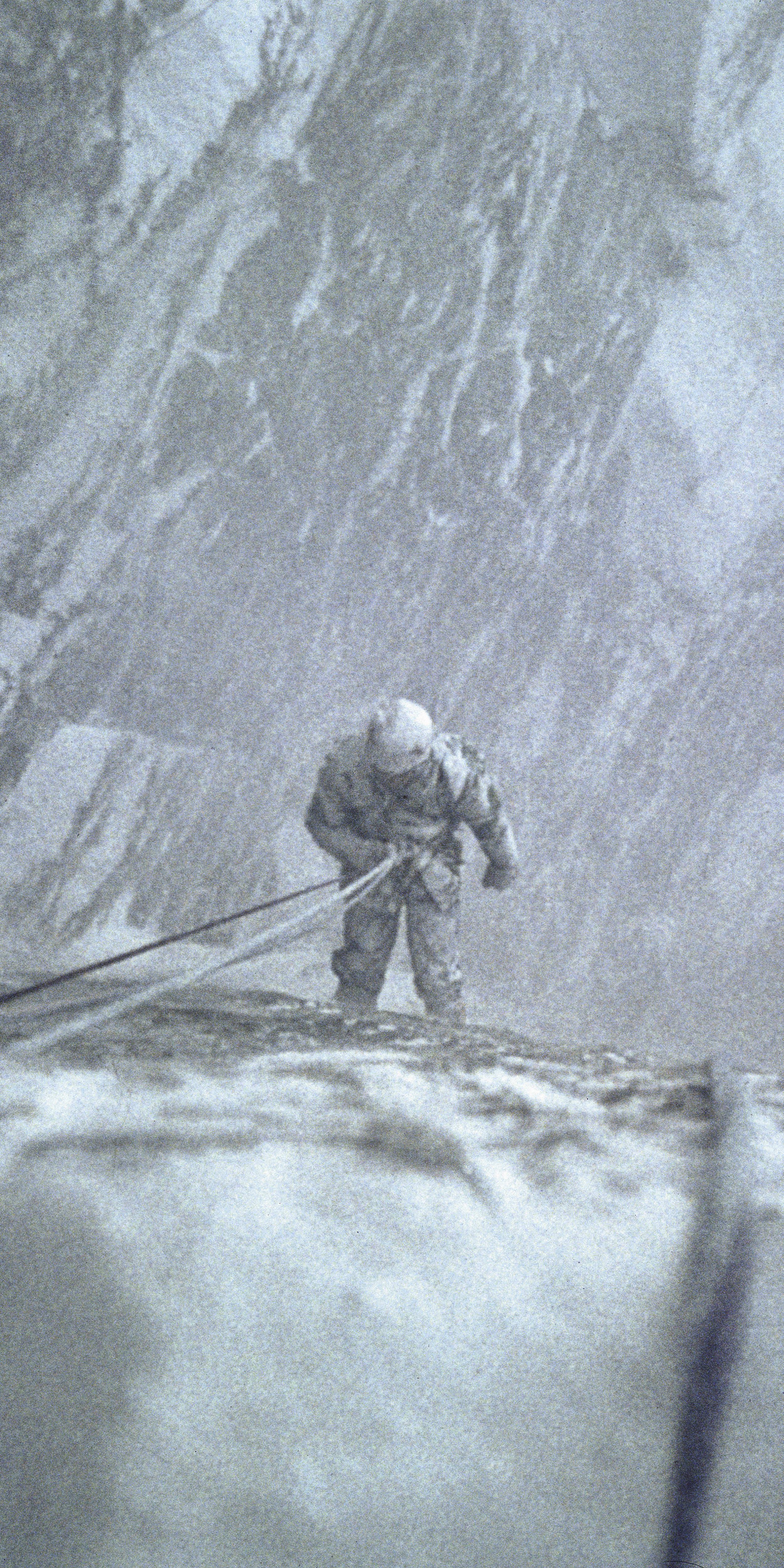
Photos: Elisa Røtterud
Published: Jan 14, 2026
Adventurer and Norrøna ambassador Elisa Røtterud loves talking, pain and solitude. No wonder she stumbled into fashion and high altitudes.
"You know. I recently bought four yak bulls."
"You did what?"
"I get regular updates on how they are doing," Elisa Røtterud says matter of factly.
For a woman who literally loves being in her own company, she is remarkably talkative. She has been talking nonstop for two hours, and three times she has apologized for exactly that. She has recounted several dramatic summit climbs, a few wild parties, her fashion career, some Hollywood celebrities and quite a lot of bodily fluids.
You could call Elisa a lot of things. A fashion magazine editor, a copy writer, an aspiring tour guide, a self- employed business woman, Art Director, motivational speaker, reality tv pioneer turned restless adventurer…
I knew she had a lot of titles I could pin on her. Yak farmer was not one of them.
"A friend of mine in Nepal lost everything in the earthquake back in 2015, so I bought two yaks and two naks for him. They will provide milk, cheese, means of transport. Their dried dung will serve as fuel for the winter and clay for mending cabin walls. They are a perfect way of giving something back to the Nepalese community, considering that most of the expedition money goes to the corrupt government," she says.
"I won’t be visiting them or anything. They’re not my adoptive pets."
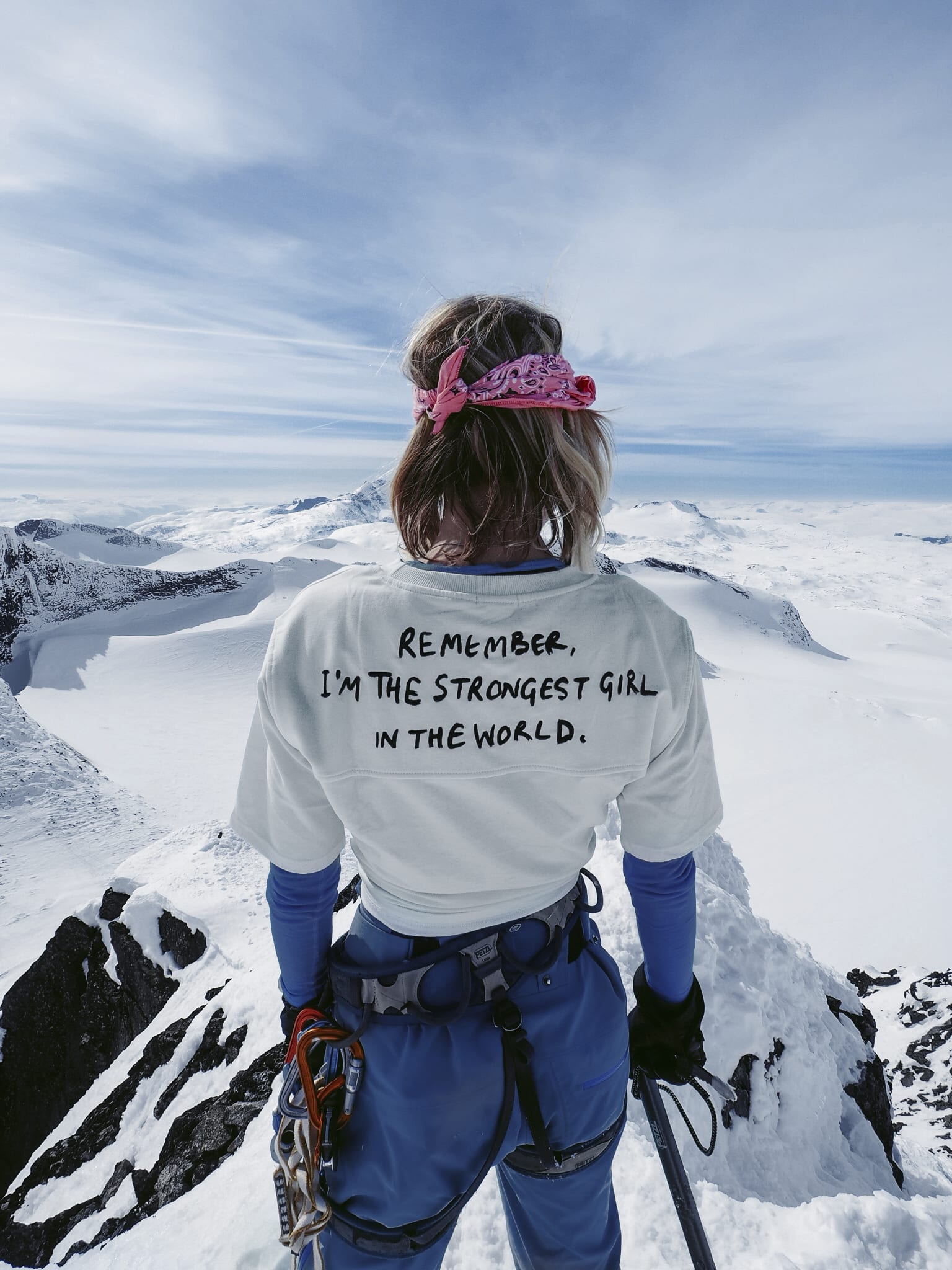
Right now, talking to me, Elisa is far from the thin air and the yaks of the Himalayas. She’s at home in Oslo, Norway. Watching the city from her 9th floor apartment with a panoramic view over the city in front of her. And the many trails of the Nordmarka woods just behind the house. Even though she is studying for an upcoming exam in motivational psychology, she agreed to a breakfast chat if I brought some brown cheese. She would provide coffee and freshly baked bread. It is still in the oven and she coyly says that she’s intimidated about the fact that I have written a book about a bakery. I suspect she is not easily scared. And also a kind of Pippi Longstocking approach to difficult tasks. “I’ve never done it, so how hard can it be?”
That’s how she started a small business of organizing micro adventures just outside her backdoor. It started with her sleeping on the balcony during the pandemic. So many people commented on Instagram that they really longed for the outdoors. So she put up camps in the woods with lots of Himalayan flags, bonfires and lanterns around the trees, and incense here and there.
"I invited people to come experience some nature workout or yoga. And then I cooked for them. I can't call myself a chef, but fortunately, everything tastes good outdoors. Even my gory stories from my trips," she says about the concept she’s called 'The path is made while getting lost.’
"We should all be better at seeking adventures in everyday life. They don’t need to be grandiose. Borrowing a canoe and paddling to one of the islands, that’s it. You have so many opportunities here in this city. You can go to the opera on Friday and sleep on an island or in the forest on Saturday. And then you can hop on a train or a bus for a few hours and reach wonderful summit hikes. It's really unique.”
The best things in life are free. But enjoying them takes both skill and sometimes money as well, Elisa admits. "It’s ironic, everyone says nature is free and for everyone. But if you have good equipment, the experience is completely different and good equipment is not cheap. But now you can rent things, fortunately,” she says, rising up to look for a book in her book shelf.
“Therese Bertheau is one of my role models. I have her extremely thin biography here somewhere,” she says recounting the story of the Norwegian teacher and pioneer climber Therese, who went hiking with famous British climber Slingsby and the boys in her homespun skirts, heavy shoes, hat and blouse, in the late 1800s.

"On my 40th birthday, I went to a peak in a similar skirt but with modern shoes. Unfortunately I forgot the skirt and tripped, jumping over a creek. It really increased my respect for Therese”, she says adding:
“I would really like to know if she shared sleeping bag with one of the Slingsby boys … ”
"To sum it up, there was far too much Namasté going on. And too much silence for me. I lasted four days before I escaped on a tuk-tuk shouting: 'You brainwash people!'”
It wasn't a given that Elisa Røtterud would come to love flying in the mountains. She came into Norwegian fame, after participating in one of the earliest reality tv-shows, Robinson Expedition. Later she hosted several tv-shows, and landed a job as Fashion Director of Norwegian Cosmopolitan. She used to love flying sky-high expensive Louboutin shoes to New York. She still loves shoes, but something changed on the way, getting lost on other continents.
"I really wanted to become a pretty and glowing yogi," she says, admitting that her hopes were too high when enlisting for an ashram deep in the jungle of India. They had to stay for a month without speaking at all. Sure, they sang to Krishna a few times a day, but otherwise, it was silent.
In her own words, she didn't become pretty and glowing. But she learned the ujjayi breathing technique, and being in the present. Apparently, by stimulating the vagus nerve, ujjayi breathing turns off our physical response to stress. After India, Elisa took a leave from work to go to East Africa to play drums and find joyfulness.
“I brought back a sense of enthusiasm. People are poor but incredibly cheerful and positive. And I adopted 'African time’. In Africa, suddenly a road can be closed due to flooding, so things can happen at any time, that you have to wait for.”
The first time Elisa went for a summit, she did not remember anything of her Indian or African skills. She did not listen to her guide. She was way too enthusiastic.
“When you start hiking in thin air, you have to go slowly and be calm inside,” she explains.
“Going up Island Peak in the Himalayas, I felt at home. I played with the kids, kicked the football and everything was just: Wow! I'm in the adventure! I used too much energy being excited.”
Island Peak was nevertheless a major turning point. On the summit, to her left, she saw the famous mountain Ama Dablam on the horizon. She cried and whispered to the mountain, "I will visit you! I'm coming, Ama!"
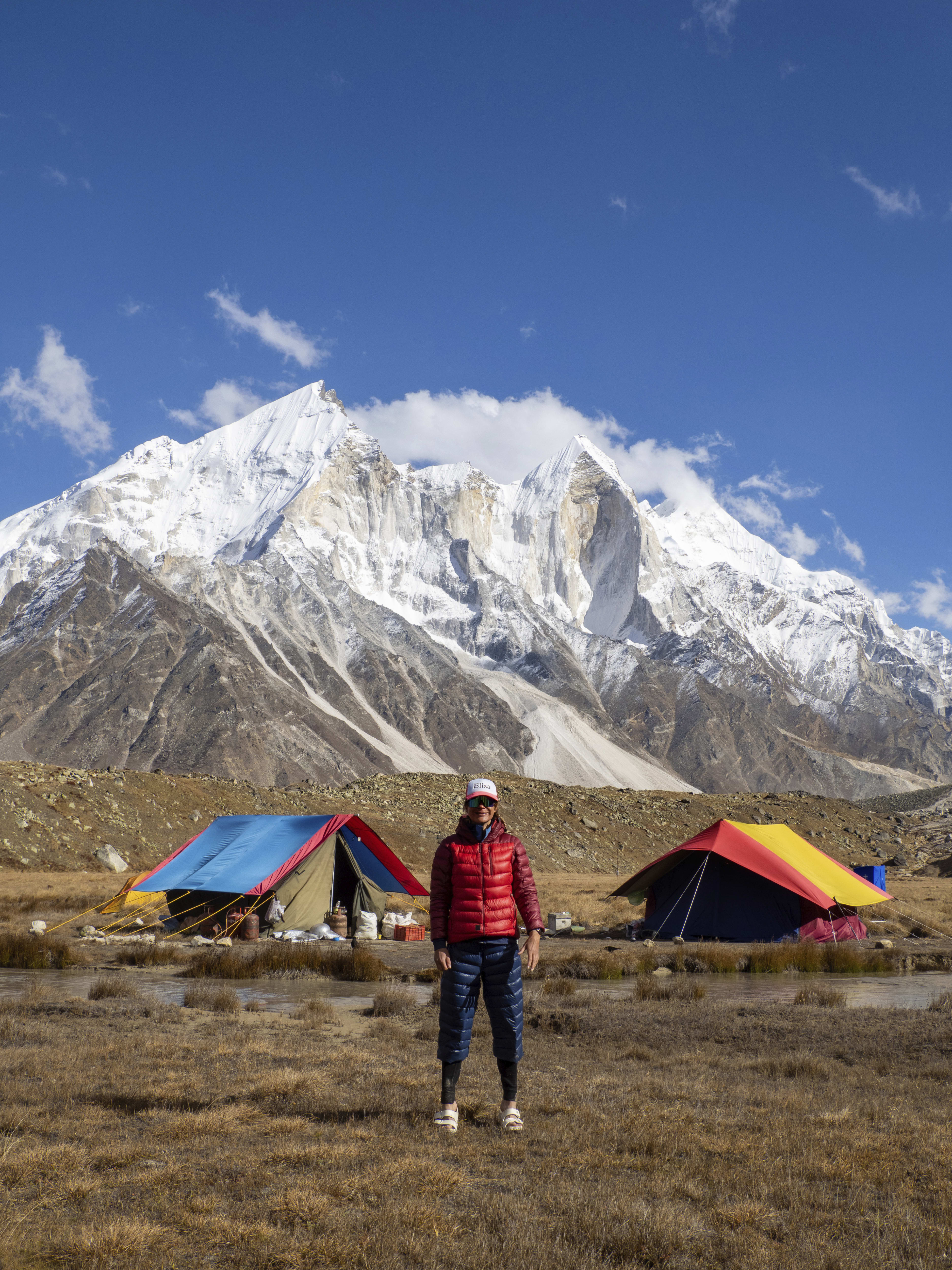


Even when going down, sitting on her horse and suffering from food poisoning, with severe diarrhea, all she could think of was how to prepare for going to Ama! So during the next two years she used the Norwegian peaks as a preparation for finally meeting her dream mountain. At first she failed. The weather was so bad they had to return from Camp 3 and she came home very sad.
The following year she was back and managed to reach the top.
“Since then, I’ve been to the summit three times. I never get tired of it. It's a fantastic, airy and jagged mountain, so it has a big place in my heart.”
She has learned her lesson. On later trips she has her own basecamp rituals. She spends a lot of time organising her tent, concentrating on gratitude and portioning her entertainment. Not watching crime before day 3 when she knows her mood will be more relaxed.
“Basecamp is often quite boring. You can wait up to a week, but for me it is like being at a spa resort, except you’re damn tired or you prepare mentally for a challenging peak and you definitely don’t get massages."
Her latest adventure was Cho Oyu, on the Tibetan-Chinese border. She was keen on experiencing Tibet. Elisa dislikes queuing up on the mountains and with few permits last season, she was assured not to walk in a big queue. “Recently, expedition tourism has boomed, sadly bringing many inexperienced climbers and increasing the number of rescues."
Since her first Himalayan adventure in 2011, she's noticed a dramatic shift in the landscape. Technically, Cho Oyu was an easy hike. It's really just slope after slope. But from Camp 2 she experienced 60 meters per second wind and a temperature of minus 20.
“I only managed four steps at a time with 16 breaths. I made use of my breathing technique, shutting out the beautiful mountains, just focusing on moving my legs,” she recalls.
Then her climbing sherpa says, 'You have three hours of oxygen left.' 100 meters from the top, Elisa decided to back down. There were no others on the mountain.
“I could have died on Ama, that would have been ok, but Cho Oyu wasn’t worth risking your life for.”
Going down, she was so dehydrated that she ate snow, despite knowing that you shouldn’t at that altitude. "Eating snow in thin air does something to your lungs, you get an unstoppable cough. I coughed up slimy 'cashew nuts' for four days without sleeping. At the same time, one of my frozen fingertips rotted and fell off. It smelled like a rotten towel for months! Hahaha!”
Elisa does not enjoy such pain. She loves it.
"Pain is what drives me," she says holding up her ring finger in the air.
“I hate speed. I don't understand the need for speed. I like the struggle and the pain,” she says, explaining how she is able to walk calmly the first few hours, but then she just snaps and chases the irrational joy of freedom-strained muscles. Not in a masochistic way though, she assures:
“I'm completely A4 in private. Haha. It’s more that I feel really alive. Feeling the splitting headache of altitude sickness, when lowering my head, makes me laugh uncontrollably. I’m there pooping in the sky, laughing, having a fantastic time.”
The love of pain almost turned deadly in 2016. With an oxygen saturation of 33, she was completely swollen all over. She couldn't talk, she vomited and had diarrhea. "Even so, when the doc in base camp came to measure my O2, I was so obsessed with reaching the summit that I warmed up my fingertips to get better blood flow, jazzing up the saturation a bit," she says frowning.
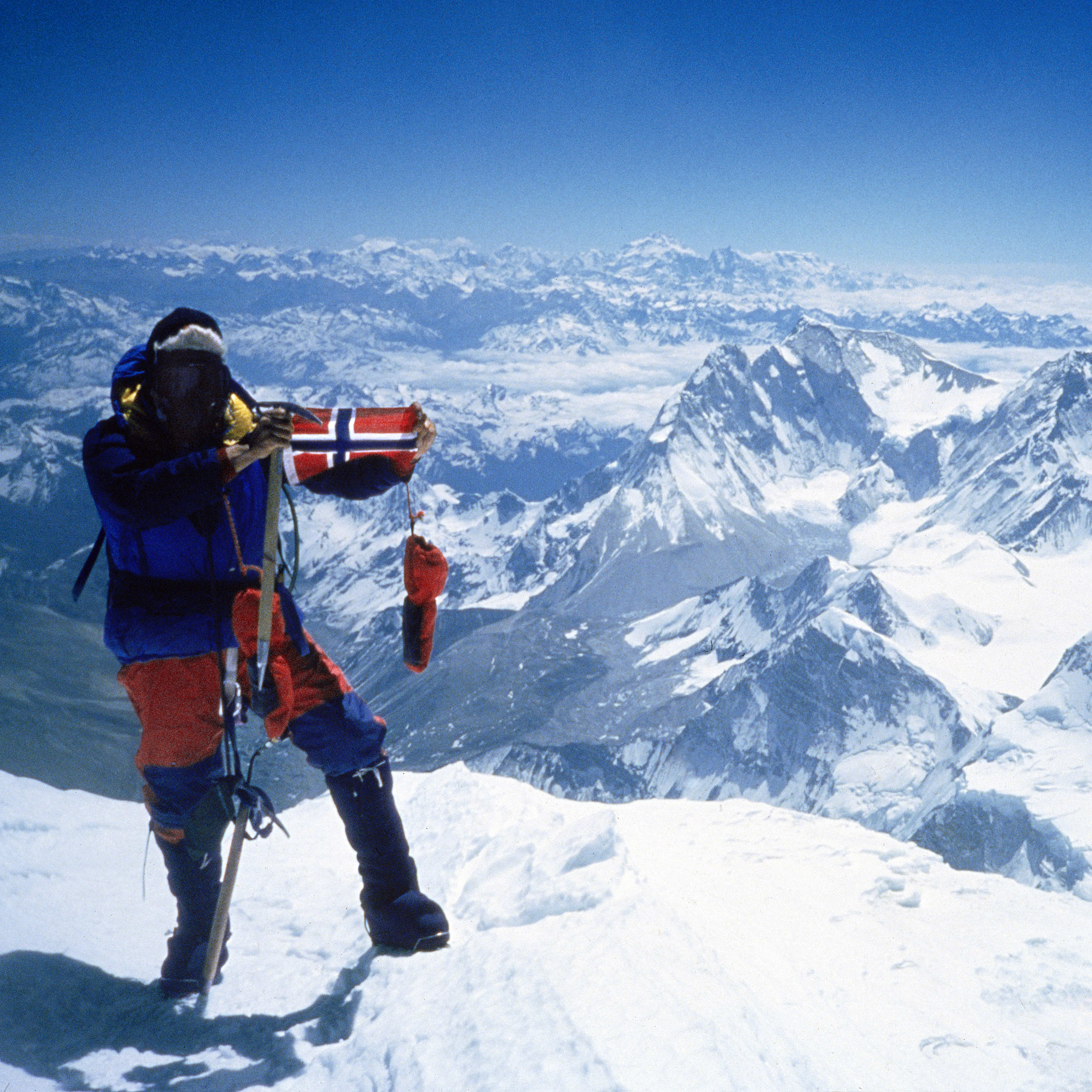
Fortunately, the weather got bad, so she got a week of rest and recovery, before managing to reach the summit. Standing on top, she experienced a terrible anticlimax. Firstly, it’s only halfway; you still have to get down.
“The journey from training home up to the summit – that's my passion. Every time when I get home, I suffer from 'expedition blues' as Norrøna ambassador and climber Robert Caspersen talks a lot about. You’ve achieved an adventure, a feat for yourself, all alone. You feel immortal, but get a feeling of emptiness, a feeling that you carry a big secret.”

Elisa does not have a problem doing these things on her own. Not at all. She once left a party in Longyearbyen, borrowed a scooter and hiked up to an ice cave, bringing take-away pizza, a sleeping bag and some red wine. She played techno music, ate the ice cold pizza and had a great time.
“I love solitude above the treeline. I don’t like sleeping in the woods alone though; I’ve watched too many scary movies.”
Maybe it dates back to her childhood, growing up as an only child on a small farm in Sørum, just north of Oslo. She only had her dog Mira to play with. Her substitute for a sister, they even ate from the same bowl. Their favorite dish was pasta and liver pâté. They roamed the woods near the farmhouse daydreaming and enacted episodes of Disney’s Duck Tales.
“I really enjoy my own company. Or as they say, I thrive under my own hood.”
The bread has rested enough. It tastes wonderful with butter and brown cheese. A real Norwegian treat. Elisa doesn't have to leave the apartment for the next days. She can study in solitude. She’s looking forward to celebrating finishing her study by going to Nepal for the summer to work at an elementary school.
"I'm insanely excited to just pour out my energy. I don't know what I'll be teaching, but it'll probably be gym and English. I'll be living in a small hut. It'll be great. I admit that in a way it is egoistic, because I will be really happy.”
“And you’ll be alone doing that?”
“You bet.”
What do you have to take with you on a trip?
"I bring some shrimp cheese and mackerel in tomato sauce for long trips. And if I’m sleeping on a Norwegian mountain top, I always bring a tiny bottle of red wine. My camera and of course my Norrøna gear!"
How do you account for the climate?
"I don’t have children, so I can travel three or four times a year with an OK conscience. The irony is that I love kids; I am a child myself, but I don't want my own children."
What’s your definition of “friluftsliv?”
"I think people in our age are so focused on measuring everything. Everything we do is measured! Friluftsliv is deeply rooted in our DNA. It's about feeling alive and getting perspective. It’s the definition of freedom! I’m not on Strava. I work out almost every day, but I don’t measure it. I feel how my body should be built up to cope. For me, friluftsliv is a sense of freedom and mastery. But for me, to get that sense of freedom, I have to really work for it. For some, it's enough to grill a sausage on the fire. But I need to struggle."
Elisa's Summit List
2011: Island peak 6189 m
2013: Ama Dablam 6812 m
2014: Mont Blanc 4808 m
2015: Ama Dablam 6812 m
2017: Manaslu, Nepal 8156 m
2018: Norway Seven Summits in Seven Days
2019: Norway Seven Summits in Seven Days
2019: Himlung, Nepal 7126 m, Norwegian first ascent
2021: Ama Dablam 6812 m
2022: Shivling, India 6543 m
2023: Cho Oyu, Tibet 8188 m