

Text: Alexander Urrang Hauge
Photos: Chris Holter
Published: Jan 15, 2026
Surfing on Norway’s Varanger Peninsula is not about cold seas and even colder fingers, but the sense of being completely alone with waves that come from the top of the world.
“One thing stands out about surfing in Finnmark County,” says Frode Goa in a singsong dialect from southwestern Norway’s Stavanger.
He has surfed all around the world. But something about Finnmark, in the far north of Norway, left its mark. “There’s almost nothing but wilderness. It's just the sea, the waves and the landscape. I don't think I have ever surfed in such a desolate place before. It creates a very special feeling,” he says, with a hint of both mystery and enthusiasm in his voice.
Images from the Varanger Peninsula echo scenes from the movie Fargo: Empty, flat light, deserted roads, then the light cuts in, with waves rolling forward like the clearest and purest glass.
But before we throw ourselves into the waves, let's take in some cold facts about surfing in Finnmark. Reports like this one often focus on the extreme, whatever it is that makes this particular adventure extra hard, tough, demanding or dangerous.
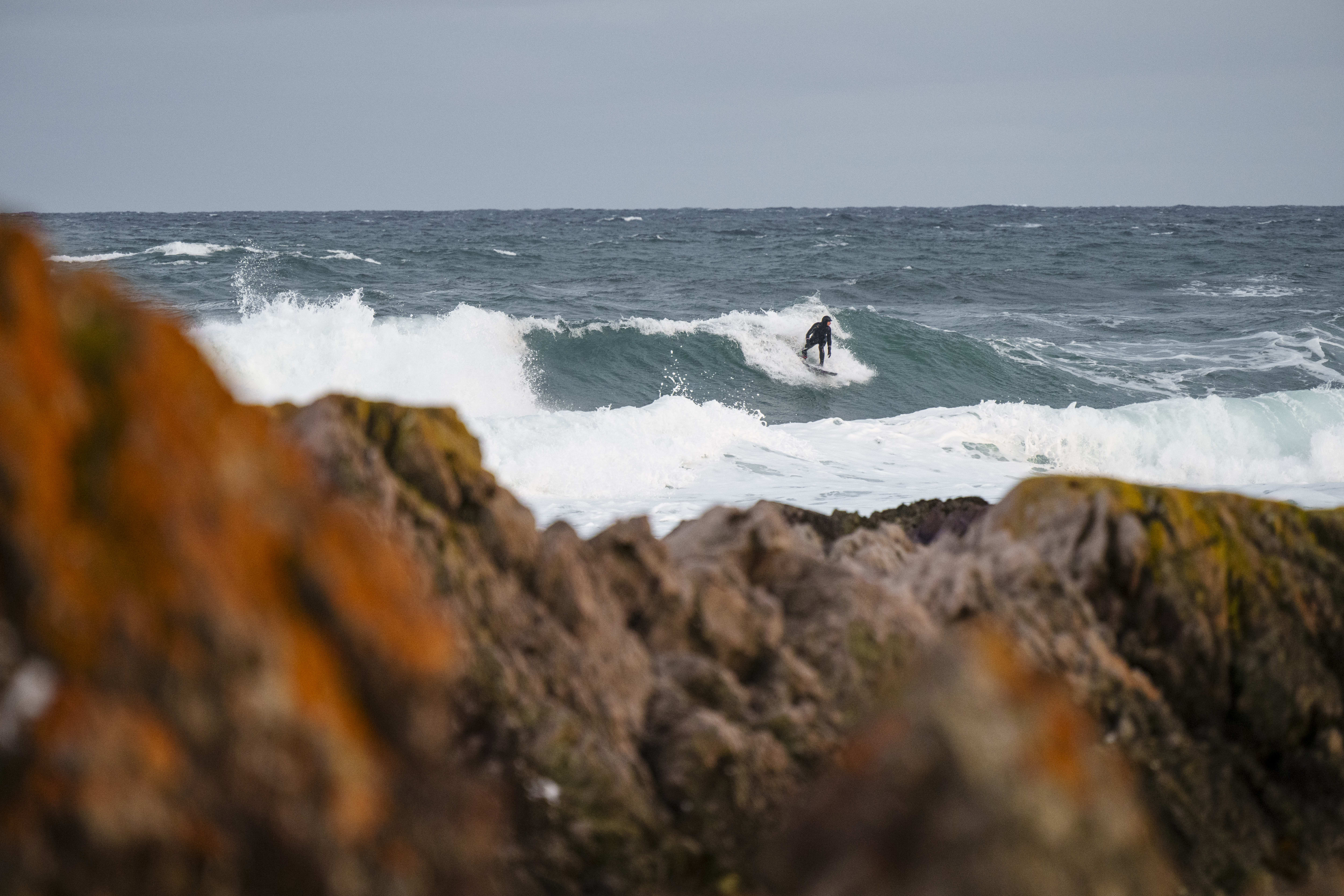
The truth is that Finnmark is a peaceful, Arctic oasis in the far north of Norway. Hardly anyone lives there, nature seems endless and if Norway was a giant feast for the adventurous, Finmark would be the T-Bone steak at the top of the heap.
Nothing is mediocre about Finnmark. Nothing is indifferent. The light is constantly changing, with powerful weather. It is infinitely far north and you have no choice but to deal with the forces of nature.
They're there – year round – and play their starring role in whatever script you've envisioned. You can’t buy a coffee and a hot dog at the 7-Eleven around the next corner. Your best hope is to find a local Joker grocery store on the next 100 kilometer stretch of road. Naturally, this is also the case with surfing.
“The waves of Finnmark and the ones we found at Varanger Peninsula stand out because there is such power in them. Imagine the Arctic’s Barents Sea and its enormous water depths. When the waves move towards land, they bring power from the ocean depths and make surfing much stronger,” says Shannon Ainsle.
He is from South Africa, has a permanent base in Stavanger, near local surfing along the Jæren reef, and now has a new surfing spot on his list of favorites.
“If we had had the same wave forecast as on Jæren, the sea would have been flat. Here it is different,” he says. Anyone who has studied a map of the Varanger Peninsula can see that it stretches out into the open sea. The southern part is best when the wind direction is from the north-west, but it is the north and north-west that stand out.
“When the weather systems come from the east, we are stuck with a less accurate weather forecast,” Shannon says.

When surfing far north of the Arctic Circle in November, temperature, wind and weather cannot be ignored. You can safely leave your surfing shorts at home. The Gulf Stream ensures that the sea does not freeze, but not much more than that. The scenes from the Varanger Peninsula are like art photographs.
In a world where everything has to be polished and published on Instagram, it's liberating that places like this still exist. Still without too many tracks, still bare-knuckled, wild and untamed.
“The water temperature was around 4-5°C and, on the coldest days, the air temperature was -13°C. Modern wetsuit technology is what makes it possible,” says Shannon and adds.
“I never froze in the water, but when you are on land you feel the cold.”
In some places, our little surfing crew found surf spots that were close to the road. In other places, they had to walk a fair distance in wetsuits with surfboards under their arms.
“That was when it was coldest. When you walk in the snow at -13°C and your fingers almost freeze to ice, you eventually lose feeling,” Shannon says, laughing.
Some mornings, they woke up in their car with the frost smoke steaming out of their sleeping bags. Warming up with coffee and expectations of new waves isn’t a bad way to start the day.
Surfing in Finnmark is at the mercy of what happens in the crazy Barents Sea. A sea that stretches due north towards the Svalbard archipelago, farther east to Frans Josef's Land and bounded in the east by Novaja Semlja and Russia.
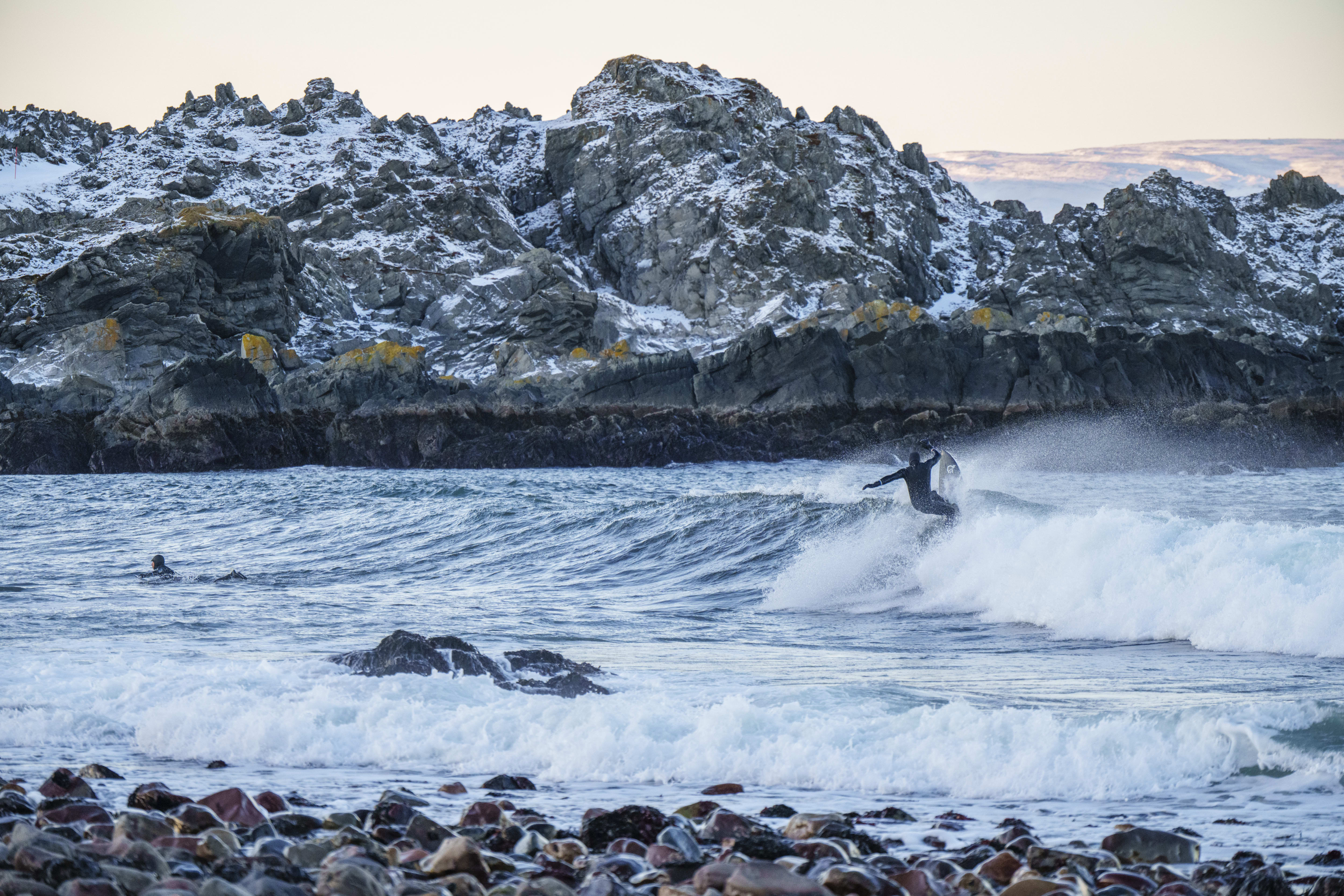
When the weather systems pump in from the north and northeast, there is absolutely nothing standing in their way. Not an island, not a reef. Nothing.
Everything from currents, wind, waves, rain, snow and sleet hits the coast of Finnmark with full force.
Surfing in Finnmark and the Varanger Peninsula is not like anywhere else. The waters are still unknown, not all places have been mapped.
“That is one of the very best things about Finnmark and the Varanger Peninsula. You are on a bit of a journey of discovery. You have to figure things out,” says Chris Holter, who is Norrøna’s content and creative manager, and the man behind the photos in this story.
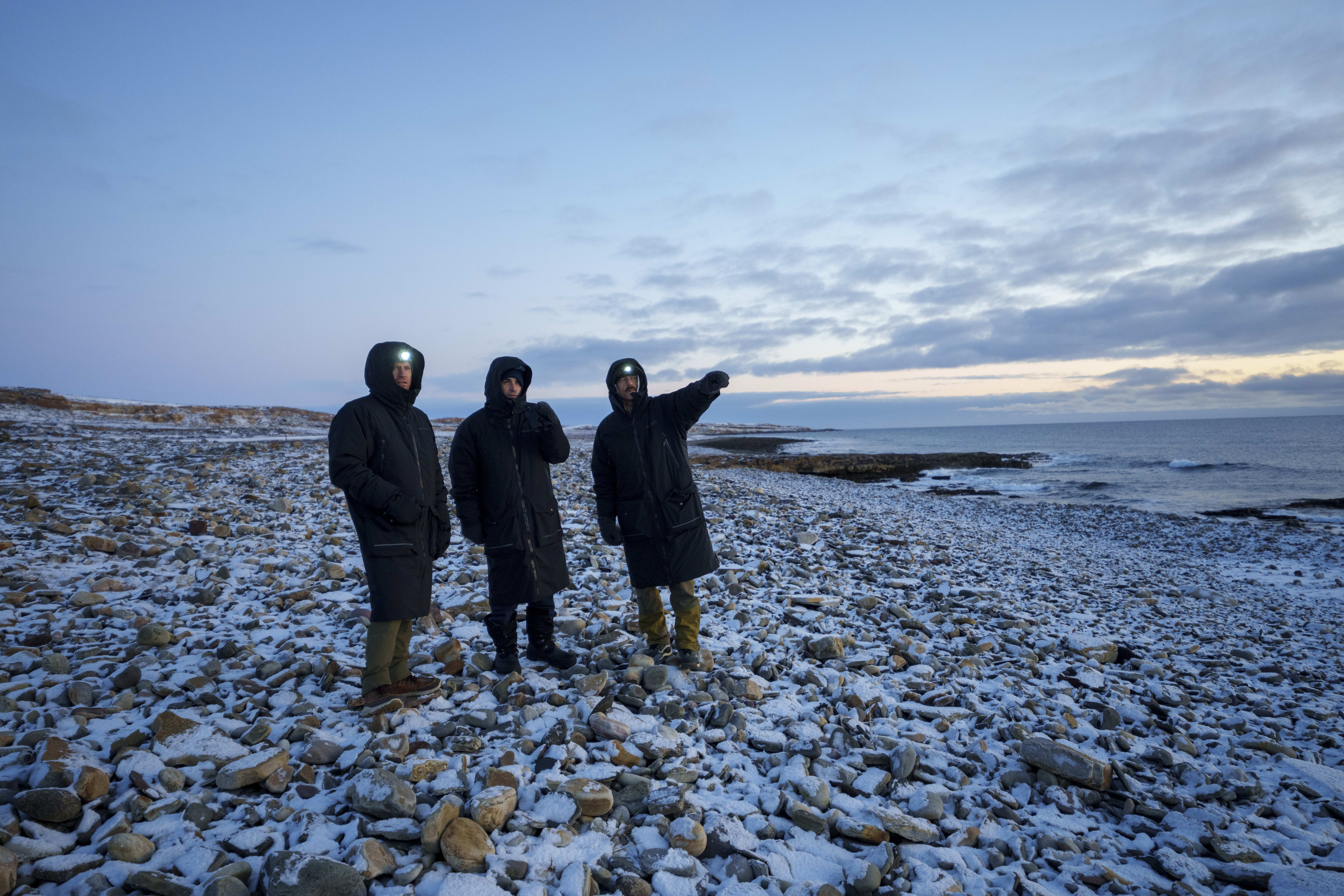
Surfing is different from skiing. The waves regenerate themselves, but are still in short supply. In the end, there may be so many people in a lineup that there will be jostling and queuing.
Surfers don’t line up in Finnmark. Humans have an annoying tendency to congregate in one place. “If you surf in California or Hawaii, you can forget about finding a completely new place. But off the beaten track, in Africa or here in Finnmark, you can find places where there isn’t anyone else,” says Shannon.
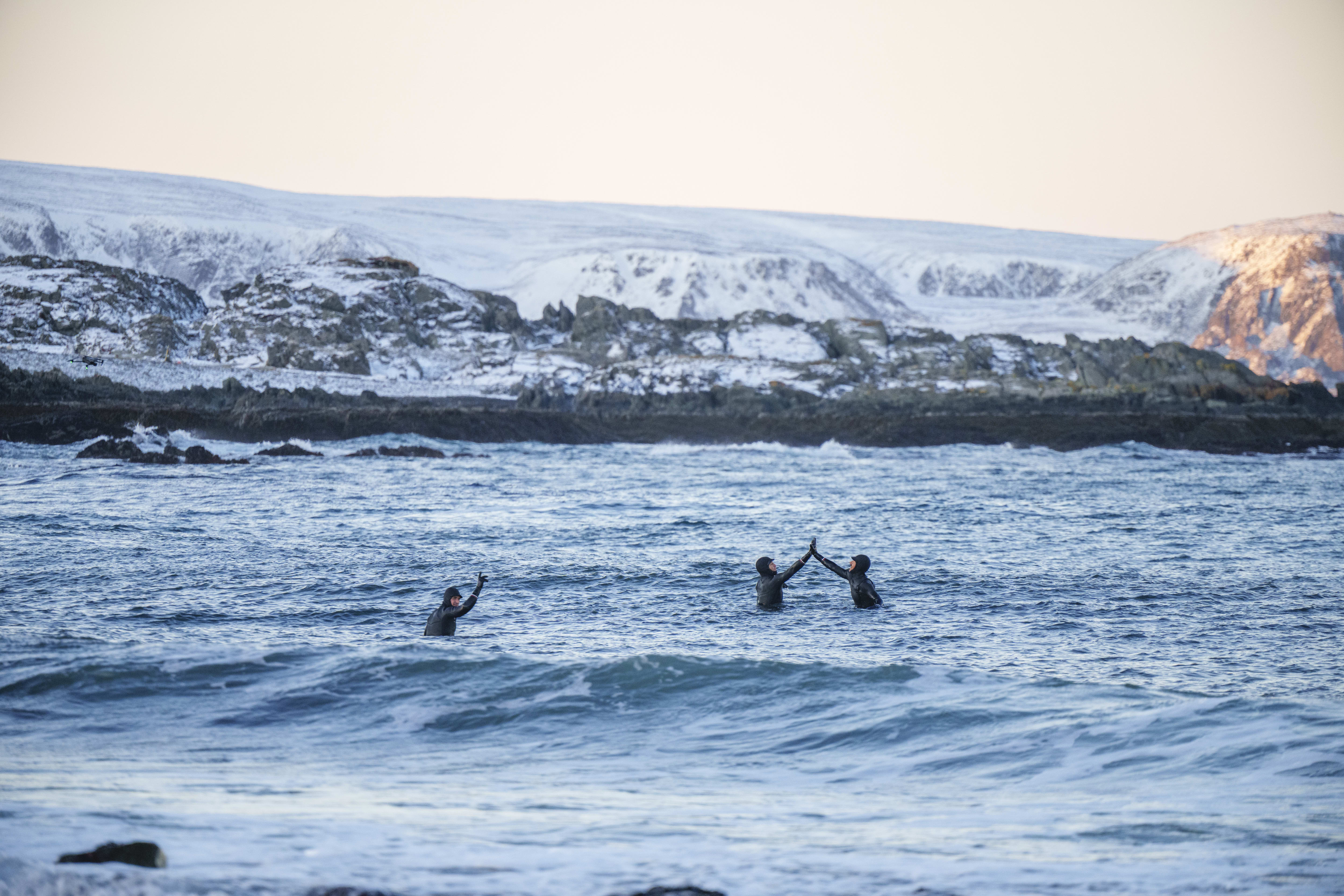
That’s absolutely the best thing. You have to search and search to find waves that have barely been surfed before,” says Shannon and falls silent.
“Think about it,” he says. “It's pretty amazing.”