Published: Jan 26, 2026
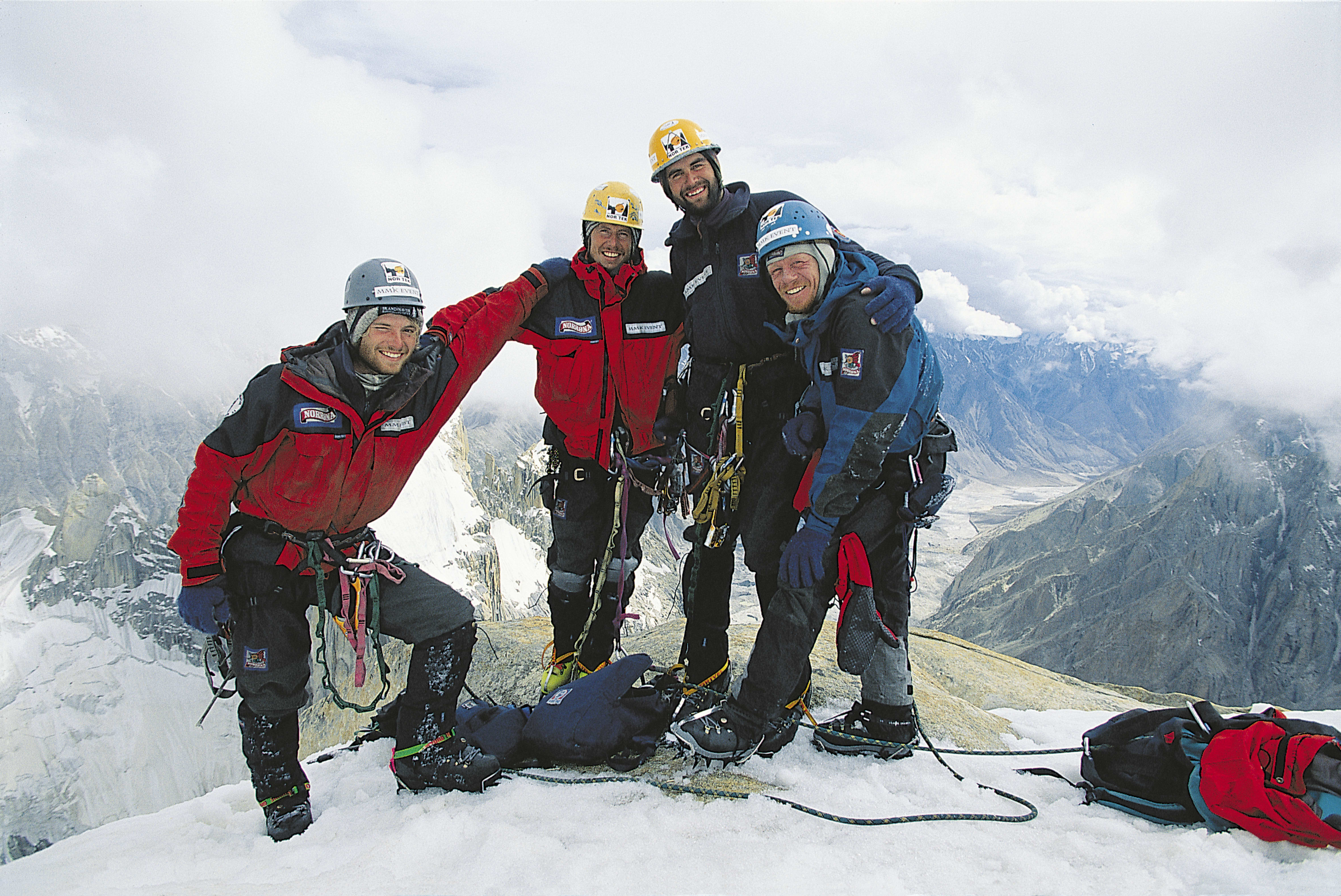
In 1999, four Norwegian climbers from a new generation traveled to the Trango Massif. Inspired by the 1984 expedition, they set themselves a new goal: a completely new route on Trango Pulpit. Robert Caspersen, Gunnar Karlsen, Per Ludvig Skjerven, and Einar Wold had their own unforgettable climbing adventure.
There’s hunger, as in childhood daydreams, emerging from films, books, photographs: an itch enabling ravenous risk assessments and the making of plans. Some plans even itch their way across the actual Poles, or towards very real mountains – towards climbs and descents; where there’s hunger.
There wasn’t enough – not even close: they were running out of food. 21 days into an expedition supposed to last no longer than 25, Robert Caspersen and his friends were counting calories.
They had successfully climbed the first pillar of the Trango Pulpit in the Himalayas; one of the most dangerous and challenging big-wall climbs on the planet. However, at that point, this meant the four Norwegian climbers were not at all where they were supposed to be. They were irrevocably behind schedule – the Trango Pulpit as much a castle in the air as ever.
— We had packed provisions for 25 days: 4500 calories per day, per person – and something like three days’ worth of emergency rations. That didn’t quite cut it, Robert Caspersen laughs.
The seasoned climber quickly reveals his habit of laughing heartily when retelling his life-and-near-death-stories.
— We’d climbed a thousand meters at that point–on day 21, that is–and we were gazing up at another 600 meters of sheer wall, a more or less blank surface. Additionally, we knew we’d have to do another 300 meters of ridge climbing to reach the summit. The outlook wasn’t great. Nor was it good. At all.

1350 calories a day
Regardless of outlooks along the way, Robert makes no mention of anyone even entertaining the thought of turning back or in any way whimpering, though no-one could have blamed them. The ascent of the first pillar had involved continuously difficult aid climbing– so progress was slow.
60 meters a day was no exception. And after inching their way up a vertical kilometer, as they finally reached their first interim goal, they were practically out of food. But, regardless, it seems there were no decisions to be made; only calculations to perform.
— It was obvious we wouldn’t make it with four rations. So, we divided it all. We figured that we needed two more weeks to reach the summit, which would make 35 days total, he explains.
— So, we quartered our rations. From there on out, we’d have to make do with 1350 calories a day.
That’s not enough.
— Right. No, it’s not enough.
Trango 1984
When Caspersen and his friends – Per Ludvig Skjerven, Gunnar Karlsen and Einar Wold – took on Trango in 1999, the backdrop was gloomy. Trango had been full of taboos, at least in the Norwegian climbing community, since 1984, when four other Norwegians attempted the first ascent of the North-East buttress. Only two of them made it to the summit, only two of them made it back alive. Their situation was eerily similar to the one that would occur 15 years later.
So, what went wrong in ’84?
— A tragedy. Finn Dæhli and Hans Christian Doseth died in their attempt to descend–after succeeding the ascent. The climb took longer than anticipated. They’d climbed a thousand meters and reached the top of the lower buttress, about two thirds of the climb, when they realized they didn’t have enough food for all four of them to continue. So, Dag Kolsrud and Stein P. Aasheim volunteered to abseil off, Caspersen recounts.
— Dag and Stein went back to base camp to wait for their friends. Every day they went out on the glacier with their binoculars to scout for their friends on the wall. Just a few days passed before Hans Christian and Finn managed to pass an especially blank section and reach some bigger formations; a crack that basically led to the summit. Then, a week after the group split up, the two of them reached the summit – an exceptional accomplishment–but they never made it back down.
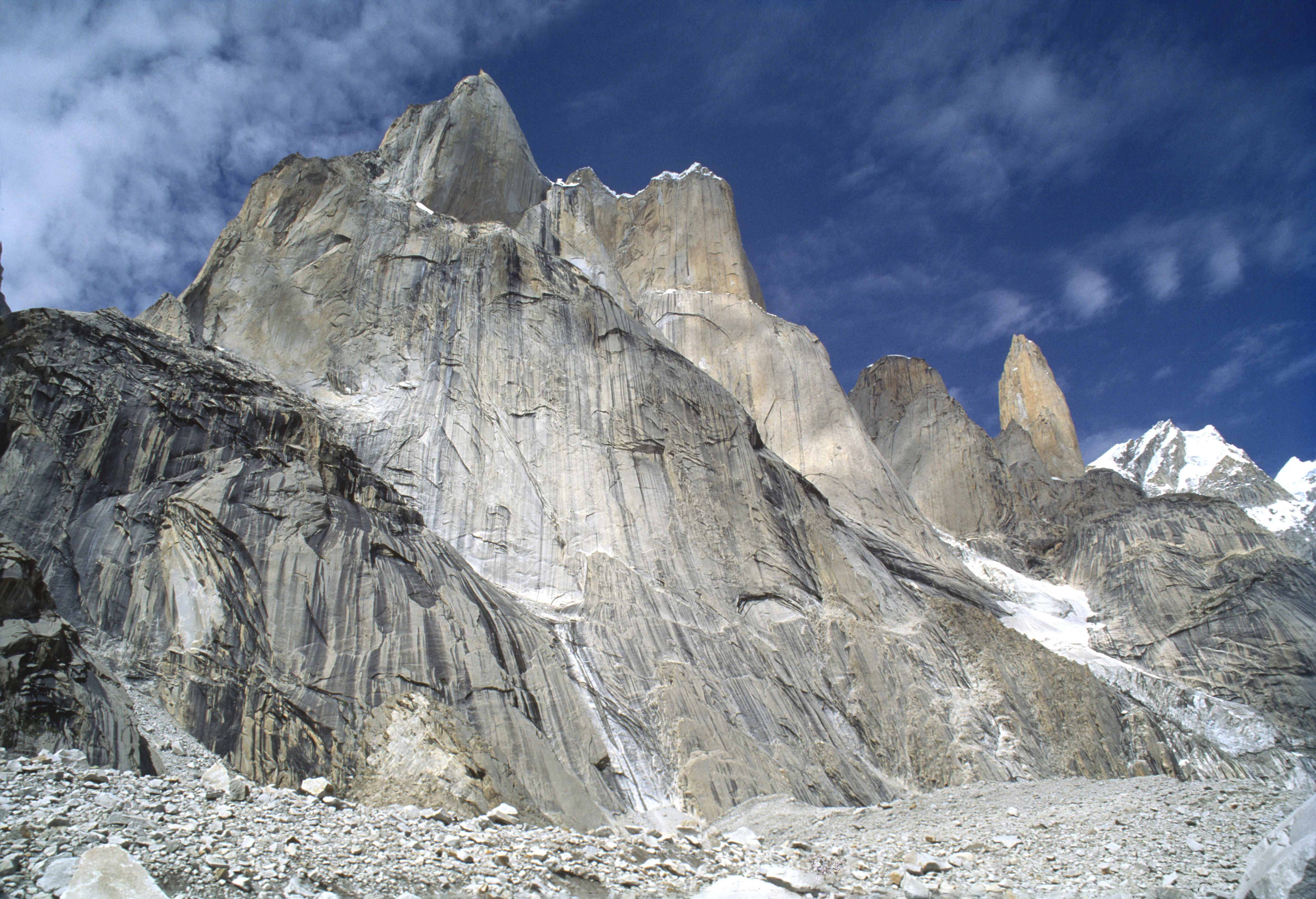
The mark on Trango…
Dæhli and Doseth started their descent undoubtably exhausted, their friends watching from the glacier some 1600 meters below. The first day they got back down to their tents. The second day they abseiled to the commune camp. On the third day, something went wrong.
— On the third day of the descent, Dag took his binoculars up on the glacier as usual. The weather was nice, the visibility good. But he just couldn’t spot them. So, immediately, he knew tragedy had struck.
The walls of Trango appear smooth as glass, at least at a distance, and from the glacier. There’s nowhere to hide. There was no doubt there had been an accident. A search party was organized. Eventually they got hold of a helicopter and flew in towards the foot of the lower wall.
— They spotted Hans Christian and Finn lying on the glacier, just below the lower pillar –all their gear and ropes around them. It was obvious they had suffered a long fall. It was a terrible blow for their families, of course, a shock to their friends and climbing partners, and it took its toll on the climbing community. Trango was marked–cloaked in darkness, death.
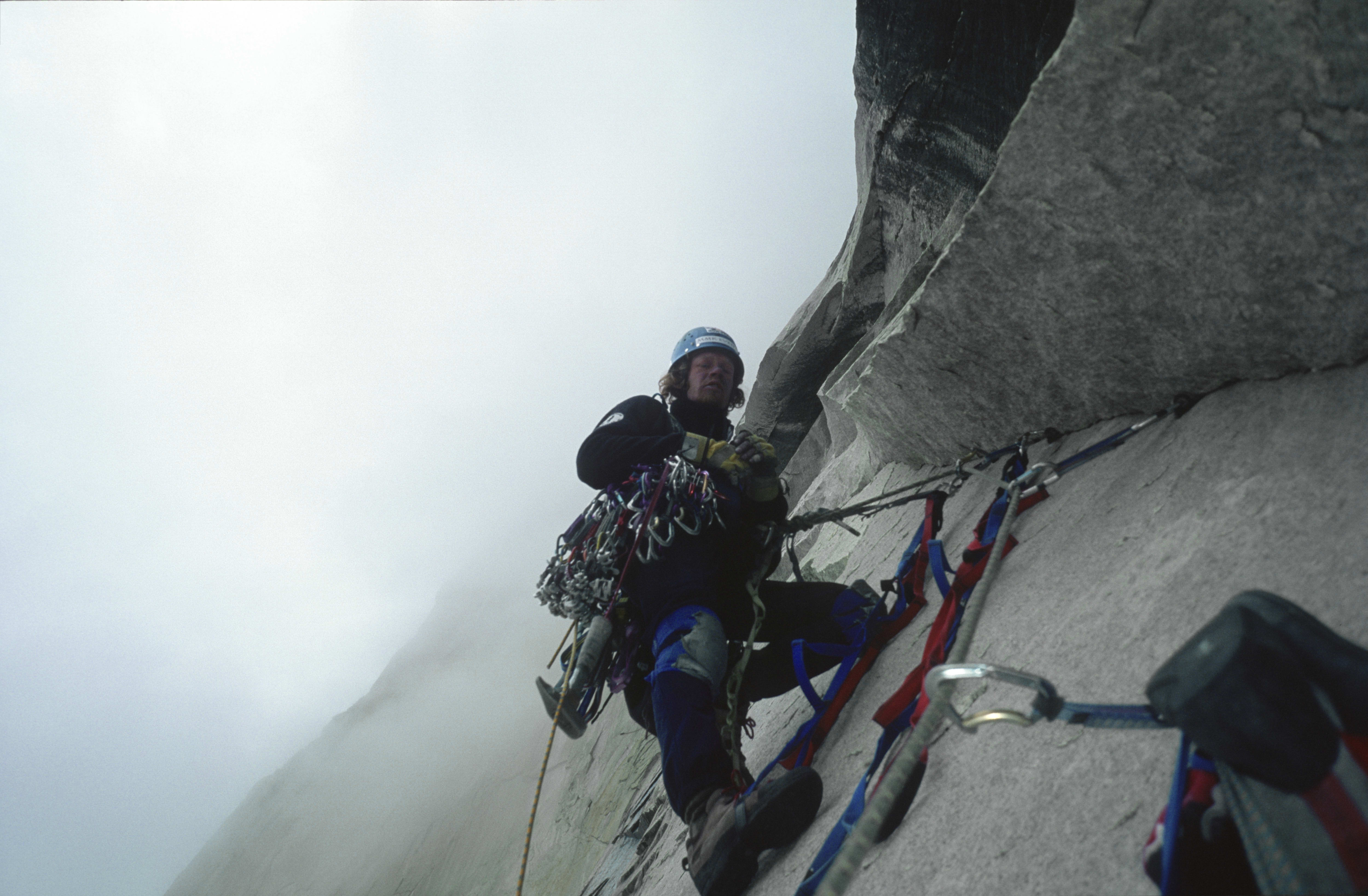
When planning his own expedition 15 years later, the accident of ’84 was still an open wound in the Norwegian climbing community and Caspersen faced some resistance, remarks and quite a bit of guilt tripping.
— When you cross the Dungee glacier towards the K2 or Gasherbrum, as loads of mountaineers do, there are a lot of sights. It’s the Himalayas. But for climbers, gazing down the valley and upon the Trango Towers is quite formidable–and the towers have an equally formidable pull, Caspersen says, pausing for a moment.
— I’ve never seen, nor heard of vertical walls taller than 1200 meters. I don’t think they exist. In the Trango massive, the walls are stacked upon each other: The first one a thousand meters, the second 600 meters. Separately and together, they’re immense.
— There are similarly structured, clean, steep, compact big walls in Yosemite and Antarctica, but what’s special about Trango is that the walls are situated at between four and six thousand meters above sea level. That makes for a completely different challenge altogether. Let’s be honest: the risk is partly why we do this. And the attractiveness of the Trango walls can’t be denied.
The pulpit was there, and Robert wanted to be in it. So, when friends and acquaintances in the climbing community reacted to his revealing of the plan with silence or resistance, he countered with disbelief.

— Some would go quiet; others would remark that, “Trango is really dangerous,” and the like. My reply was always the same. Everyone in the climbing community is perfectly aware of the contract: climbing is dangerous, and yes, that’s partly why we do it.
The Foothold, the Hunger
To get to The Trango Pulpit, you need to get to the Himalayas. To get to the Himalayas, you need something of a spark–or the mountains must have a pull. In Robert Caspersen’s case the spark was lit by the generation of climbers preceding him, amongst them, of course, the foursome of the ’84 expedition.
Robert started climbing, and he started reading everything and anything related to climbing he could get his hands on. In 1988, the literature wasn’t exactly extensive. But at the local library, he borrowed a copy of Aasheim’s “Trango, triumf og tragedie.”
The book would prove more than enough to generate a real pull. He started dreaming of adventurous expeditions, of climbing, of the Himalayas. He got hungry, and the hunger would only continue to grow.
Had it not been for those 139 pages–the story and the photographs–the pulpit and the climb might not have been on Caspersen’s horizon at the point when he was physically and mentally able to carry out the ascent–an ascent that partly lifted the veil from Trango and exposed it for what it really is: a pulpit in the Himalayas, a thing of beauty.
— I started climbing in ’88, four years after the accident. The week after I started climbing, I got a hold of Stein’s book. I borrowed it and kept it for three months and probably read it ten times. I was completely absorbed by the story, the challenge, the photographs–this seemingly blank golden granite face. I was so attracted to it. 11 years later, I went.
The First Rope Length
In 1999, after 11 years of climbing, Robert Caspersen was prepared. He was also stressed out. Shortly after he landed in Islamabad with his team–Per Ludvig, Gunnar and Einar–they got word of an expedition “attempting to climb the tallest wall in the world.” They were sure it was their wall.
— It turned out that it was one Russian and one American team climbing the other side of the mountain, and nothing to worry about. So, as soon as we got into the Himalayas– enormous, beautiful, seemingly empty–I was just really, really keen on climbing. I could hardly sit still.
How did it feel when you first touched the mountain, and when you finally climbed the first rope length?
— Oh, wow. The first rope length was quite scary, actually. As I was tying my figure of eight knot with Gunnar at the foot of the first pitch, we heard one of those terrible noises that climbers don’t like; like gunfire, far away whistles: the sound of rocks falling. We looked up, and five or six black spots were coming our way, growing bigger by the second.
Robert and Gunnar hurled themselves into the snow below the rock face, seconds before the boulders hit the snow only meters from where they’d taken refuge.
The Wall
— It’s a bit strange to think of now, Robert laughs.
— But instead of running away from the rock face, I ran up. I kept away from where the rocks had fallen, climbing five meters to the right, in a corner, as fast as I could upwards, before I traversed out to reach a ledge, safe from the fall line. That was my instinctive reaction. I was very keen on climbing this mountain, I must admit.
The hike from base camp up the glacier to the foot of the mountain took about two-to-three hours. The team had a lot of gear and had to spend three days carrying it all to where they were planning on starting the climb.
— We had six fifty-meter ropes with us, which stretched out could cover 300 meters. We slept in base camp during the night, while carrying gear and climbing and fixing ropes during the day. After four days all our gear was finally up on the wall. We established our first camp at the top of our ropes at 300 meters, and then pulled up the the ropes and committed to the climb, and from then on remained on the wall.
Trango Time Travels
In Roberts own words the face of Trango looks like a beautiful, blank section of El Capitan in Yosemite.
— So you have to be ready. It will take a lot of time, and you will need to be very patient. You’ve absolutely got to love what you’re doing to the point that you completely disappear into a crack or a move, and there is nothing else than what your see in front of you that matters, you´re inspired and motivated to try and solve the beautiful puzzle above you…
— You’ve got to be ready for continuous pitches of extremely thin aid-climbing, where tiny structures must be filled with tinier metal pieces and so forth and so on. We knew we needed a lot of gear, and we knew we needed a lot of food.
No-one in the group had ever spent more than 17 days on a wall, which was Robert’s personal record from climbing Rondespiret in Antarctica. Trango looked quite a bit bigger, so, they decided to bring food for 25 days. And they were off.
— We free climbed the first six or seven pitches, up to grade 6C+; very nice slab climbing, pretty exposed in parts. But after the seventh pitch, the face suddenly became very compact–the rock: thin, difficult to get your fingers into, no footholds.

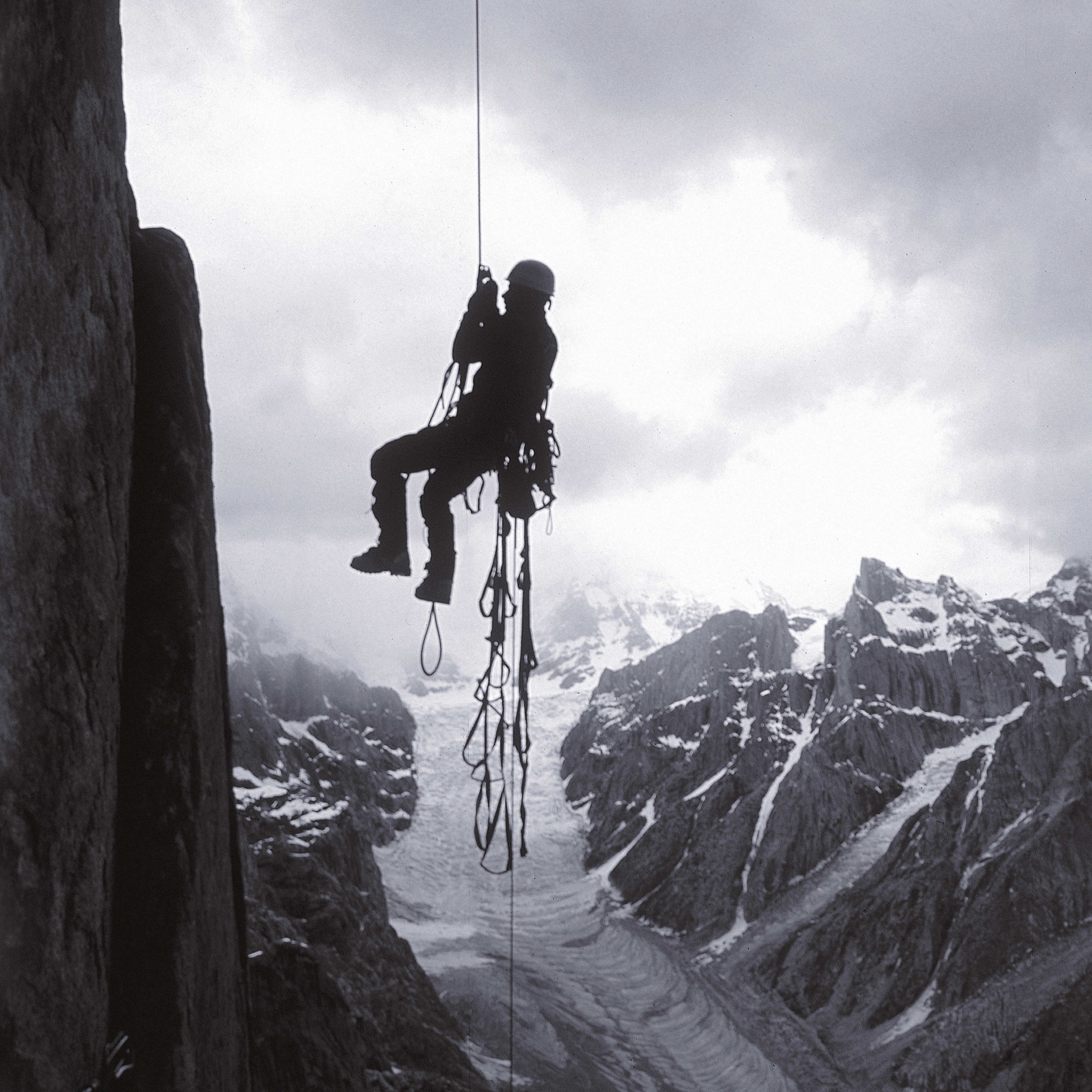
— We were forced to aid-climb, pulling on pieces of protection to make progress, and just doing the odd free move if we could reach a structure big enough to hold on to. When you’re aid-climbing your speed is reduced–a lot. The climbing was very technical and slow–but fantastic: demanding and interesting. We were complety absorbed and forgot about time passing.
The Summit and the Last Supper
The progress on the wall was slow. And now, they were out of food. 21 days in, with what they estimated to be 14 days left, and with four rations each. They quartered them all. There was no talk of turning around. Robert had read just enough about Gandhi, hunger strikes and food deprivation to know that a human being can go without food for a long time–as long as there’s water to drink.
— There was enough snow, and we had enough gas and fuel to melt it. Of course, we were extremely hungry, continuously, and if we had had more food, we would have been able to climb faster. But we managed. For two weeks we lived on this poor diet, until, on day 35, we reached the summit, had our last meal and started the descent.
How did the last meal feel?
— It felt committing. I was very hungry, so it obviously felt very good. But it was a very small portion and I had been hungry already for two weeks. It felt very real. Now we were at the point we had discussed two weeks earlier: when we decided to ration out the food to give us a chance to try for the the summit, calculating that the descent could be done without any food. We were at this point now – and that what was we had to deal with.
The Descendants – the Hunger
The easiest part, the deadliest part: the descent. Robert, Per Ludvig, Gunnar and Einar were famished and heading down the face of Trango. They knew exactly how much care had to be put into every knot, every belay.
— Abseiling in a state of starvation is dangerous, but then again, abseiling is a lot easier than climbing–you’ve just got to stay focused. And we were very aware of our situation, and had the testimony of Finn and Hans Christian, looking back at 1984, so we were extremely strict, checking each other’s knots and belays, talking a lot. Keeping each other focused.
Robert was nervous, just as the others must have been. He was periodically losing his vision, he had trouble staying focused and sometimes he’d hear a loud whistling noise in his head.

— The situation was quite dire, but I remember feeling confident that it was completely possible to survive and perform physical tasks without food for sustained periods of time. We kept melting snow and drinking water, kept abseiling. And we made it down, all four of us, safe and sound. Thinking back, I learned a lot about myself. When you think you’re done–really, really done, mentally and physically–there’s still a lot more in you.
Why Risk Everything, Why Risk Anything at All?
After returning from the Himalayas, Robert was not himself for a long time. The mundane was far more mundane than he could recall. There was little joy. No spark, no pull–nowhere to go.
— I would never make another attempt at climbing the route we did on Trango Pulpit. There are many climbs I’ve done that I think about from time to time, and I know they felt right at the time, but now I feel it would be too dangerous.
Robert’s whys and whats are difficult to entangle, even to himself. Is it fatherhood; is it age; is it biology?