Published: Feb 2, 2026
The tale of “The Norwegian Hindu Kush Expedition." Five young men. Two cars. And a long drive from Norway to climb the mountain Noshaq (7492 m) in Afghanistan.
“Do you want to come along as medicine man and climber on the great Norwegian Hindu Kush Expedition of 1972?”
With rabbit testicles and spirochete bacteria in one hand and the phone in the other, I thought it over for a second and took one look at the rabbit testes. That was enough:
“Great. When do we leave?”
Those words are from a scrapbook the Skjerven brothers – Per Ludvig and Håvard Ove – got after their father, the physician and climber Ove Skjerven, who died in an avalanche in Peru in 1984. Their father’s climbing buddies had worked together to collect articles about the expeditions he had been on. Some were written by their father himself, such as the lines above.
They were gleaned from his own report to his employer, the Norwegian Institute of Public Health, after the Hindu Kush expedition in 1972.
The man at the other end of the phone line that February day in 1972 was named Erik Boehlke. Now, many years later, he’s sitting in a sofa with the Skjerven brothers looking at pictures from the Hindu Kush expedition.
“There was no expedition leader, no rank. It was just best friends. But you had to have worn crampons on your feet before the start. You don’t just ring the neighbor’s doorbell and ask if he wants to join a three-month trip to Afghanistan,” says Boehlke.
Afghanistan had a special attraction for young Norwegians at the time.
“It was like a wonderland. Something out of ‘One Thousand and One Nights.’” And it would still be, had not the Russians and others come,” he said.

–And the idea for the trip?
“It was Odd’s” recalls Boehlke. Odd Eliassen, that is.
“When you’re on a trek, you’re always talking about plans for the next trek,” says Eliassen.
In 1971, he had been part of an international expedition to Everest. That expedition ended in a dispute. However, an Austrian Eliassen spent a lot of time with just couldn’t stop heaping praise on one mountain: Noshaq. A nearly 7,500 meter mountain. The highest in Afghanistan. Somehow, it turned to be the target of their expedition.
“Well, Erik and Per Gran had been in Peru the year before. We had to come up with something,” says Eliassen. Boehlke and Eliassen were best friends.
Gran joined up again. They needed a doctor, and there weren’t that many climbing physicians at that time. That’s why Skjerven’s phone rang at the public health institute. David Isles from the Everest trip also joined in.
Plus, they had a few hand drawn sketches from the Austrian. And a world map. That’s how they navigated.
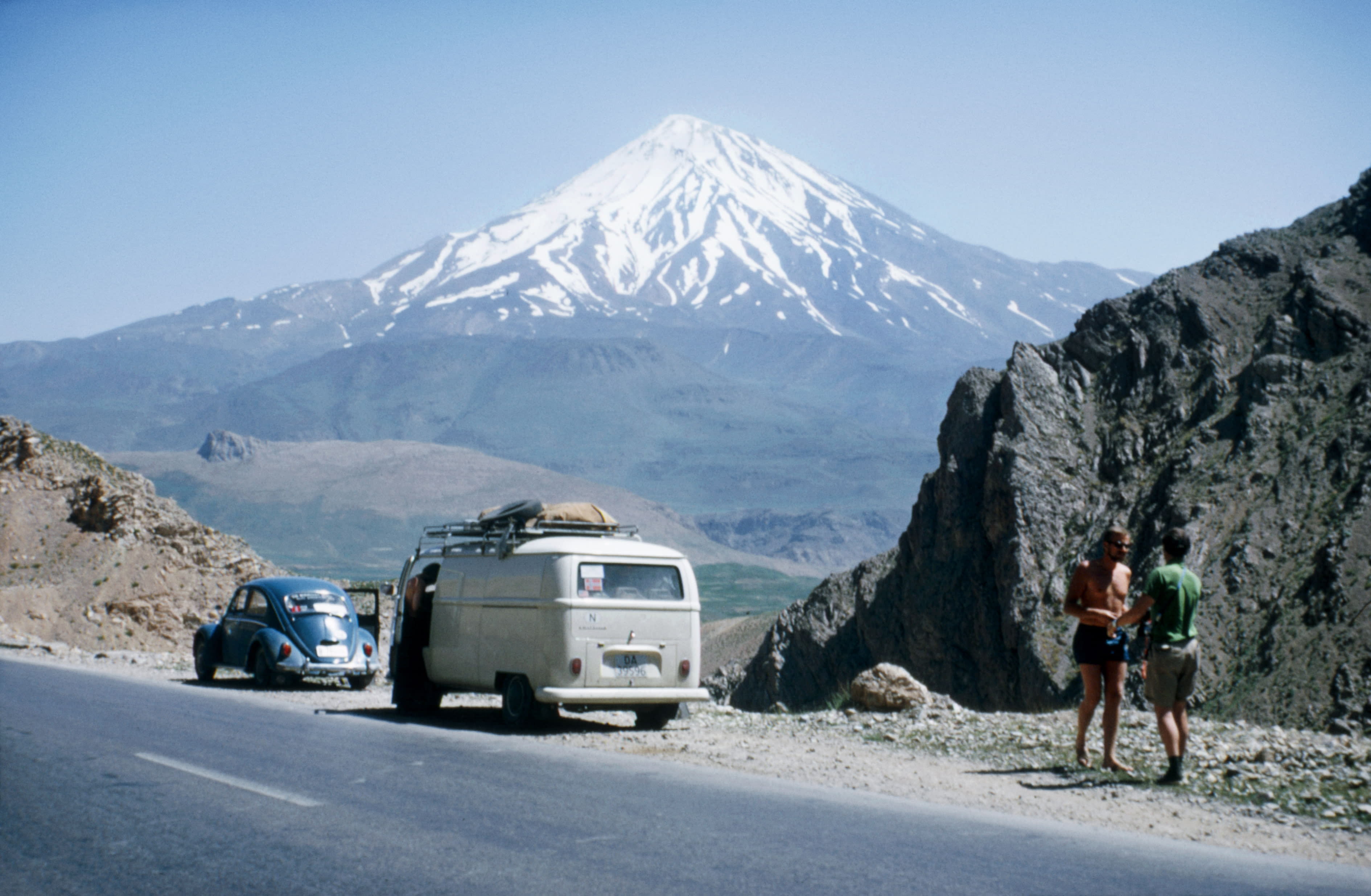
It’s 10,000 kilometers from Oslo to Kabul.
“Ove had a car, a VW Beetle, but we needed one more car,” says Boehlke. So he went to see the Volkswagen importer.
“I explained what it was about. And after a while, he got interested and said we could have a VW Transporter on long- term financing. He said, ‘You pay an installment, borrow the van for the trip, and return it when you get back – and then get your money back,’” says Boehlke.
They had to be creative when it came to dealing with the altitude.
“We couldn’t climb with oxygen because we couldn’t afford it. But we got some smoke diving masks from a fire station, and got a company to modify them with regulators. All in all, we had three bottles of oxygen in reserve,” he said.
They packed a ton of equipment and five men into the two vehicles.
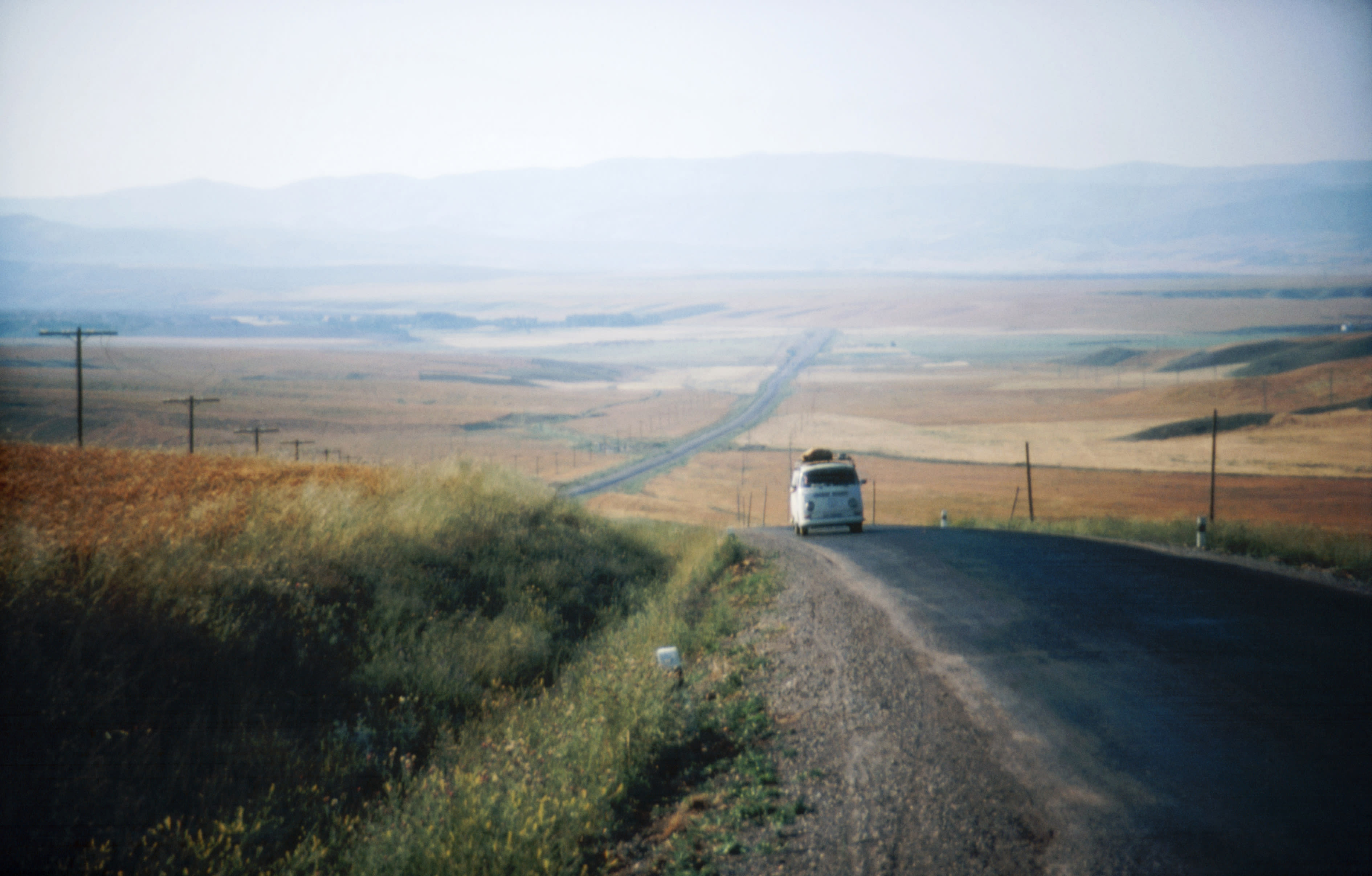
While crossing Europe they stayed with friends and acquaintances. In Copenhagen, they picked up a Japanese man who rode with them to Belgrade and then rode back on a lady’s bike he had borrowed from Eliassen.
Starting in Turkey, they slept out under the stars.
“There was no end to the accidents. From the time we left Austria until we got to Teheran there were a lot. You’d come driving out of a bend and a car would be coming towards you in the same lane. You got so used to such things, almost as if you were brainwashed,” says Boehlke.
But he recalled the long drive as not all that bad.
“We were all in good shape. And, regardless, we couldn’t afford to fly, and Afghanistan doesn’t have any ports. The only thing we noticed was that the farther east we went, the worse our stomachs got,” he says.
And the whole way, they followed their world map.
“You can’t go wrong,” Boehlke says.
The ambassador in Ankara gave them one piece of advice: “If something happens, don’t stop, run like hell.” In the Kurdish area near the Iranian border, and a little boy ran in front of the Beetle and was thrown up into the air. He got back on his feet and kept running. But the Norwegians saw people reacting. They floored it and headed for the border, while men on horseback were chasing them. For Skjerven, as a doctor, it was tough to leave the little boy. “I remember that we saw a cloud of dust approaching while we were at the customs checkpoint. I’m glad we cleared that quickly,” says Eliassen.
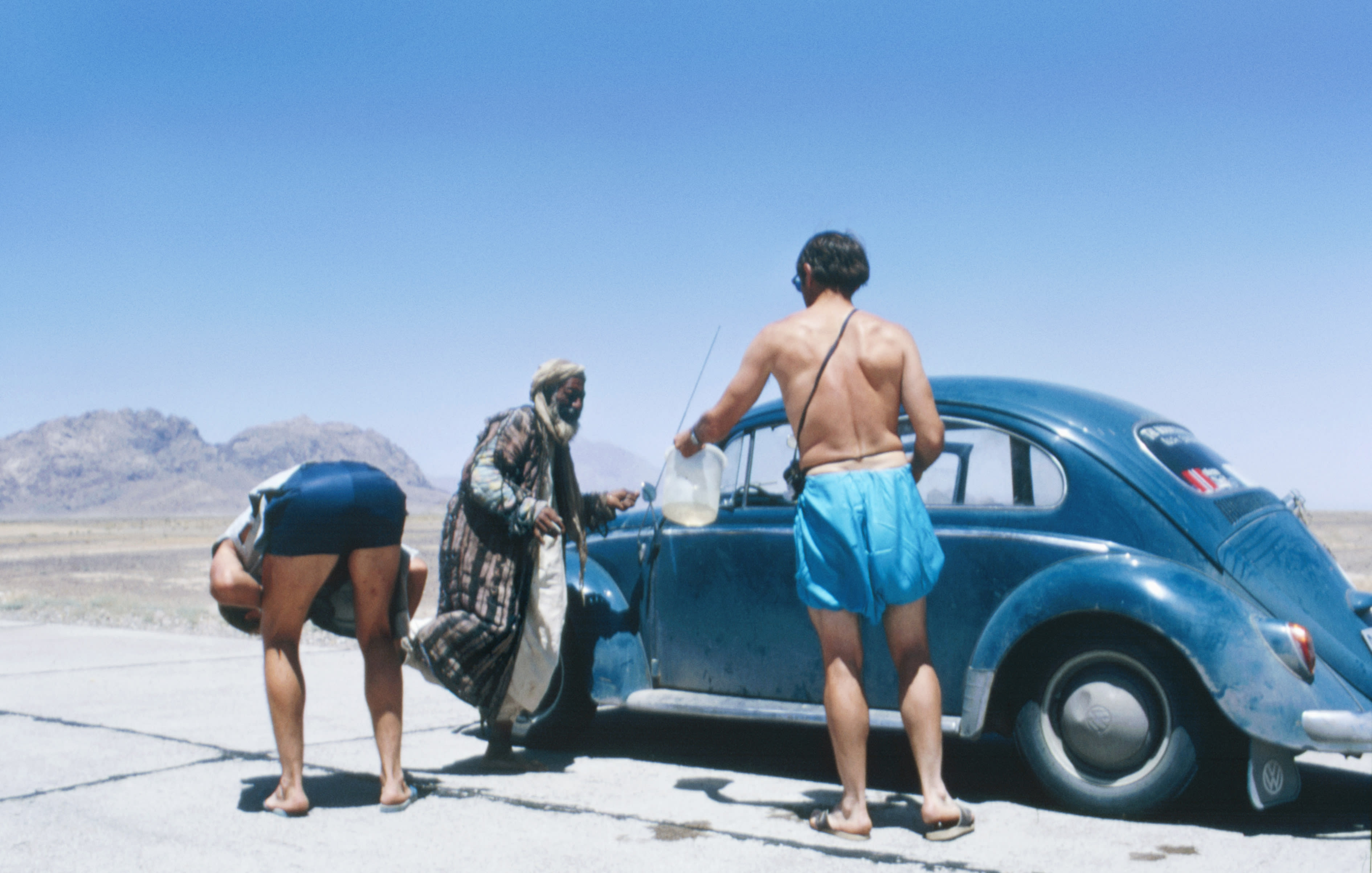
Ove Skjerven writes: “In fine style, we passed Mount Ararat, seeing neither Noah nor an Ark, and crossed the border into the Shah’s Iran. We didn’t get to see much of the Shah or (his Queen) Farah Pahlavi either. On the other hand, there were getting to be an annoying number of camels and donkeys in the road. After over two weeks of driving more than 700 kilometers a day, way out in the middle of the desert, we got to the border of the Promised Land: Afghanistan. We were greeted by 48°C temperatures and a sandstorm, which was really no laughing matter for us winter and cold- loving Norwegians.”
They reached Kabul on July 12. From there, they chartered a Twin Otter plane to fly them to Faizabad, where they rented a Russian-built truck, and followed their world map across rivers to the small village of Qazi. “We pushed more than we drove,” says Boehlke. In Qazi, they hired 25 porters to help them on the three-day march to the base camp at 4,600 meters.
The porters were surly at times, but as long as they got to smoke opium, everything was fine. “They had to have oil to do that, and they ran out. In desperation, they borrowed a little oil from us out of a sardine can and it burned like a house afire,” he recalls.
The Norwegians weren’t interested in trying it themselves.
“But when we spent the night at a hotel in Kandahar, the owner came in with a package of Black Afghan hash. I think Ove tried it, and it made him sick. He walked into the room and fell over,” says Boehlke.

Diagnosis list. The Black Afghan Ailment was not on the list of diseases Skjerven made when he got home. The number in parenthesis says how many expedition members suffered from the ailment.
“Lack of appetite (5), Insomnia (5). Diarrhea (5).
Skjerven wrote: “We alternated between vomit and runny excrement, at times both at the same time when stomach cramps were at their worst. A bright spot for a doctor was thus a rich selection of samples to send home to the bacteriologist at the health institute. Sending that shipment was not that easy since hash is one of the country’s key export. It took a long time to convince the postmaster that the package was full of poop rather than pot.”
There were over 20 diagnoses on the list. Among them: “Hemorrhoids (2). Frostbite (3). Angina (1).
Angina? “It must have been David,” says Boehlke.
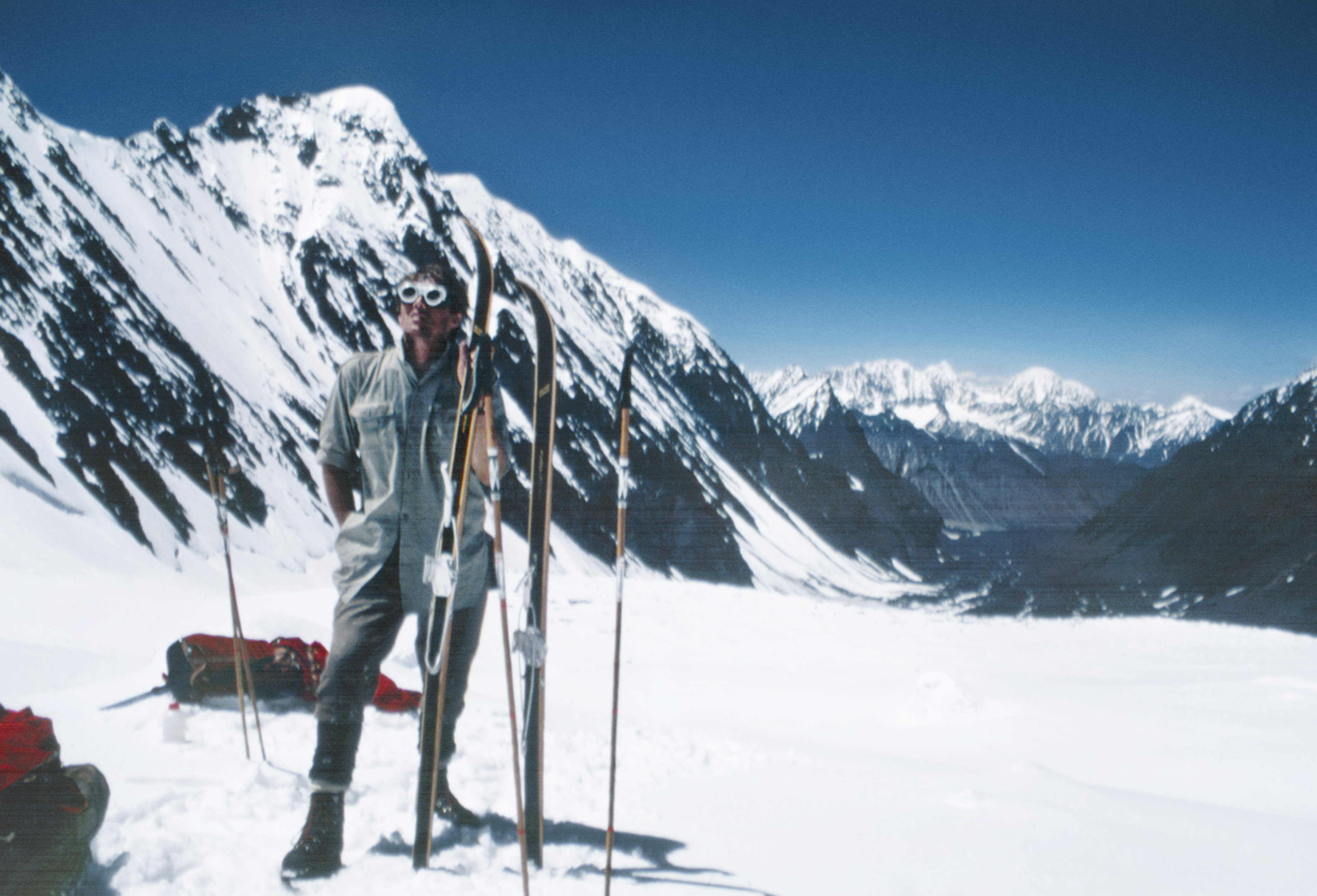
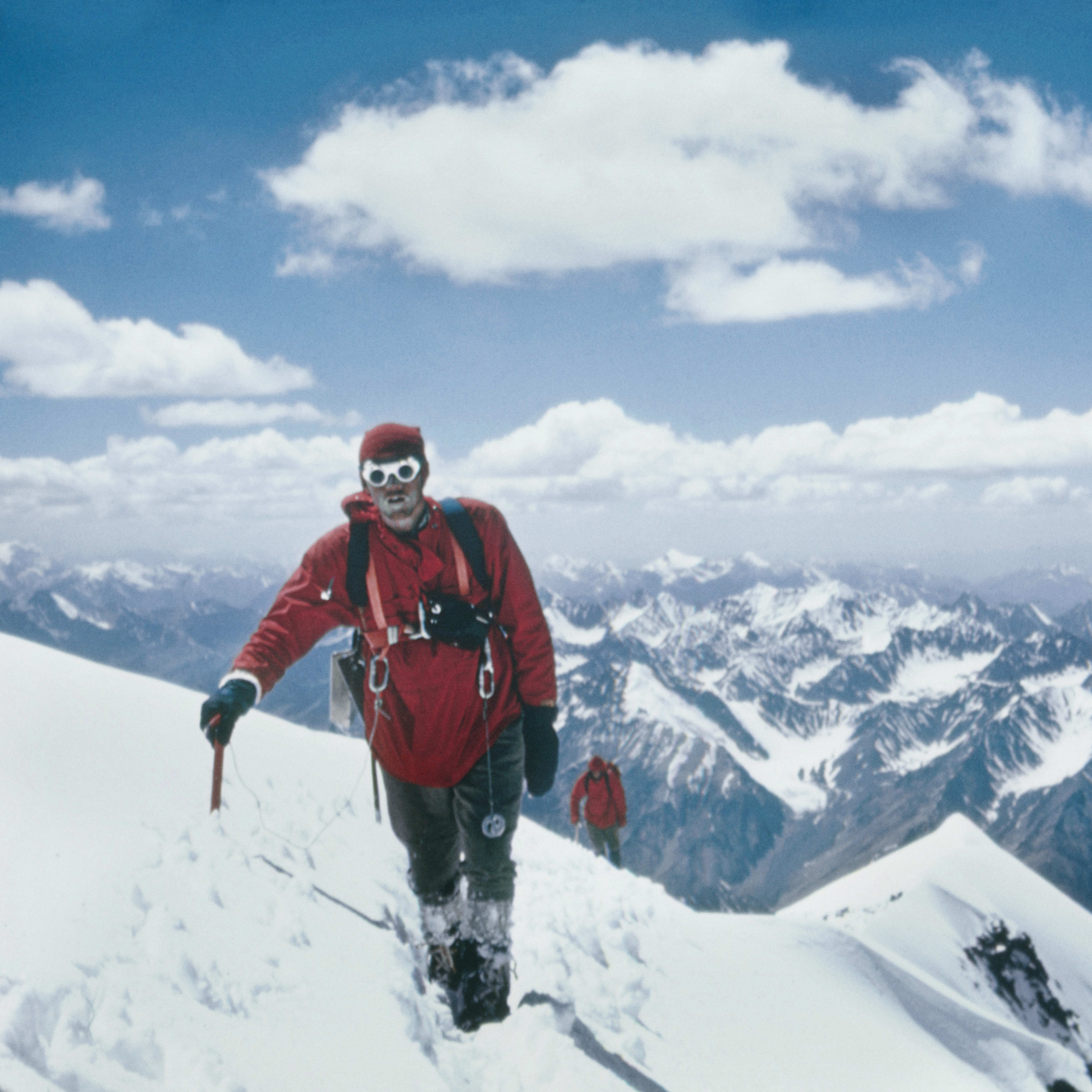
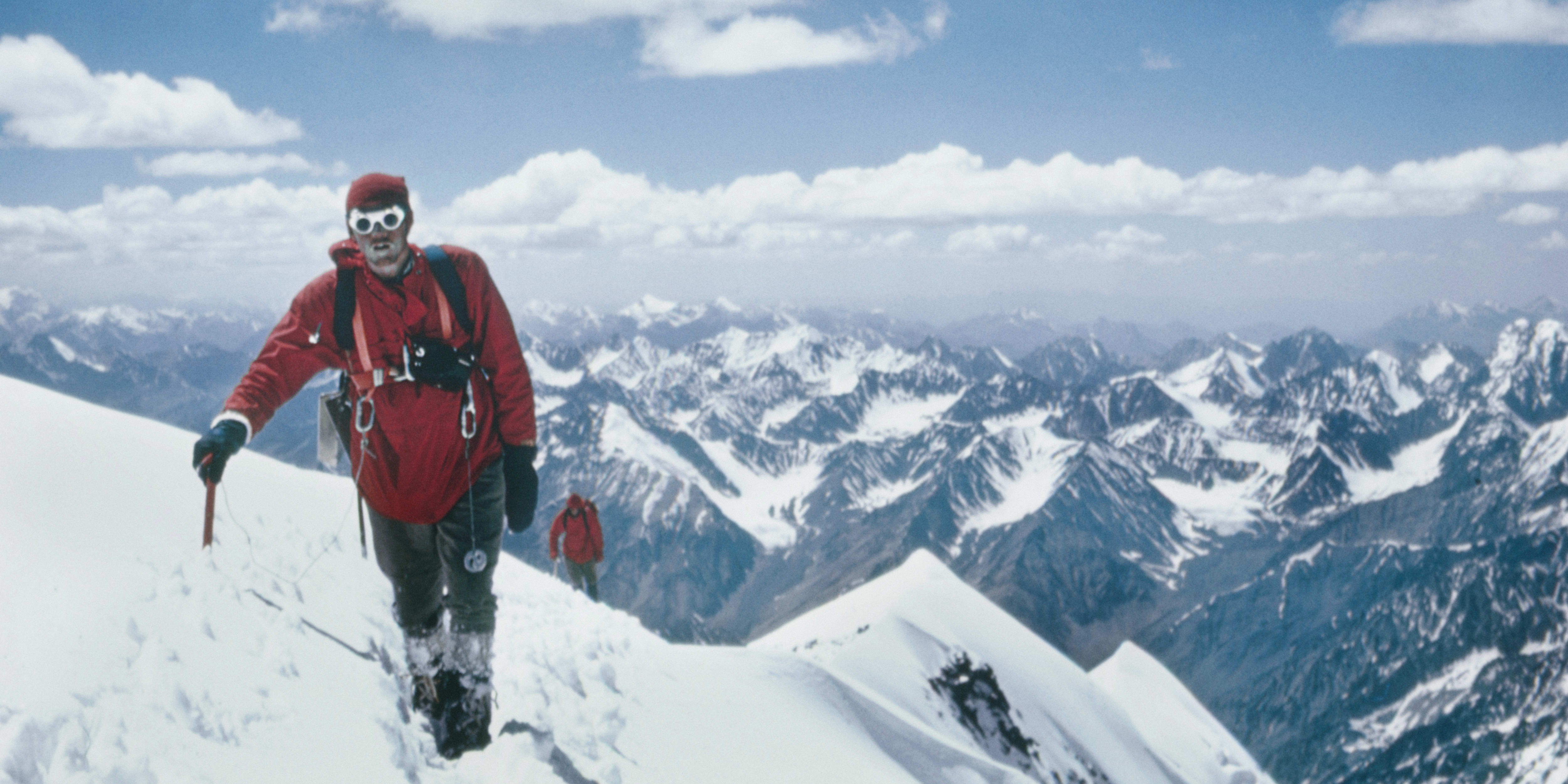
They spent 28 days on the mountain. They went on acclimatization trips, and set up camps at 5,500, 6,300 and 7,000 meters. Skjerven and Eliassen started for the summit during the night of August 8. They defied the wind, cold and their discovery of the bodies of three Bulgarians who had frozen to death the year before, and made it to the western peak of Noshaq, a hundred meters below the main summit.
Three days later, it was Boehlke, Gran and Isles’ turn.
“It was freezing cold. Minus 35°C and strong winds. We tried to hide as much as we could in the hoods of our anoraks,” says Boehlke.

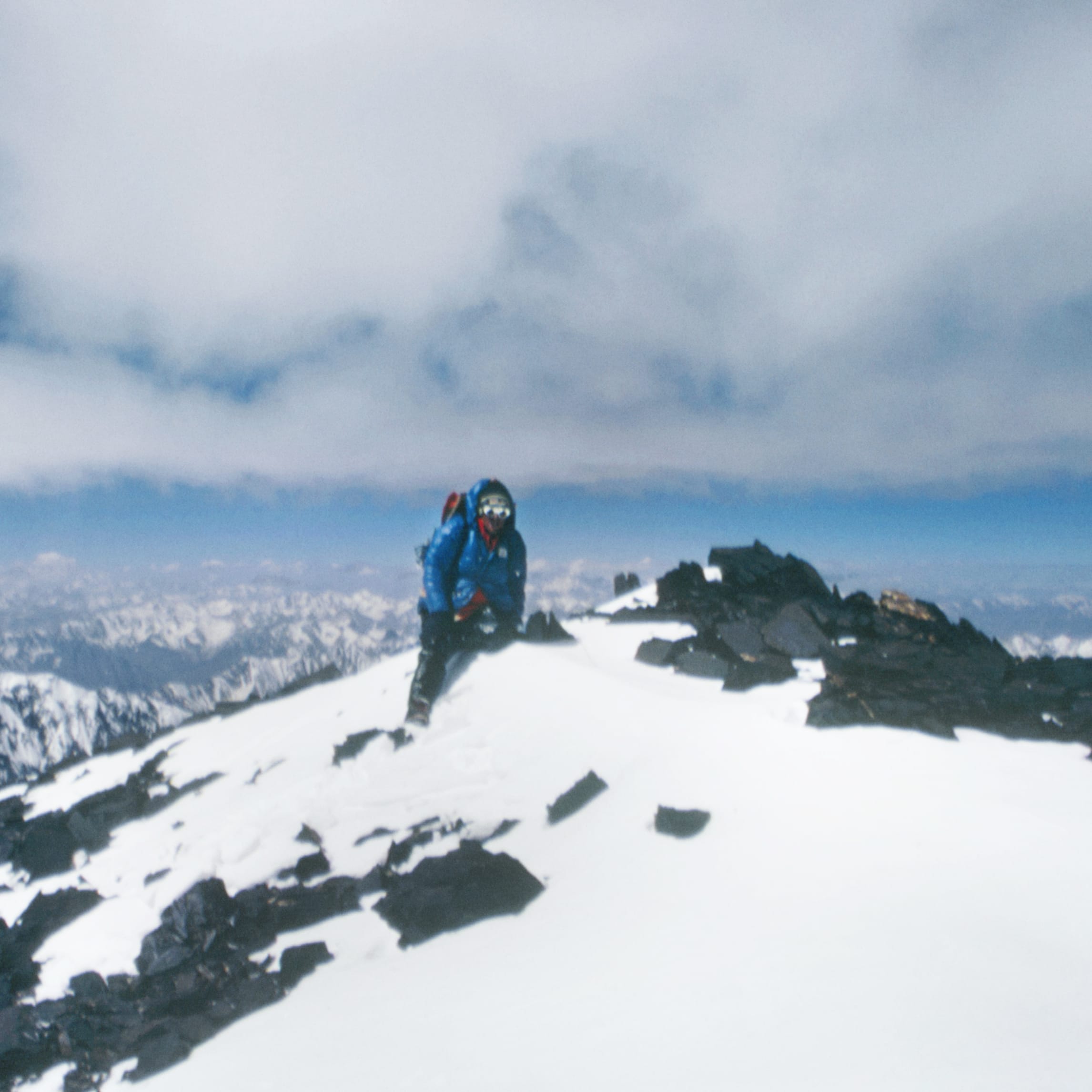
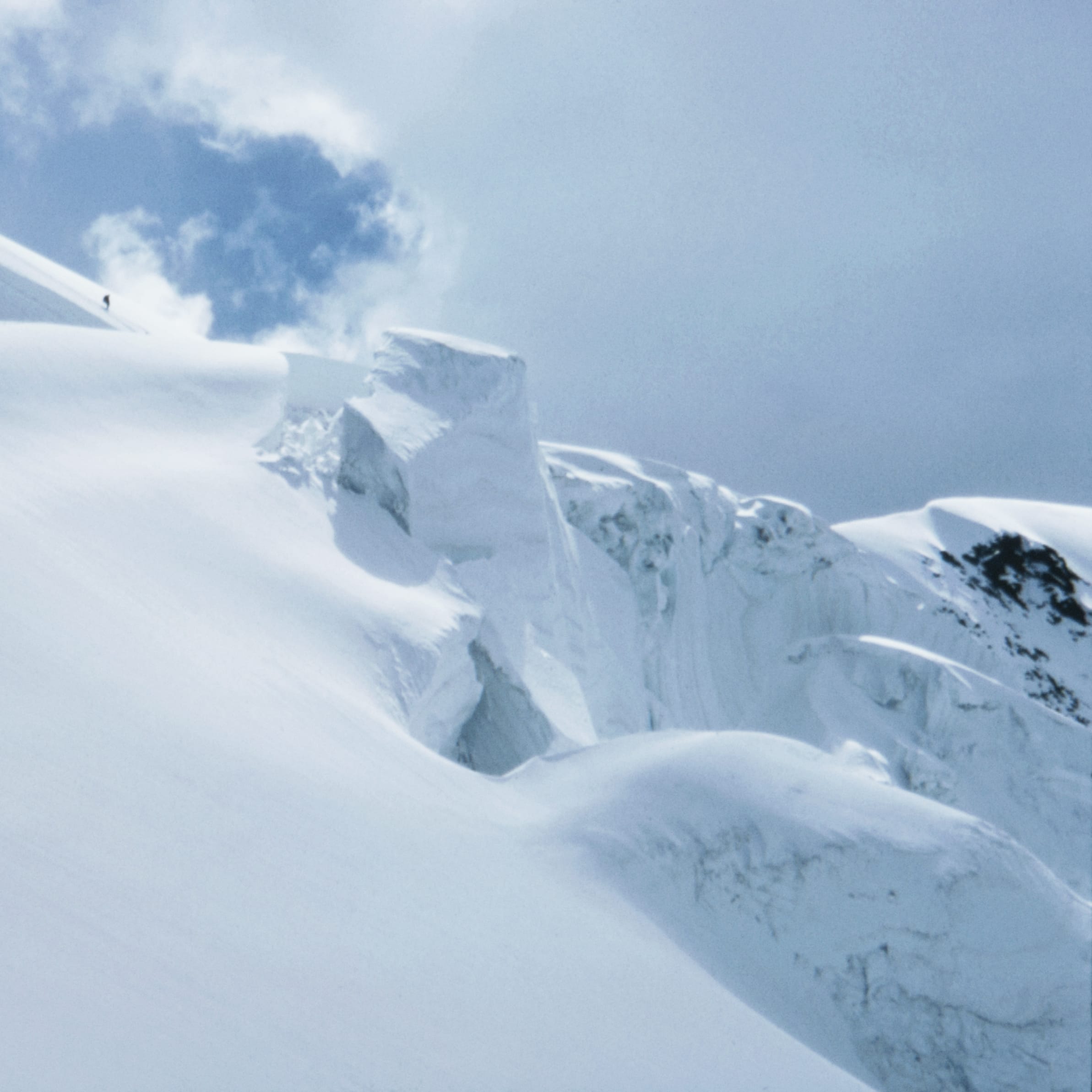

The route followed a long, gentle slope up to a steeper traverse over to the north face, where there was some scrambling.
“There was even more wind on the north face. It was so windy that the snow didn’t settle. So it was relatively flat but we didn’t know where the main summit was. You keep seeing new peaks, one hump after another. At that altitude, every step was the pits. I don’t know how many hours we spend crossing it, but finally we made it to the top,” he says.
Just Gran and Boehlke made the climb. On the way down, they saw Isles on the western peak. He had gotten pneumonia during acclimatization.
“He was helping himself to one of my sardine cans, and thought it was sun tan oil. We escorted him down, and we just made it to Camp 3 before dark,” says Boehlke. They gave him oxygen with their homemade equipment. Isles also had pulmonary edema and impaired vision. They got him farther down, and thawed his leg, only to see that he also had gangrene.
“We alternated between vomit and runny excrement, at times both at the same time when stomach cramps were at their worst."

They borrowed a pack frame designed for carrying people from an Italian expedition on the mountain at the same time. It was led by Reinhold Messner.
“I had David (Isles) on my back, and it was a 70- kilogram load. Then I slipped on an icy rock in a small creek, and ended up in a small pond with David on top of me. I lay under water until Ove pulled him off. We walked until we got warm, but David just had to sit there in the frame in his wet down jacket,” says Eliassen. They took turns carrying David for two days, until they met a man who could rent them a mule. Isles was flown home, where he ended up having three toes amputated.
Those were not the only things lost on the three. Diarrhea resulted in a collective weight loss of 40 kilograms. Gran had the record, with 13 kilos lost in 33 days of non-stop diarrhea. Eliassen was admitted to the epidemic unit of Oslo’s Ullevål hospital for three days after his return home.
The VW Transporter was also lighter.
“On the border to Iran, we had to leave many kilograms of equipment. We had to turn over jerry cans and climbing gear before we could head home,” says Eliassen.
The Skjerven brothers each followed in their father’s footsteps in their own way. Håvard Skjerven became a doctor, and Per Ludvig Skjerven climbed the great wall Trango in Pakistan. In the collection of articles they got after their father’s demise is an article by Boehlke.
He writes: “Despite David’s illness toward the end, it was a great trip, with a good mood and a lot of fun. To anyone who doubts that climbing at 7,000 meters can be fun: Try it yourself.”
