Text: Helena Shill Werner
Photos: Philip Lundman, Helena Shill Werner
Published: Feb 6, 2026
Exploring remote trails by bike is a wonderful experience - it´s only you, your bike, the sky and massive mountains surrounding you. On two wheels you can travel far in a short time, and being far away from help requires skills and preparation for self-help. In this article I will share my best tips on how to stay safe on a remote trail!
Werner
If you or someone in your group injures themselves far away from help or if you get lost in the mountains, the situation can quickly change from amazing to life threatening. Being prepared for the worst every time you go out is not always the best option, as the worst thing can be several different things and it might create unnecessary fear and deprive you of some of the amazing experience. And not being prepared at all can work very well…. until the day it does not! Therefore, hoping for the best, knowing about the worst and preparing for the most likely thing to happen is usually the best option.
Check your gear.
Is your bike in good condition, does something need to be fixed?
Ending up in the middle of nowhere with a broken bike is no fun. Make sure that your bike is up for the ride and bring some tools so that you can fix minor issues. Also check that the rest of your gear is in good condition, because you don´t want to realize that your knee pads, helmet or back protector is unusable or missing whilst unpacking when you are the start of the trail.
This is what I bring:
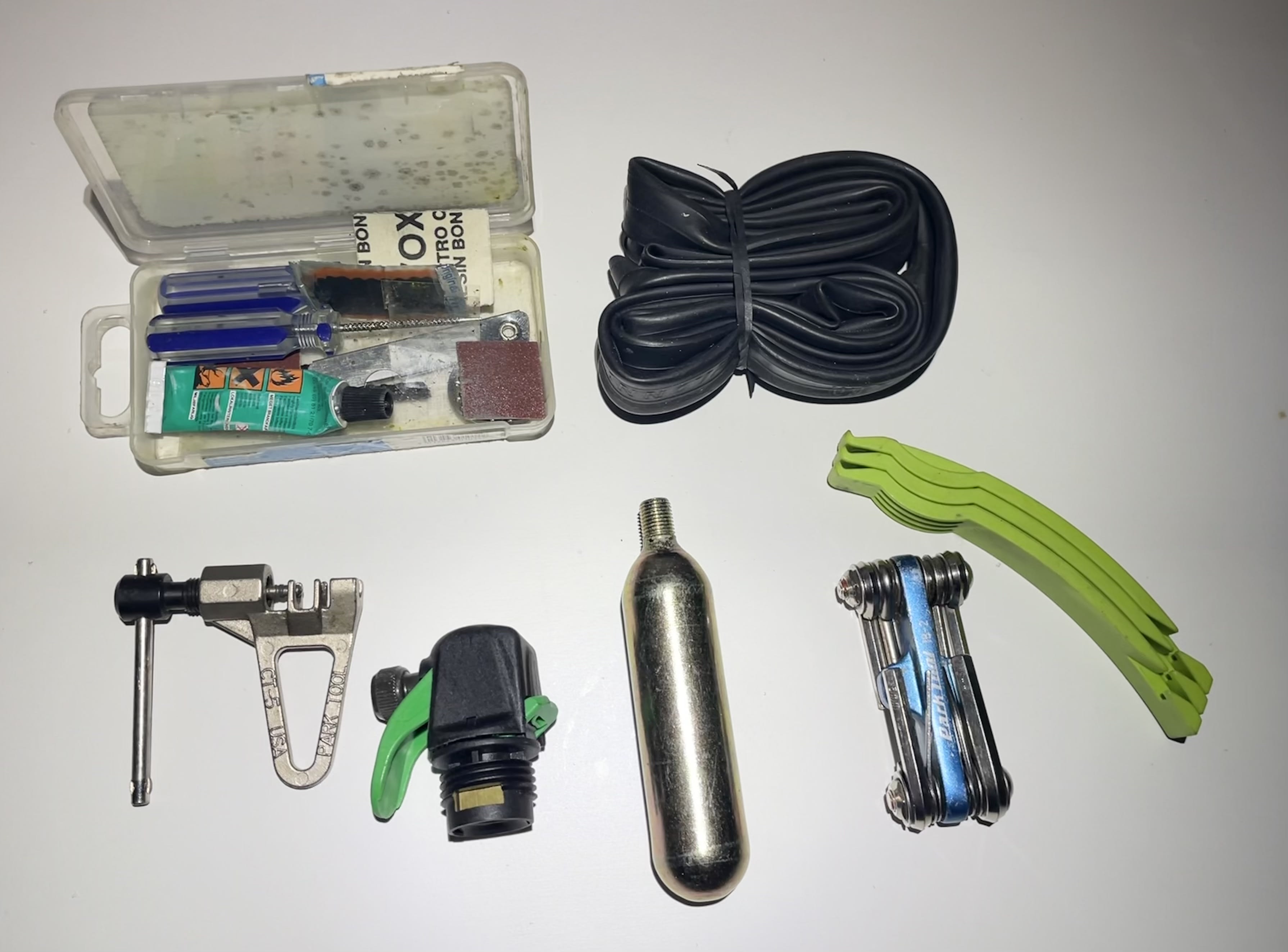
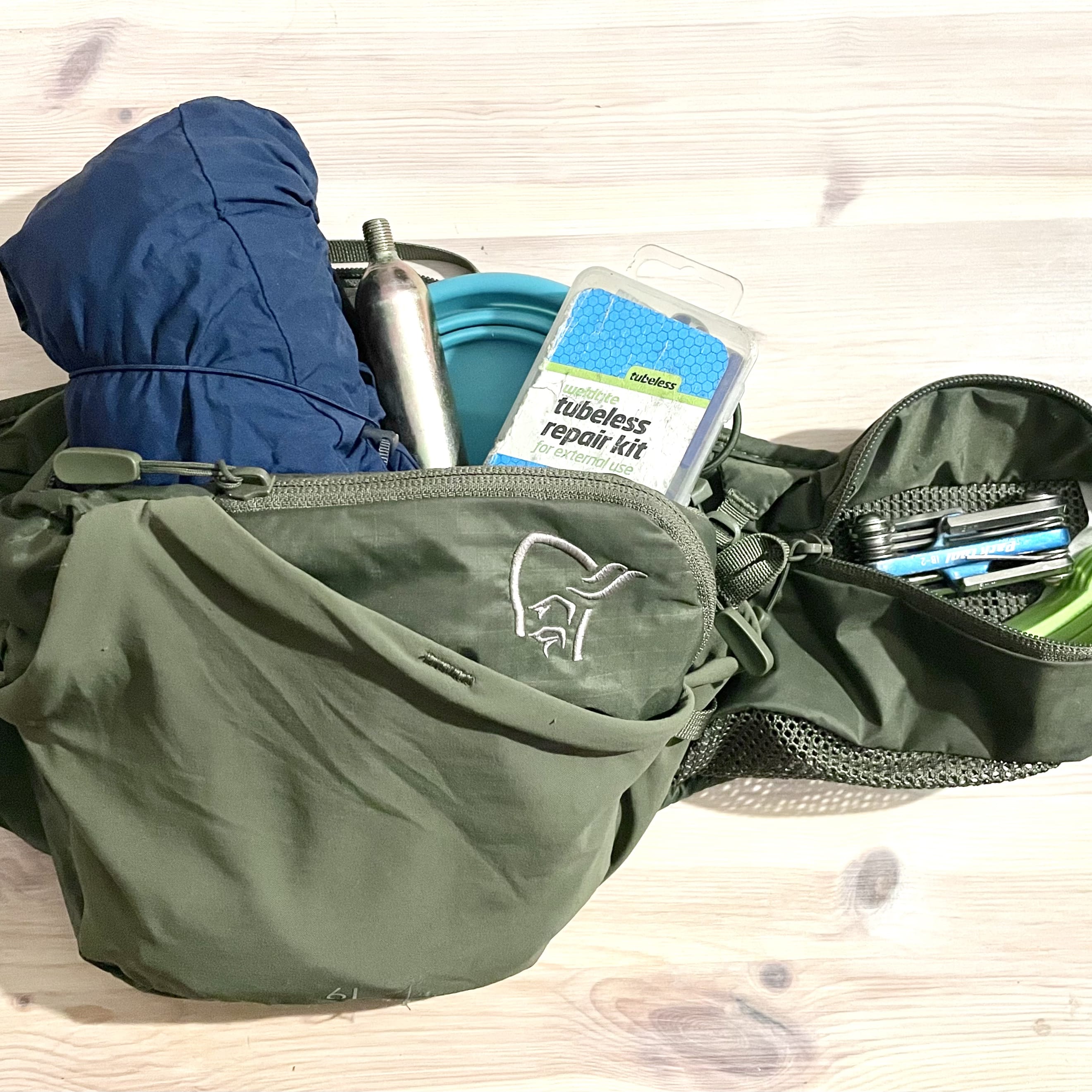
Multi tool, chain splitter, inner tube, tubeless repair kit, air canister and tire levers.
Check yourself.
Like your bike, you need to be in good condition too.
Ask yourself these questions before the ride; Am I fit enough, skilled enough? Do I know how to take care of an injurie, do I know how to navigate? Am I prepared for this?
Our strength and wellness can be very different from day to day. Every trail does not require 100% all of the time, but some trails really do. If you want to do a big ride then give yourself the best chance of succeeding and do a self-scan before your ride. I do this a lot and therefore I sometimes change my route or ride because of it. One of my biggest flaws is navigation, I get lost very easily so this is something I need to take into consideration. If I am on my own, I try to ride trails close to home to stay safe, and when I ride with others who are good at navigation it I try to participate and learn from them.
Good things to do before you leave.
- Check the weather forecast and make sure to check the mountain forecast and a couple days ahead, as upcoming weather can come in earlier. I once got stuck in a tent on the top of a mountain in a thunderstorm that came in one day earlier.
- Always let someone know where you are going and when they should expect to hear from you that you are back! If you get lost or injured and without the possibility to contact anyone this information narrows down the initial search area. If I am out longer than planned or if my phone is low on battery, I send a pin-drop with latest location on the map to someone I know. When I got stuck in the thunderstorm my phone was out of signal, but I had told my husband where I was and he also knew that I could navigate in that area, had good gear and that I had the skills to take care of myself and make heathy decisions.
- If you are riding in a new area or country, make sure to learn or write down the emergency number. If you are within an area that has its own mountain rescue or emergency unit make sure to know their number. Some areas have their own safety guidelines that you should read and learn! If you are abroad also check your insurance so that you don´t end up with a massive bill.
Good things to bring!
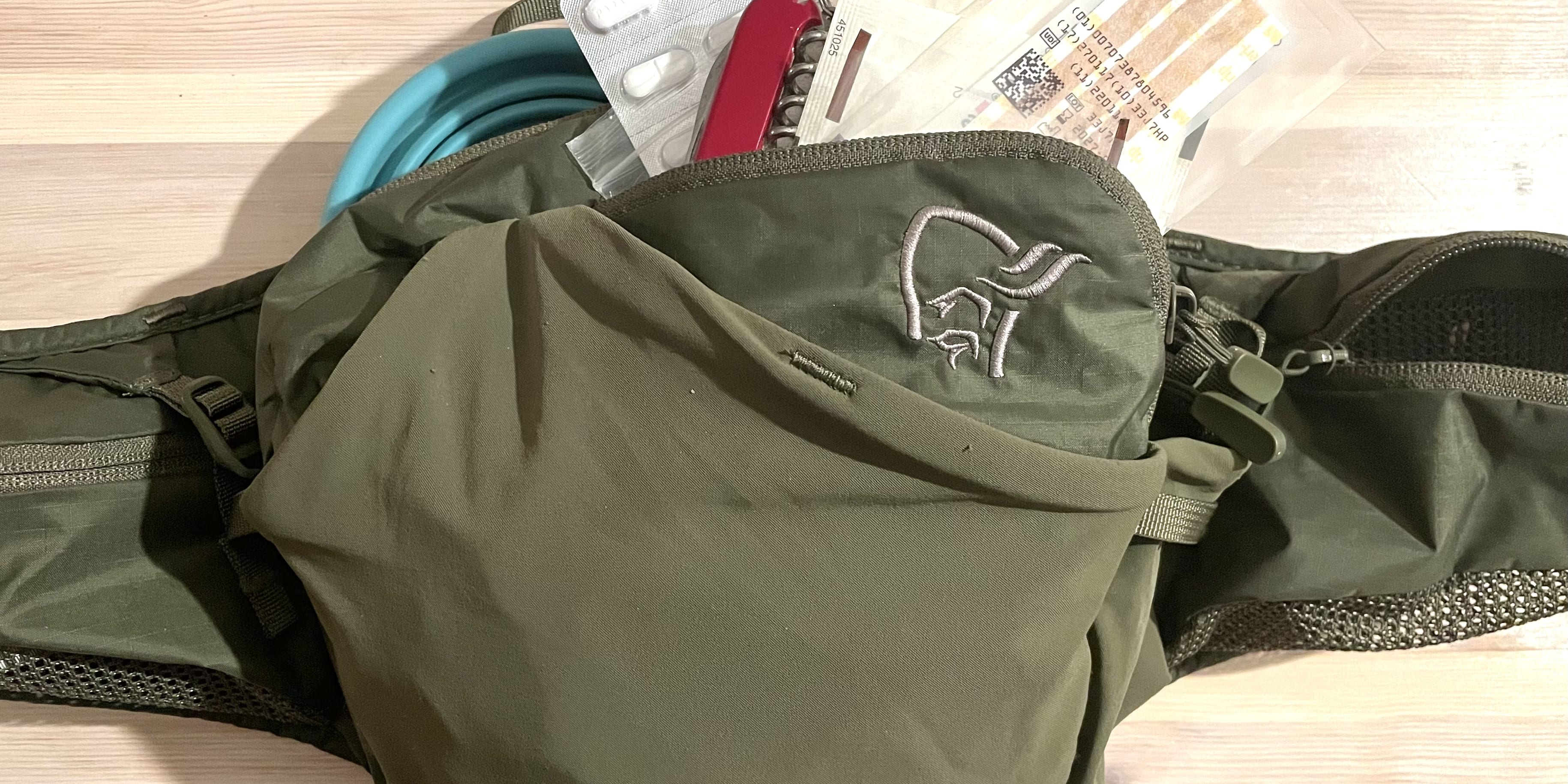
I like to carry as light as possible so for a day out I´m usually fine with the 6 L Norrona hip pack. I mostly ride with my husband so we divide supplies between us. Here are some things I bring for safety and why;
- Extra snacks and dextrose. If something happens that slows us down I will need more energy. Power bars and dextrose are easy uppers that keep me going when I am tired.
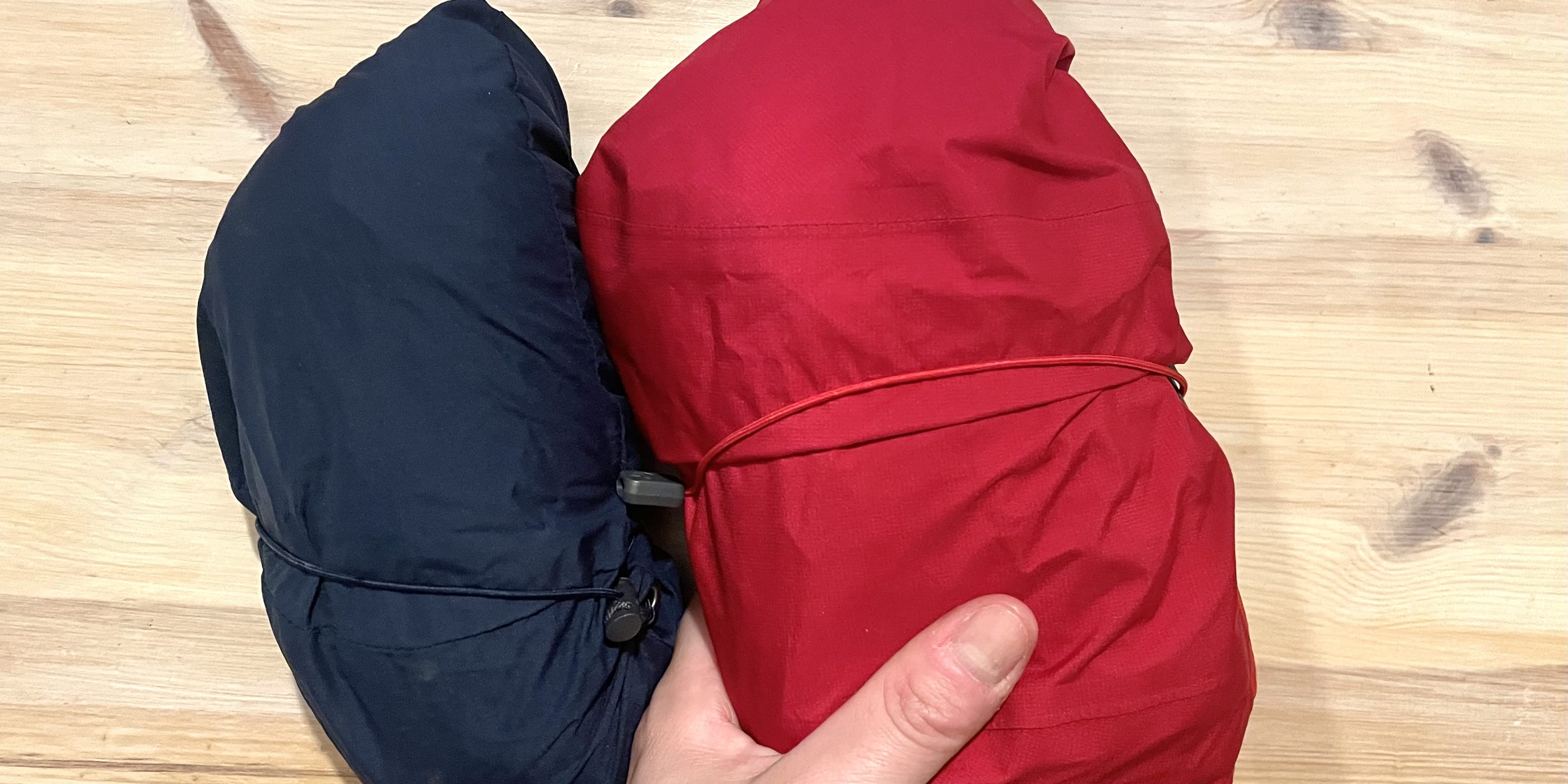
- Extra layers and protective gear. Exposure to cold and rain are one of the biggest dangers when you´re are out on the mountain. I usually bring a wind or waterproof jacket or an extra base layer, because weather can change quickly. I bring the Falketind aero 60 wind jacket and it packs really small and is superlight. If it is a colder day I bring the waterproof Falketind paclite jacket, very durable and lightweight. A very good protector from the weather is Norrona wind sack and it comes in two different sizes. A cheaper and disposable option is an foil blanket.
- Emergency medical care material.
- Pocket knife. You never know when you will need it.
- Portable charger. If you get stuck somewhere or the ride takes longer I want to be able to charge my phone if I need to call for help.
- Allen keys. Don´t go on a bike ride without it.
Emergency bag and paramedics:
I take emergency care and safety very seriously and I think everyone should! I don´t want to go out on a remote trail with someone who is unable to take care of me or themselves if something happens. Therefore, I make sure to keep my medical supplies and my paramedic skills up to date. Good things to know is how to stop bleedings, call for help, protect yourself from bad weather, how to perform CPR and how to stabilize a fracture.
I always bring plasters, sterile compress, steri-stripes, band aid, medical tape, a jacket and paracetamol. A band aid can be used in many ways, for example as a sling, supporting band aid or if you tie a loop on the end it can be used as a tourniquet.
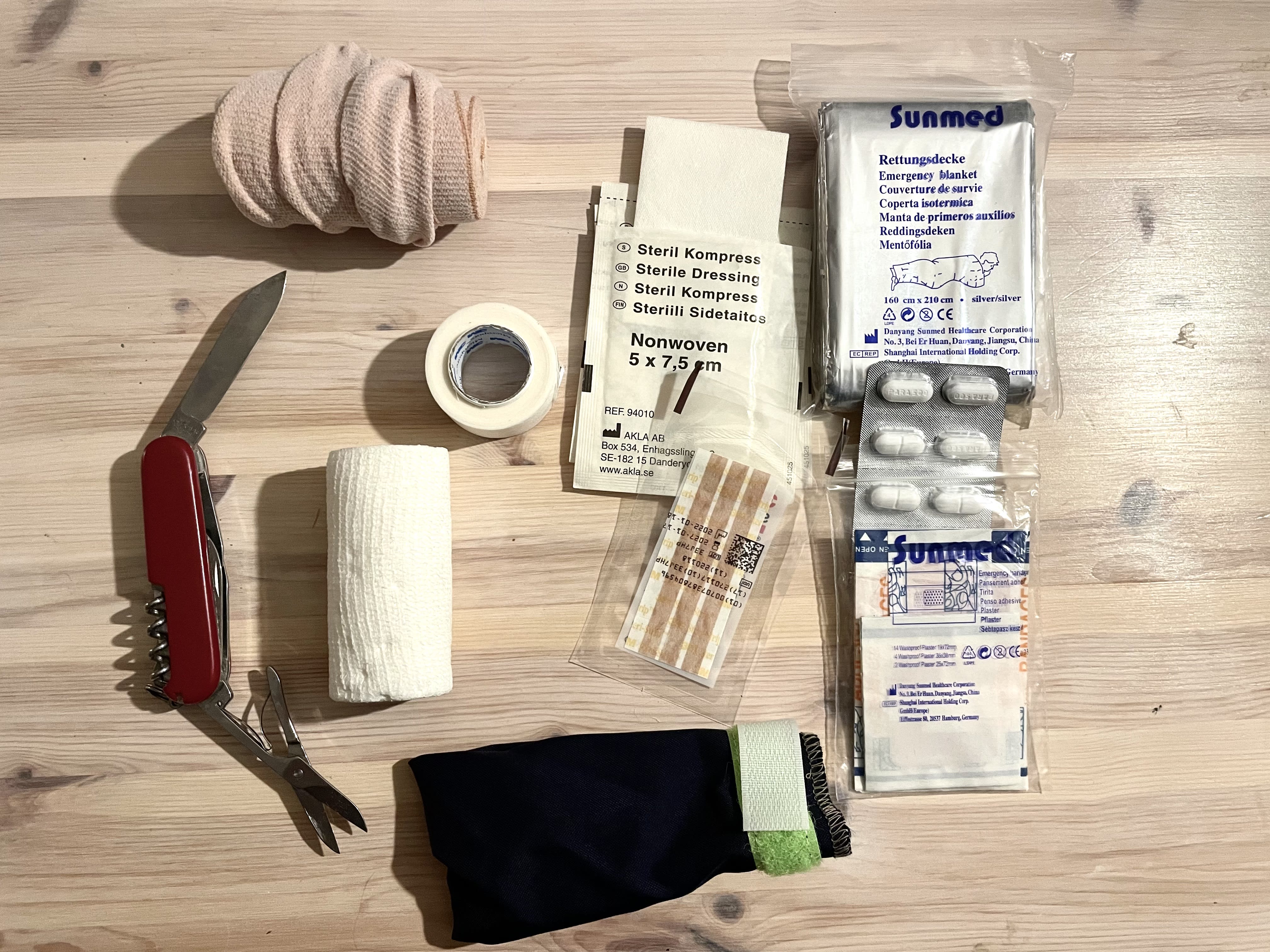
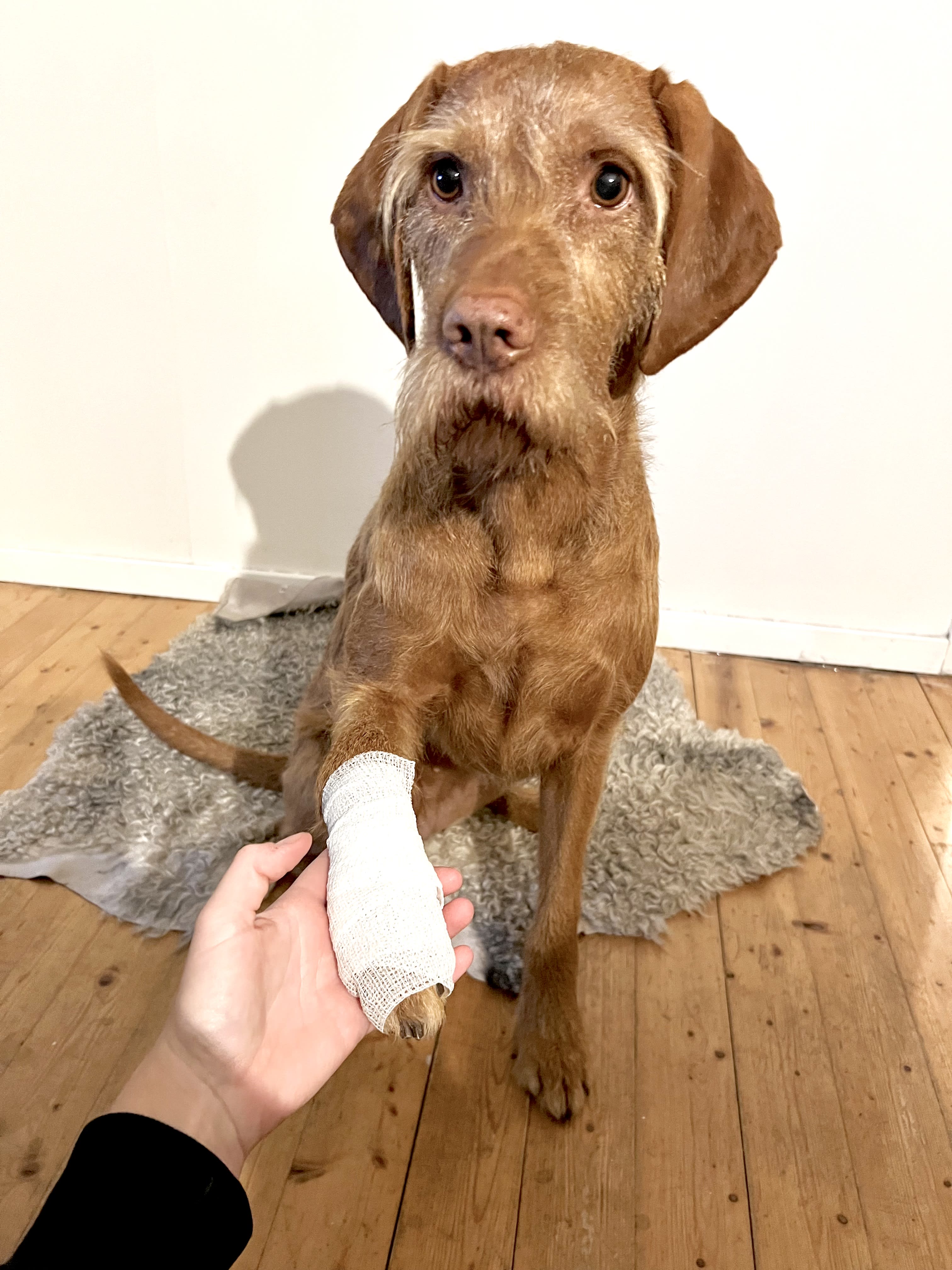
I also bring a band aid that sticks to itself, works great not only for me but perfect if my dog hurts one of her paws.
Trail dog safety
As I bring my dog with me on the trails, I have a responsibility to keep her safe. I give her extra water and food the day before and I always bring a portable water bowl. She has a harness in which I can lift her in if needed, a band aid and a "dog socks" to protect her paws if she gets injured. The most common injurie for dogs are over heating or that they cut or burn their pads on something sharp or warm on the trail. Bedrocks can get super warm if your dog is a fast runner.
If reading this article scares you or if you are thinking "that´s not going to happen, she is exaggerating" I think you should be mindful of your responsibility towards yourself and your riding buddies and prepare and take charge of the lack of skills or your lack of safety measures. Because better safe than sorry!
Helena