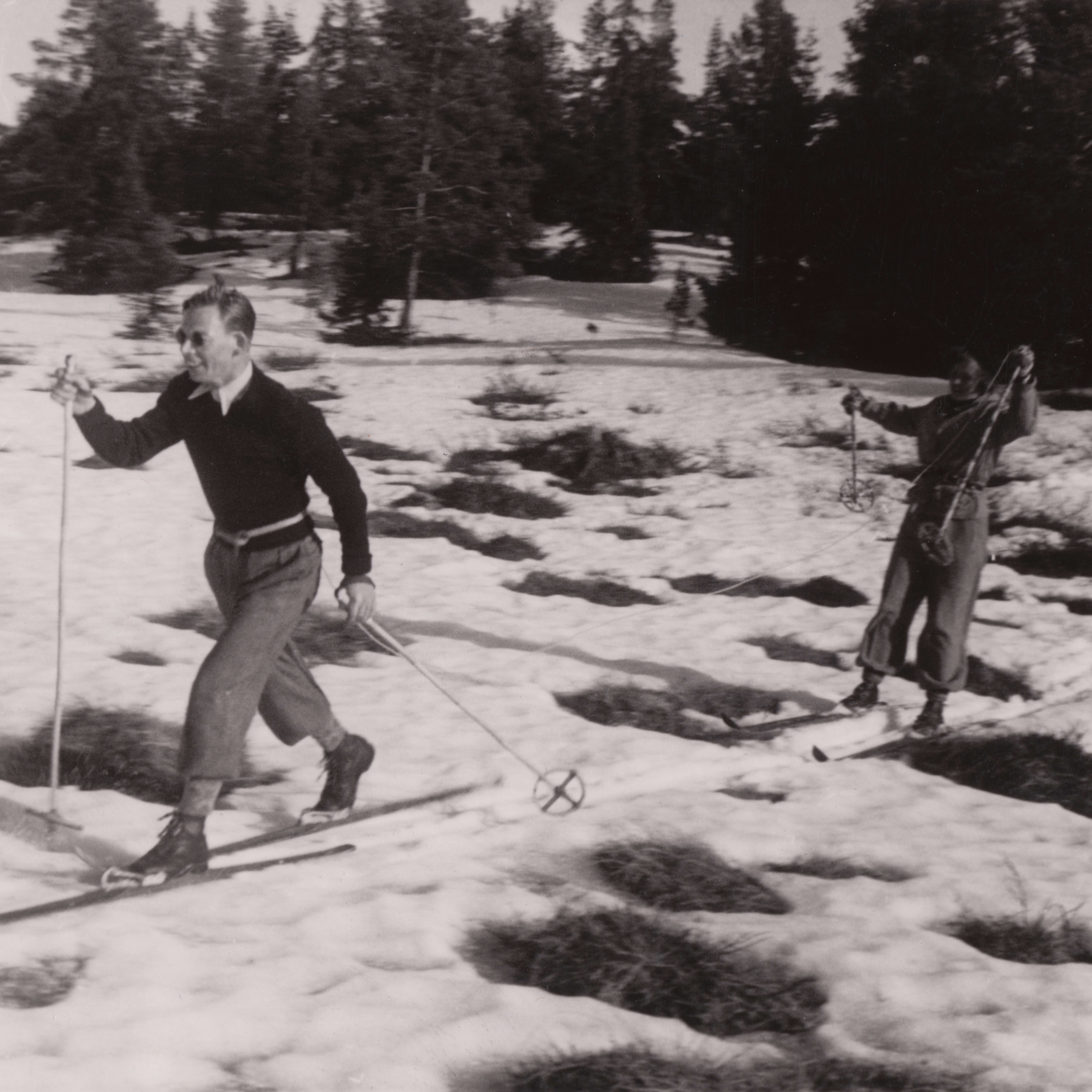
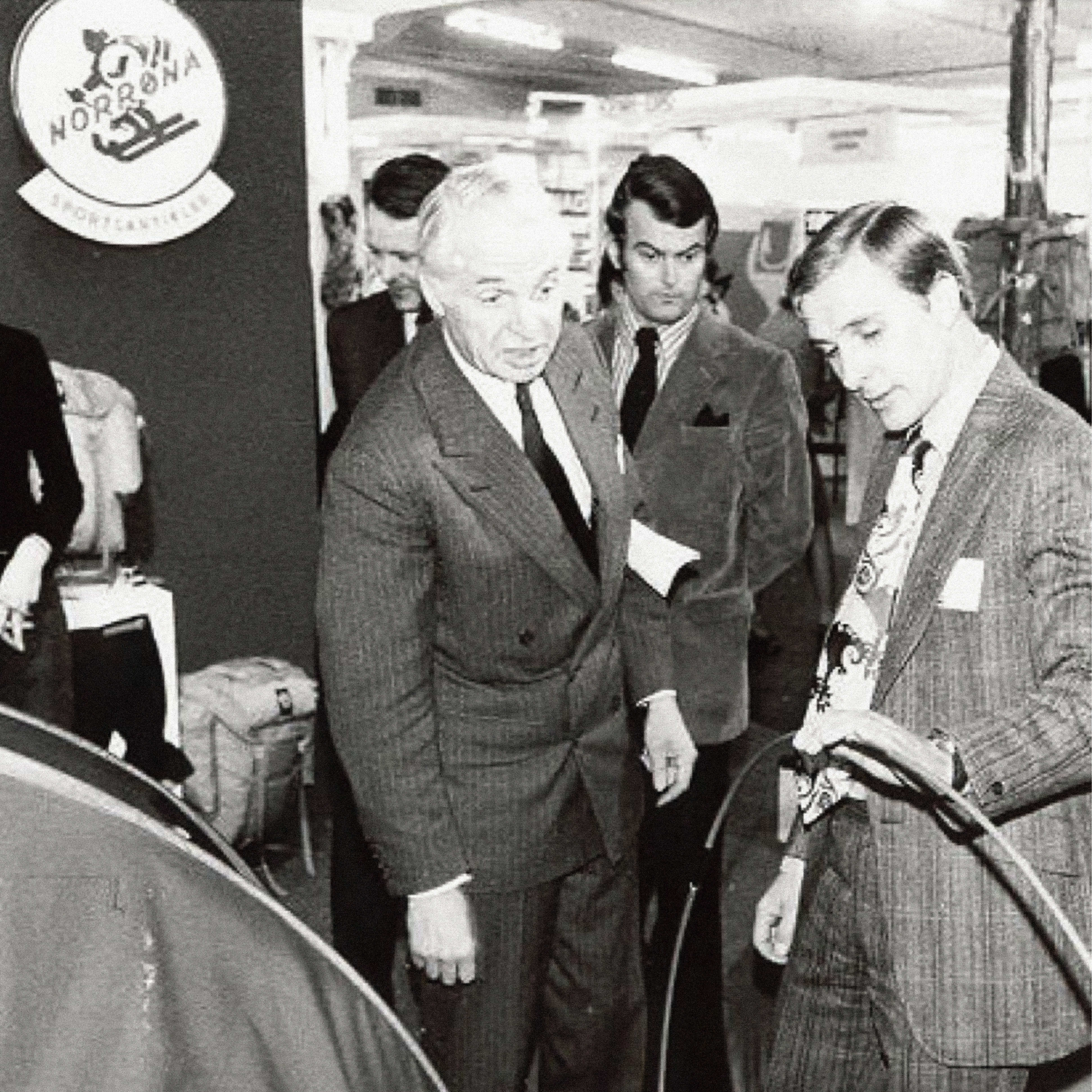
1929Our Founding Father
On April 29, 1929, Jørgen Jørgensen – great-grandfather of the current owner and leader with the same name – founded J.J Norrøna Sporting Goods and Leather Factory. The ambition was to make outdoor products of the highest possible quality for Norway's rugged wilderness and harsh weather conditions.
Jørgen Jørgensen was himself an avid outdoorsman and had started developing durable outdoor equipment several years earlier with other eager Norwegians. In 1929, he felt the time was right to bring his knowledge, experience, and ambitions into his own company – and set a new standard for outdoor gear. In the beginning, he produced leather straps, backpacks made of sailcloth, and reliable cotton garments. At the same time, he set the course that would become Norrøna’s clear direction: a continuous pursuit of new knowledge, new solutions, and new innovation – to always be able to deliver the best outdoor products for use around the globe, in all types of terrain, in all kinds of weather, under all sorts of demanding conditions. Jørgen Jørgensen established his own factory in Asker, just outside Oslo, and branded the products with "J.J. Norøna."
"Norrøna" – derived from the "Norse language" – is the name of the old spoken Norwegian language used during the Middle Ages. Jørgensen chose a logo inspired by the Norwegian rebels, the Birkebeiners, from the mid-1170s – and the famous Birkebeiner motif by Norwegian painter Knut Bergslien, completed in 1869.
With King Sverre Sigurdsson, the Birkebeiners rose to power in Norway in 1184, but did not gain full control of the country until the election of Sverre's grandson, King Håkon Håkonsson, in 1217. Knud Bergslien’s painting shows the Birkebeiners Torstein Skevla and Skjervald Skrukka fleeing from their opponents – known as the "Baglers" – with the young Håkon Håkonsson, the King's son, to the Birkebeiners' capital, Nidaros (now Trondheim), in 1206. Håkon was only two years old on this journey. He later became the King of Norway – from 1217 to 1263.