Published: Feb 25, 2026
Huge mountains, scenic alpine trails and a deep-rooted mountain culture make the Alps one of the most exciting areas in the world to ride your bike.
About two decades ago when I first started travelling to the Alps for mountain biking the trails were raw and so was the
reception from hikers. The spectacular views and ease of access into the alpine were a huge draw, but the ski resorts’ reputation as luxurious yet conservative (and frankly boring) was holding up. Despite that, it was worth going back every year – we found dreamy single track, endless descents and authentic mountain towns. For someone coming from a country where the highest mountain is just shy of 2000 metres, it was a mind-blowing experience to be surrounded by these mountains.
The Alps stretch 12,000 kilometres from France in the west to Slovenia in the east. Eight countries have a share of the
Alps. Strangely enough, the microstate of Monaco is one of them, even though the principality barely has any mountain peaks within its borders. In Switzerland however, around 65 percent of the country's 41,285 square kilometres consist of mountains.

Chamonix, France
Recommended trail:
Col des Posettes to Aiguillette des Posettes and down to Le Tour. Fantastic scenery, good flow and fun riding!
Travel:
Geneva is the closest airport. From there it's about 1.5 hours with a rental car and 2 hours by bus/shuttle. If you want to make a road trip and hit different locations in different countries, I suggest renting a car.
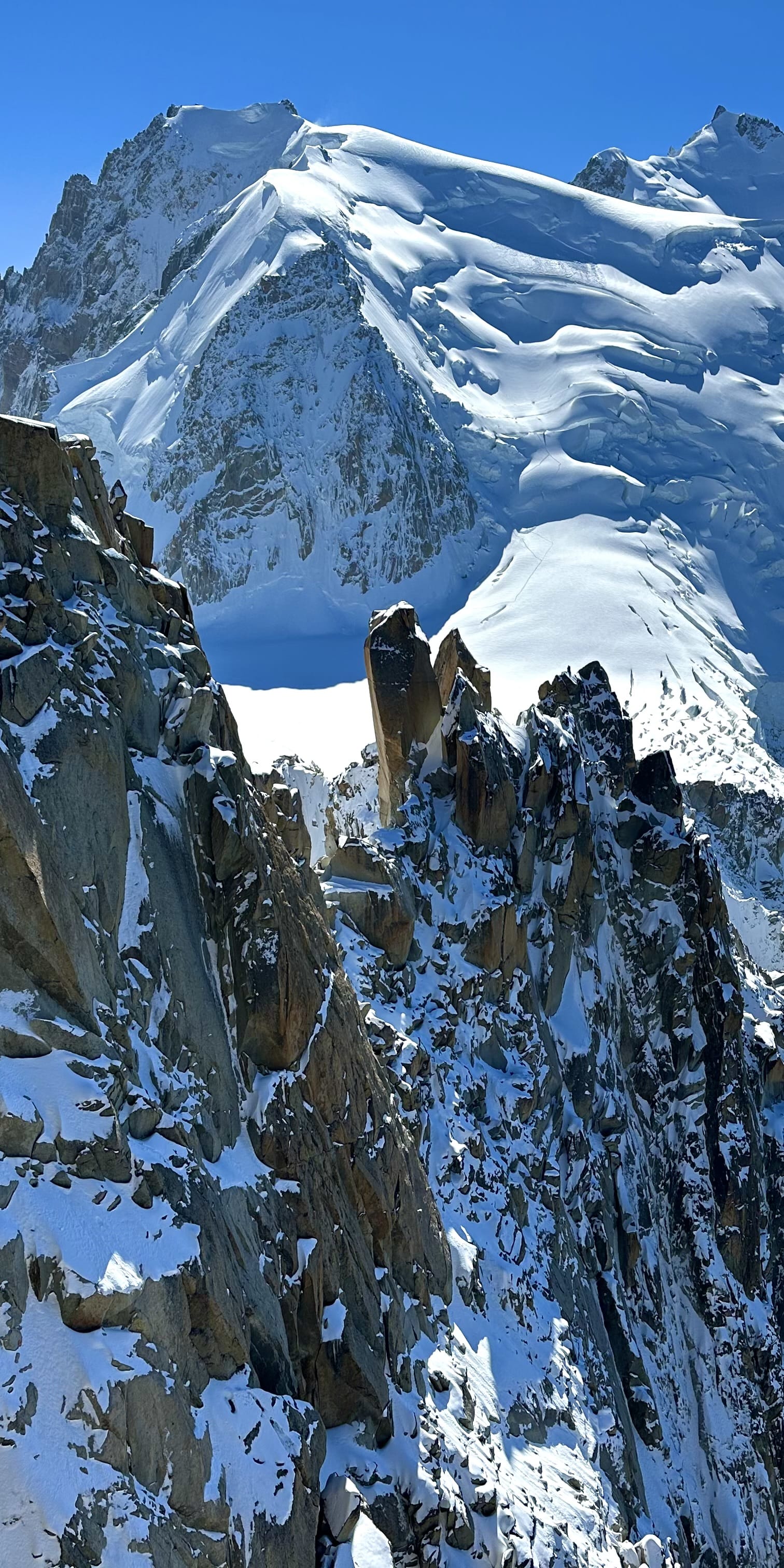
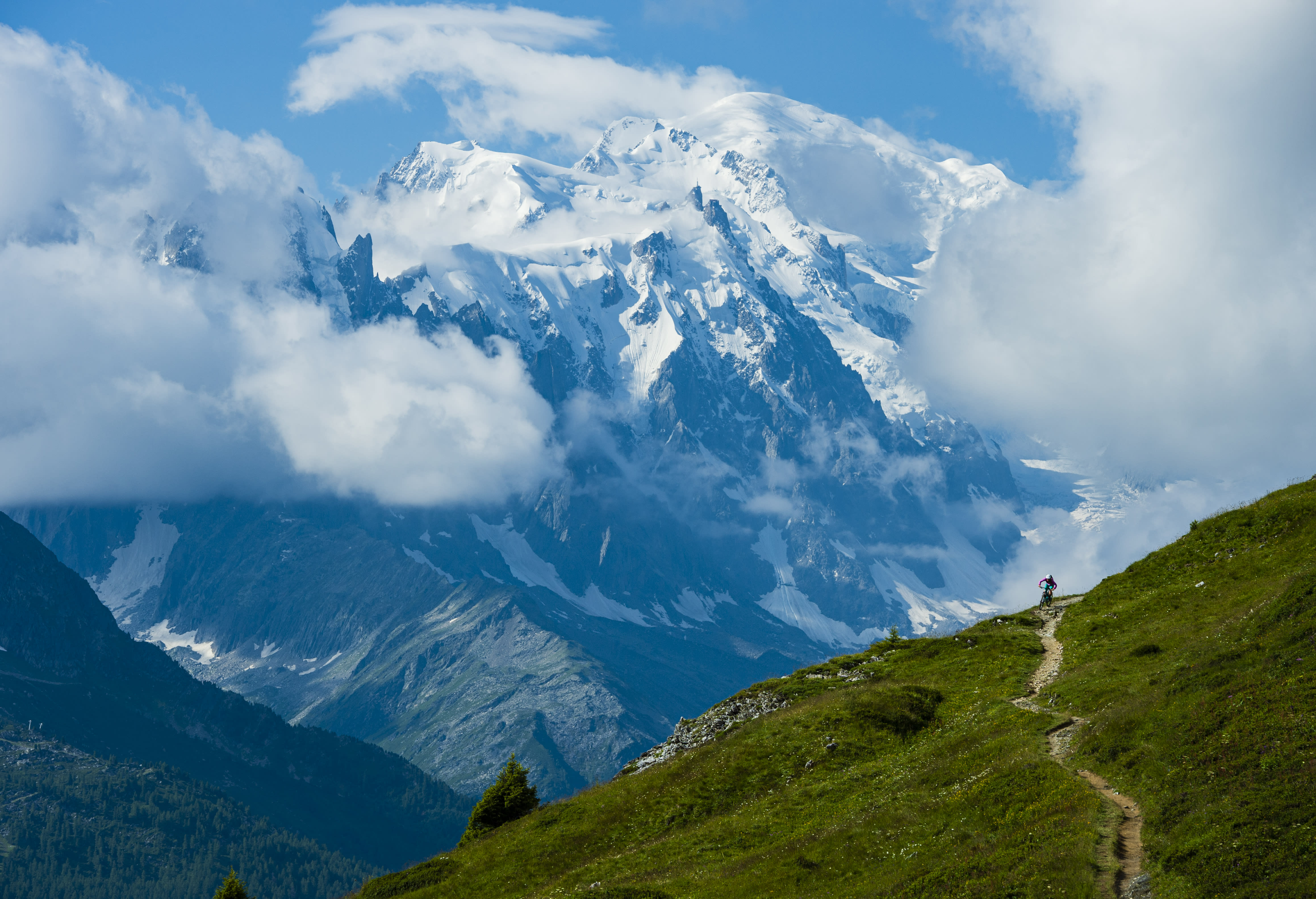
Chamonix represents the Alps in its pure sense. The most impressive mountains surround the capital of alpinism in the Alps; rugged 4000 meter peaks, glaciers,
seracs and of course, Mont Blanc – the highest mountain in the Alps with its 4810 meter peak. Chamonix is a wild and unique place.
Honestly, the mountains around Chamonix are almost too steep for mountain biking. While walking around in the valley and looking up, the mountains feel like high walls.
Le Tour is located at the eastern terminus of the Chamonix valley. Here you find relatively rolling and gentle mountains, but the vistas over the Mont Blanc massif are spectacular. From Le Tour, you can climb up from the valley floor towards Vallorcine, right at the Swiss border. A quicker and simpler way is to take the Charamillon gondola from Le Tour and pedal towards Col des Posettes (1997 m). This gives you several great options; if you keep going over the pass towards Switzerland, it takes you onto the Tour du Mont Blanc route, one of Europe's most famous long-distance routes. Another alternative is to follow the trail from Col des Posettes back towards the Chamonix valley. A fantastic trail on Aiguillette des Posettes eventually spits you out by the parking lot at the lift station in Le Tour.

Verbier, Switzerland
Recommended trails:
From the top of the Ruinette lift, ride east and follow the signs to La Chaux. Eventually you will see a rocky trail below the ridge line that leads you to a fun trail that takes you all the way down to Le Morgnes in the valley. From there, you can follow the road to Le Châble and take the gondola or bus to Verbier.
Travel:
The closest airport is Geneva but Zürich is almost the same distance. From either of them, it's easy to go by train to Le Châble, the village in the valley below Verbier. That is a great place to stay, but if you have your lodging in Verbier – busses and a lift will take you the last bit.
A classic and vibrant ski resort in the winter, Verbier was long a quiet and slow village in the off-season. Behind the luxury chalets and closed fine dining restaurants, mountain bikers started to frequent Verbier's stunning single track in the summertime. Soon a bike park was built, bike shops opened and today, full- scale summer operations are in place.
With all due respect for the bike park on Les Ruinette, that's not the reason to travel to Verbier for mountain biking. However, use the lifts in the bike park to get to where the trail riding starts and enjoy the alpine riding. Some of the trails go all the way down to Le Chable and other villages in the valley. From there, you can take the yellow post bus back up to Verbier. All busses have bike holders that can take up to six bikes and it only costs a few extra Swiss francs. If you reach the valley floor during opening hours for the lifts, you can take the gondola back up to Verbier.
The other side of the mountain is called Medran and is also served by a gondola lift. Here there is even more single track and it’s so scenic. From here, you can
also descent to Martigny, the little city in the Rhone valley on the other side of the mountain. That could quickly turn into a full day's adventure, same as Tour du Mont Fort, a 60-kilometre all-mountain tour for riders who feel they are in good shape and want a real challenge. This tour includes a lot of climbing, but the reward is more than 3000 vertical meters downhill in total.
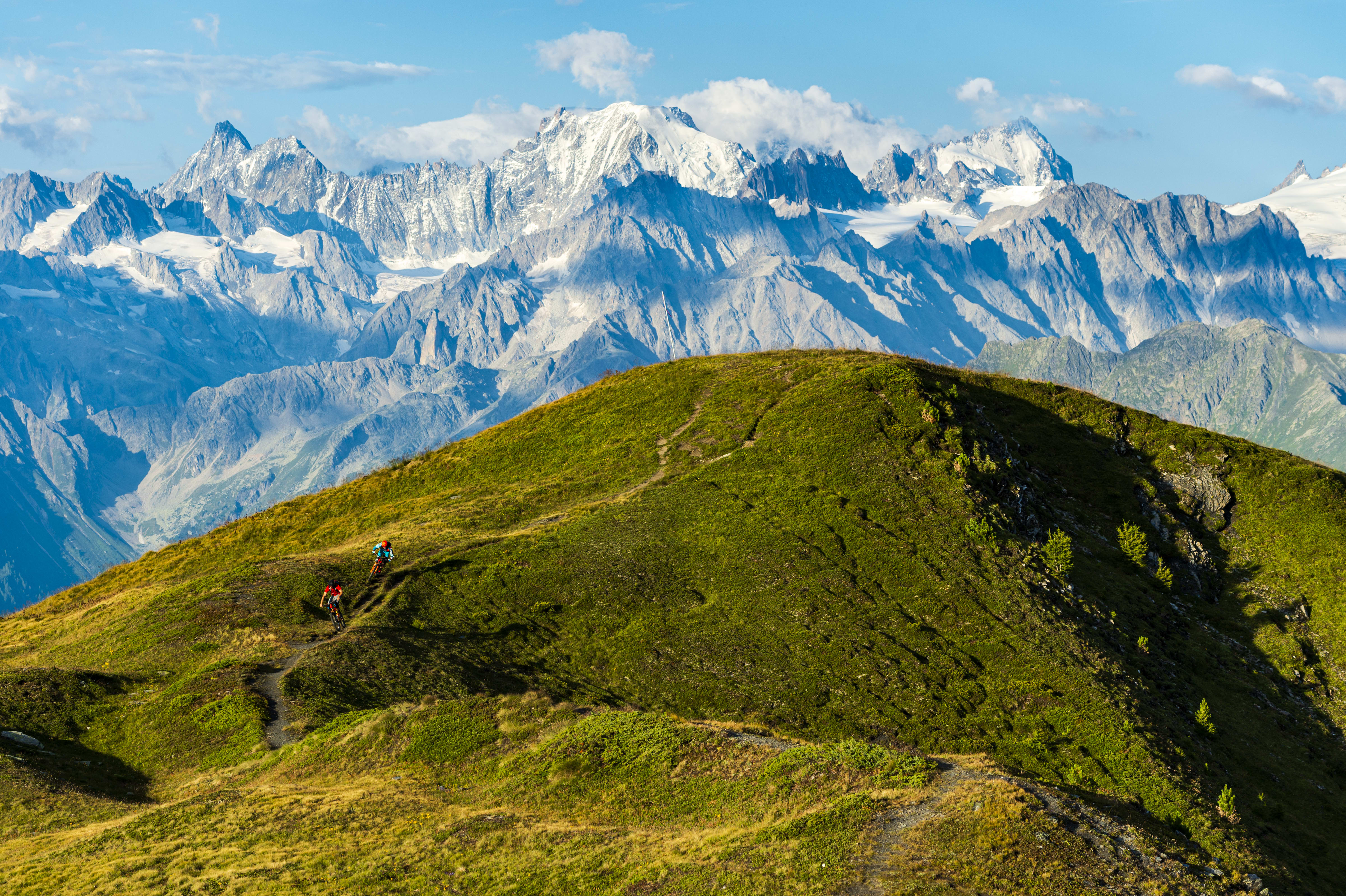

Livigno, Italy
Recommended trail:
Livigno-Passo di Val Trela. This is a 30-kilometre loop with about 1200 meters of climbing and as much downhill. After the climb, you can look forward to a
fantastic tour on perfect trails in super lovely surroundings. Eat lunch at Alpe Trela. If you want to cut a bit of the climb, catch the lift to the top of Mottolino.
Travel:
Livigno is a bit isolated with a long transfer from the airports in Milano, Zürich and Munich (3-3.5 hours), but it's worth the detour to experience some of the best trail riding in the Alps.
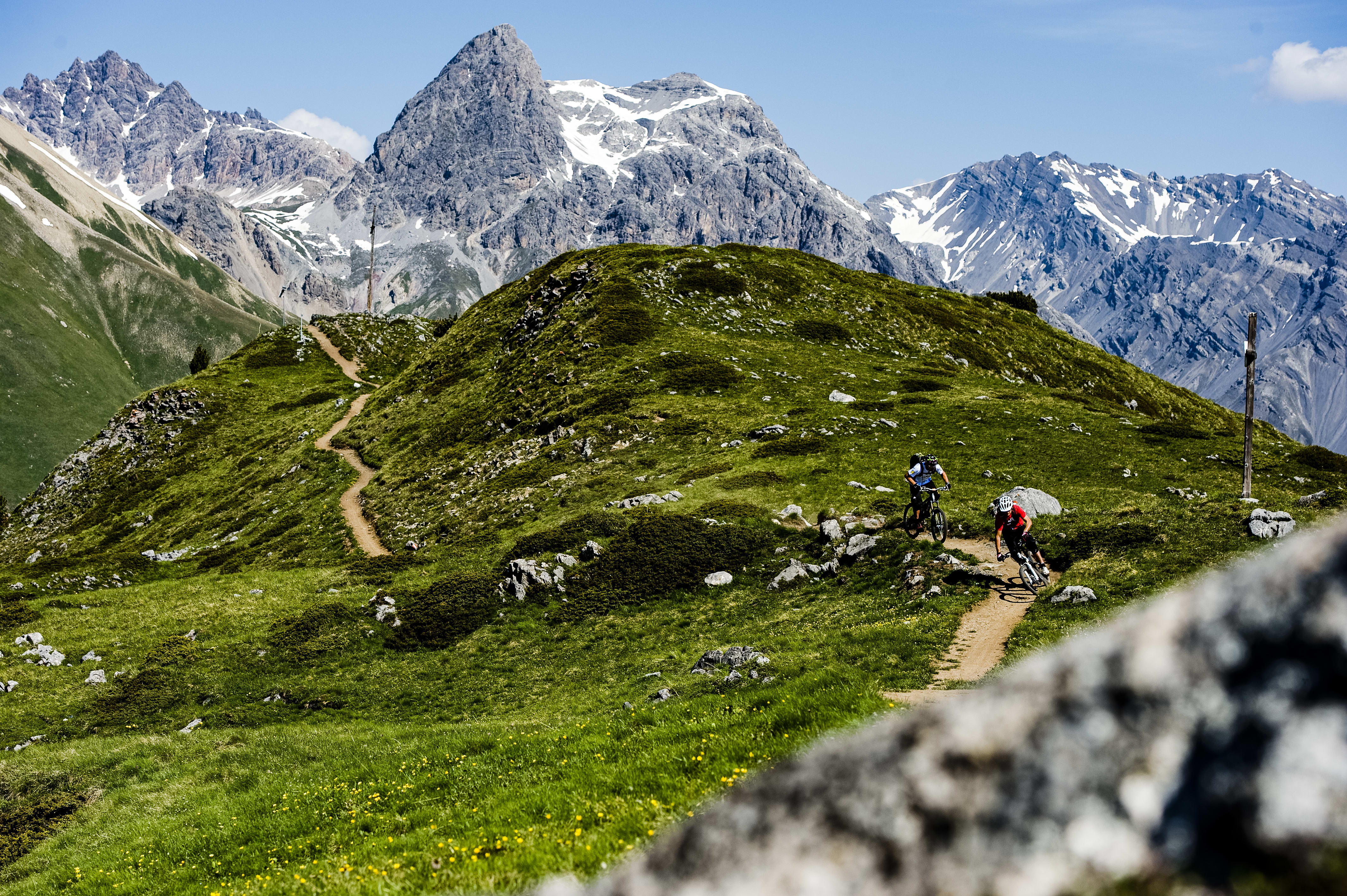
Back in the day, Livigno was a poor agricultural village, isolated between high mountain passes near the border to Switzerland. In Napoleon's time, Livigno was given special advantageous customs rules. In modern times, this has helped the region become an attractive tourism destination since the ‘60s; Livigno has been a customs-free zone. Like many winter sports destinations, Livigno targets mountain bikers in the summertime which got a kickstart in 2005 when they hosted the World Championships.
Since then, a lot has happened and nowadays, Livigno is known as one of the premier destinations for mountain biking in the Alps.
There are 600 kilometres of marked bike trails around Livigno and the region called Alta Rezia. Add two bike parks, 12 bike shops and almost 20 bike hotels, and you realize Livigno is a paradise for mountain bikers.
Livigno is beautifully located at 1816 meters by the foot of the mountains in Stelvio National Park, which means the village is one of the highest in the Italian Alps. The high altitude has made Livigno popular for athletes in endurance sports who want to train at high altitudes. Some trails reach well over 3000 meters.


Zermatt, Switzerland
Recommended trails:
The Mark Twain trail on the Gornergrat side goes on the mountain's edge with spectacular views towards the Matterhorn. If you want to make a long
descent, try the trail from Rothorn to Täsch, the village below Zermatt. It starts just behind the lift station at Rothorn. While in Täsch, catch the train back to Zermatt.
Travel:
Fly to Geneva or Zürich, it’s about the same distance from both airports. I recommend you trainthe whole way; Zermatt is a car-free village, so you have no need for a rental car, it's just a hassle and expensive to park below the village.

With almost 40 peaks over 4000 meters and epic trails in some of the most beautiful surroundings, Zermatt is a dreamy place for a mountain biker.
The classic Swiss mountain town has a reputation that precedes it, especially now that they’ve invested heavily in becoming a more mountain
bike-friendly destination. Zermatt in Switzerland's Valais canton is a classic
destination in a slightly new costume. Historically people came for mountaineering, hiking, skiing and simply the stunning views. With car-free streets, a deeply rooted mountain culture and perhaps
the most iconic mountain silhouette in the world, Zermatt always has a particular pull. It’s one of the Alps' classics with all its beauty, but honestly
a bit boring and conservative. Naturally it took a long time for mountain biking to get rooted here. Luckily things have changed and nowadays
Zermatt is transitioning into one of the most
progressive mountain bike destinations in the Alps.
As one of the original villages in the Alps and at the foot of the famous Matterhorn (4447 m), Zermatt certainly has a unique appeal. People would come just for the incredible views and the exciting history.
Still, instead of sitting comfortably on the sofa and collecting tourism money, the entrepreneurial spirit of the Zermatters has created a never-ending
progression as a mountain town. Most recently, they have decided to take mountain biking seriously and they have done their homework. For a few
intense years, Zermatt has created a mountain bike product worth the name, which has put them on the global mountain biking map. The single track was always there but with a US $13 million investment spread out over five years,
a fantastic mountain biking product is being created in the shadow of the Matterhorn. The ongoing project in Zermatt is probably more significant than
any other mountain bike development project in Europe, perhaps in the world.
Aosta Valley, Italy
Recommended trail:
From Punta Chaligne down to the town of Aosta; first climb up the mountain from Rifugio Chaligne and then a descent that lasts for a few hours down
to town. Incredible mountain biking with everything from scenic alpine riding to fast sections in the trees!
Travel:
Fly to Geneva or Turin, it's about the same distance from both airports, about two hours. There are airport shuttle, but it's smoother with a rental car
in the summertime, giving you freedom on location; some trailheads are far from each other.

On the sunny side of the Mont Blanc massif, the beautiful Aosta Valley spreads out. The valley starts right where the Mont Blanc tunnel enters the small village of Entreves at the foothills of the spectacular mountains. It heads south and extends down to the rolling meadows north of the big city of Turin. If you are a skier or snowboarder you have probably heard about some of the region's
well-known ski resorts such as Champoluc, Gressoney or La Thuile. Like many classic destinations in the Alps the trails in the Aosta valley were used long before anyone thought of the word 'tourism' or 'outdoor sports.' These trails were used for transportation and trade. They connected people. Nowadays
mountain bikers are exploring every part of the Alps and in recent years, the Aosta Valley has become a destination that gets a lot of buzz. Riders worldwide appreciate the fantastic variety of epic trails, excellent food, charming hospitality, rich culture and good coffee everywhere you go.
It’s great to be based in the Roman city of Aosta. There are lots of tours near the city and the vibe is lovely. There are also a lot of great restaurants.
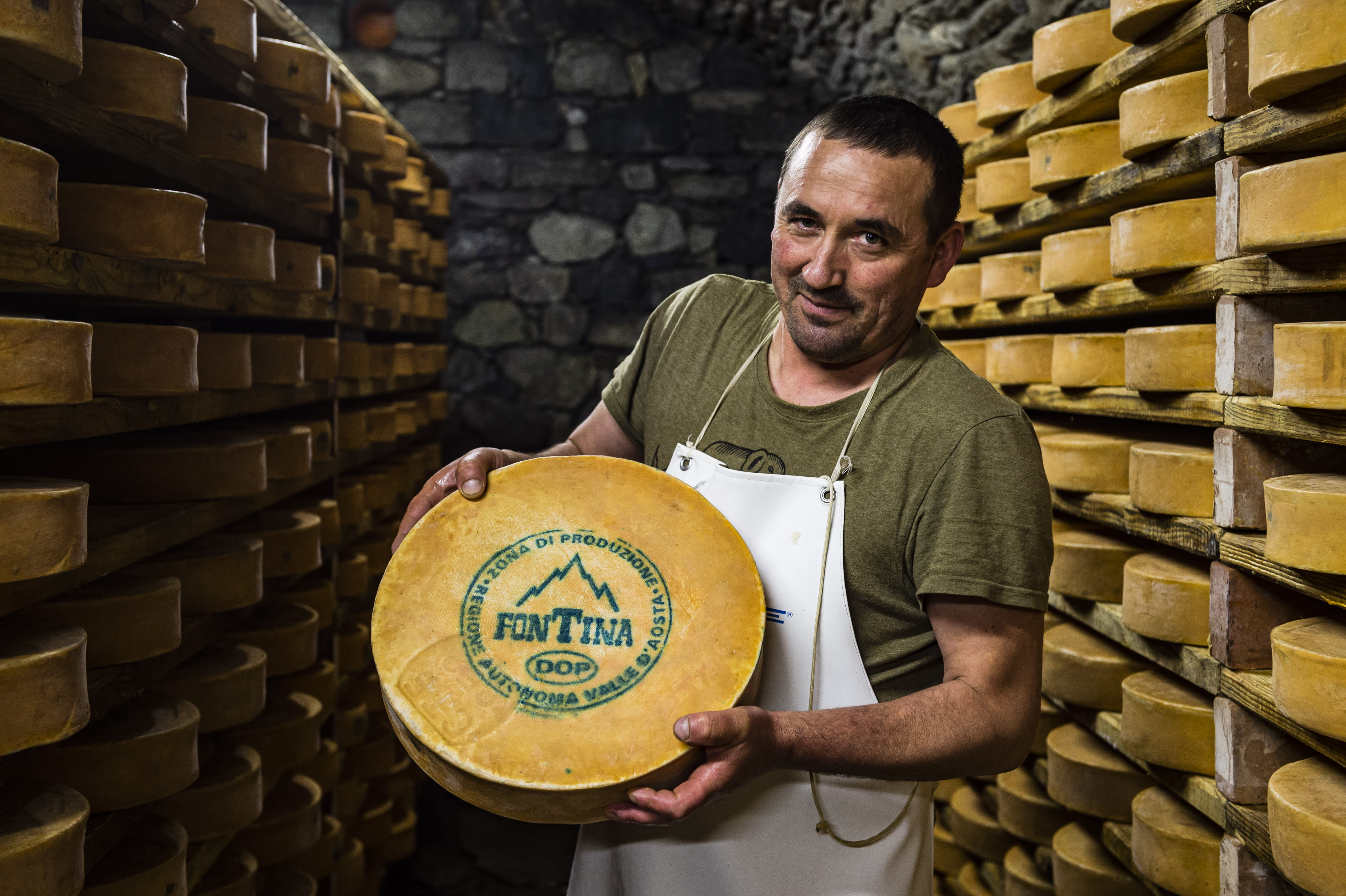
La Thuile has a bike park with only natural trails and Pila, one of the better bike parks in this part of the Alps, is another place to check out. Contact Aosta Valley Freeride (aostavalleyfreeride. com) for a great time in the Aosta valley. They put together guiding, bike shuttles and everything you need in the area.

Val Gardena, Italy
Recommended trail:
The Sella Ronda MTB is one of the most scenic mountain bike tours in the Alps. The 60 kilometre long ride takes you around the Sella massive in one long day. Val Gardena is one of the starting points, and with a mix of pedalling and lifts, you will conquer four classic passes in the Dolomites; Gardena, Campolongo, Pordoi and Sella.
Travel:
Fly to Münich or Marco Polo Airport in Venice, which is 270 kilometres away. From Münich, it is only 300 kilometres to drive to Val Gardena.
No other mountain range in the Alps is as spectacular and unique as the Dolomites, a UNESCO World Heritage Site. The Sella Group near Val Gardena is world-famous, perhaps even more so for hiking, climbing and skiing than mountain biking. However the Dolomites offer some of the most spectacular mountain biking in the Alps and around the Val Gardena region in South Tirol there are endless possibilities. The trail network by Passo Sella is extensive;
there are trails in all directions. Thanks to the deeply rooted mountain culture, people have been hiking everywhere in these mountains for a long time. From the pass, you can drop in towards Marmolada, the highest peak in the Dolomites with 3343 meters, or back down to Selva Val Gardena. The surroundings are impressive; rugged alpine peaks and limestone mountains which are typical for the Dolomites. Yet the landscape is green and lush; it is simply a stunning location to ride a bike.
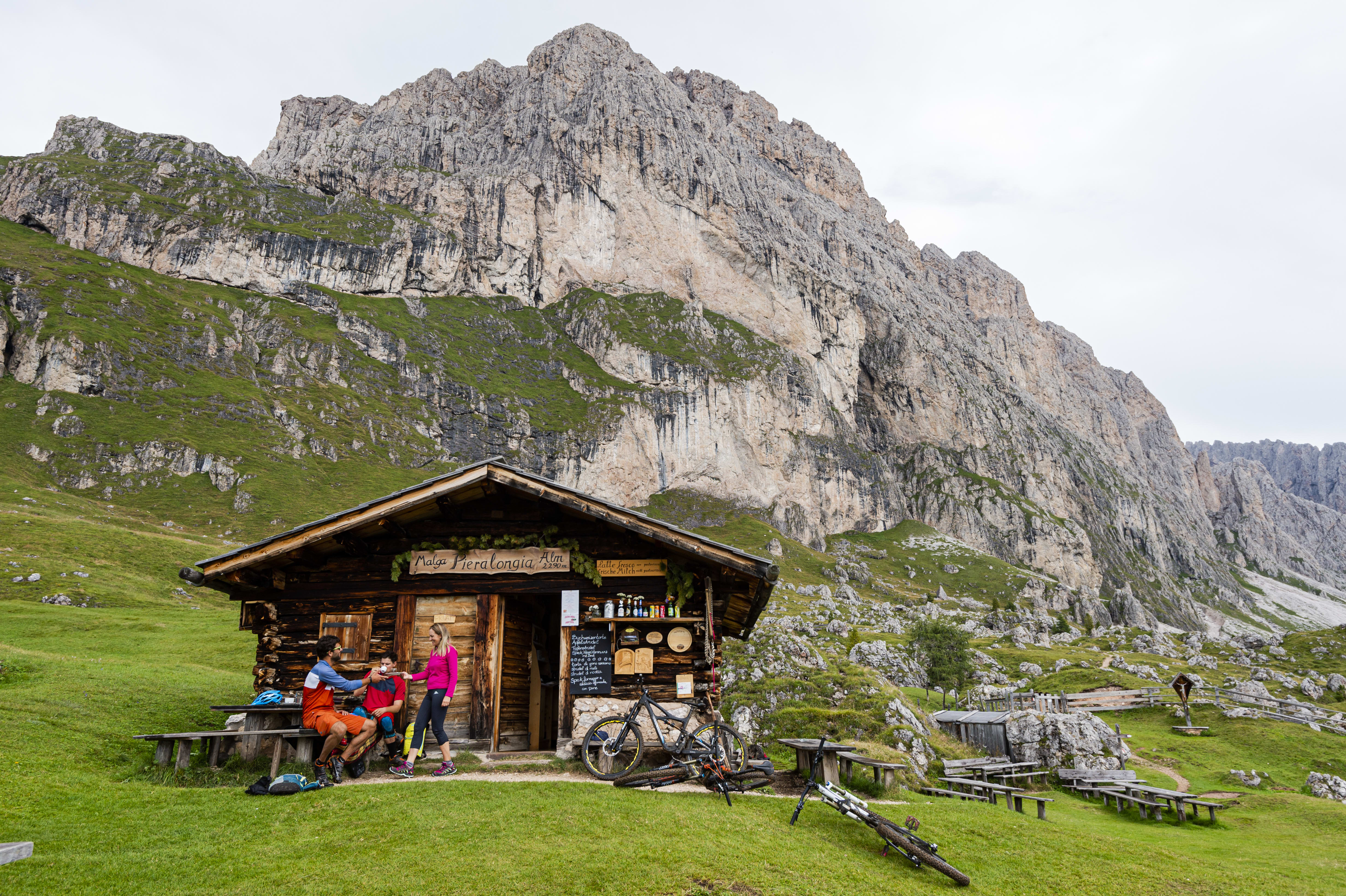
If you want to get a kick start and ride in the true alpine, take the cable cars up to the foot of Seceda (2450 m) above the village of Ortisei. At the top station, 2400 meters above sea level, you can set off for different tours under the impressive Geisler group. My favourite trail is number six on the map. If you follow the green meadows under the vast mountainside, the trail takes you right to Pieralongia Hut. This rustic hut has been in the same family for over 100 years and is well worth a stop, if only for a freshly squeezed juice. Eventually, you might pass by Regensburger Hütte, where you could eat lunch and enjoy a cold beer.
Lenzerheide, Switzerland
Recommended trail:
From Parpaner Rothorn via the Schafalpi trail to Arosa via Alpisee, one of Switzerland's most beautiful alpine lakes. From Arosa, you take a few
lifts back up in the mountains to Fuerggli and drop back into Lenzerheide.
Travel:
Lenzerheide is only 1.5 hours from Zürich, so that's the best airport to fly into. It's easy to go by train to Lenzerheide, but you have to switch to the bus in
Chur, about 30 minutes away.
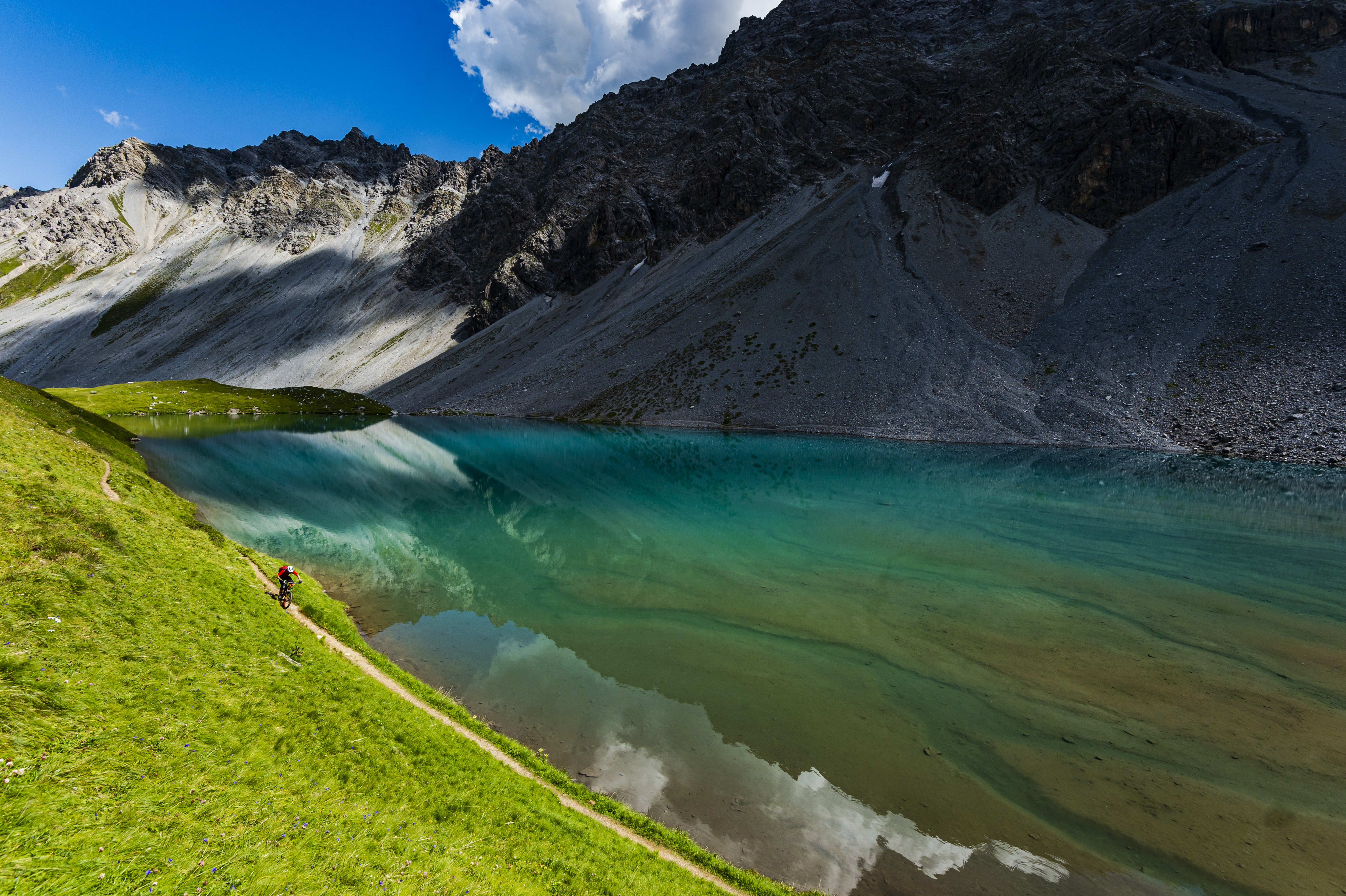
Years ago Lenzerheide in Switzerland's Graubünden was like many other ski resorts in the Alps; sleepy in the summertime with barely anything going on. Then they decided to make a real effort to develop mountain biking and
get the summer operations up to par with the winter business. They quickly realized it was not enough to let bikers go up with the lifts and ride old cow trails, like in many places. Instead, they brought in consultants to design a plan.
In just a few years, Lenzerheide created a well-functioning bike destination and through a bunch of events – everything from World Cup races and World Championships to public grassroots events – they have spread the word.
The strategy worked well. Lenzerheide is now a trendy destination for downhillers and freeriders who enjoy one of the best bike parks in the eastern
Alps and all-mountain riders, who are offered lift access trail riding, tours in the valley, and to the neighbouring village of Arosa. In the Kanton Graubünden (state of Graubünden), there is a network of 17,000 kilometres of trail,
for both hiking and biking. An unwritten rule says anyone can use all trails in the state. This is a unique policy in the Alps and globally. Graubünden,
Switzerland's most significant state and the least populated, is known as one of the most progressive regions in the world when it comes to bike tourism.There are 4000 kilometres of specifically marked mountain bike trails and several regions in the state are leading the force in Europe when it comes to bike tourism.
Ötztal, Austria
Recommended trail:
The Kleble Alm Trail offers a fantastic mix of technical riding with switchbacks, roots and rocks, to flowy high-speed stretches. You climb almost 600 vertical meters from the top of the lift, but after a drink and rest at the Klebe Alm hut, you have a long ride down to Sölden with a total drop of about 1000 vertical meters.
Travel:
Fly to Münich or Innsbruck, then it's the easiest to continue with rental car. From Münich it's about 2.5 hours and from Innsbruck 1.5 hours.
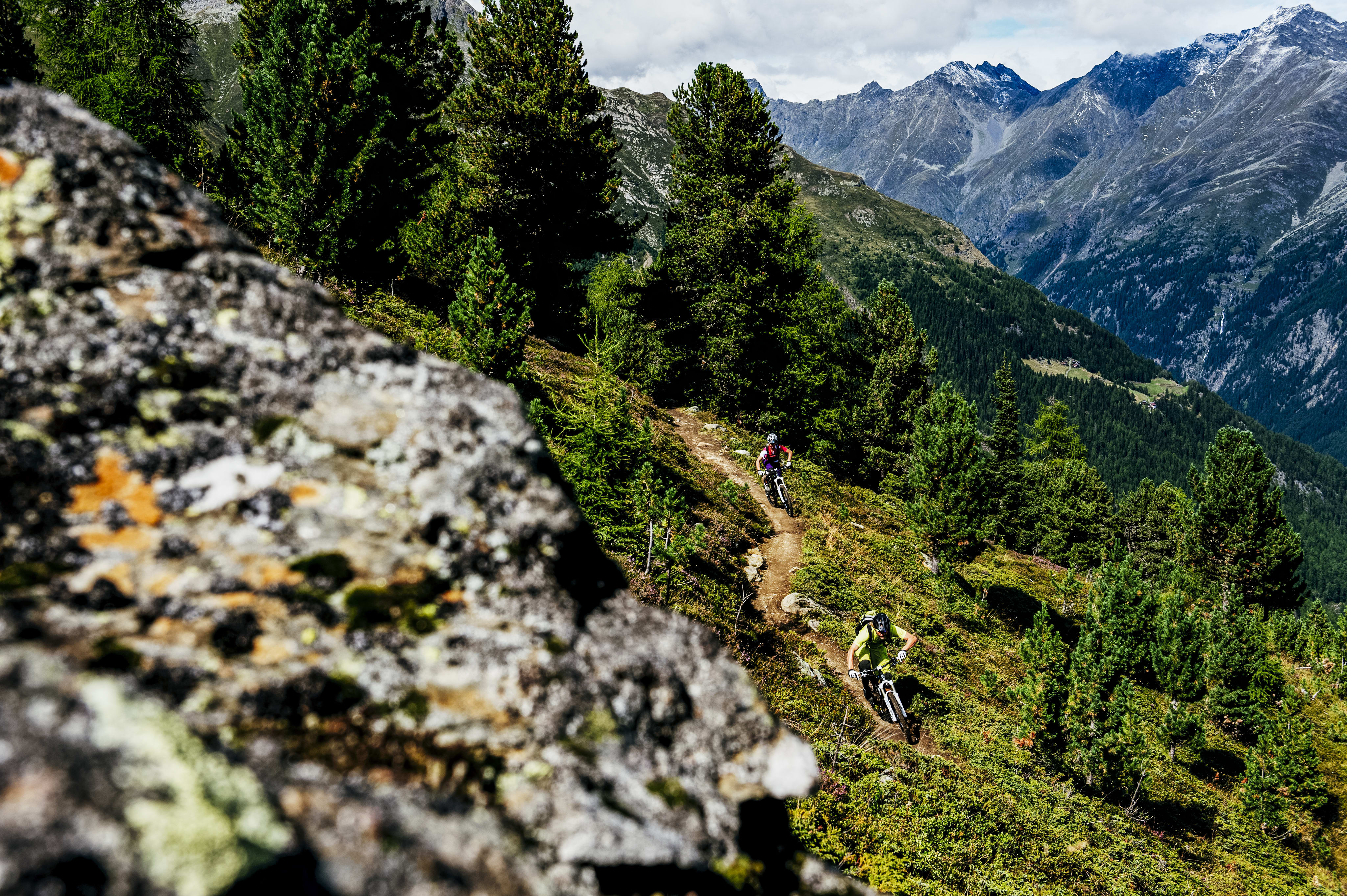
Sölden and the Ötztal valley is one of Austria's most famous bike destinations. The well-known ski resort in Tirol has developed its bike trails and infrastructure for many years. Today, Bike Republic Sölden is a staple in the bike industry and well worth a visit. The alpine riding is scenic but the many trails in the forest are the real gem in this beautiful valley. One of the main objectives for the Bike Republic Sölden is to offer trails that allow for a broader range of mountain bikers. With that said, no matter your ability, you will have a good time
in Sölden.
Stretching over 65 kilometres north to south, Ötztal is one of Tirol's longest valleys. With Innsbruck's conveniences one hour to the north and Italy close by to the south, Sölden is a great place to spend a long weekend or a whole week of biking with your friends. Not only does the valley itself appear endless, so do the trails. The network includes many long tours to add to your bucket list.
Three gondolas serve the trail system in Sölden and Ötz, which provide access to numerous trails. Remember that trail riding is the focus in Ötztal; no full-face helmets are allowed on the lifts nor the trails. A trail crew with over 20 employees keeps the 32 trails in the Bike Republic Sölden in mint condition.