Published: Mar 4, 2026
Come along on a quick trip through the long history of the Norwegian trail riding phenomenon.
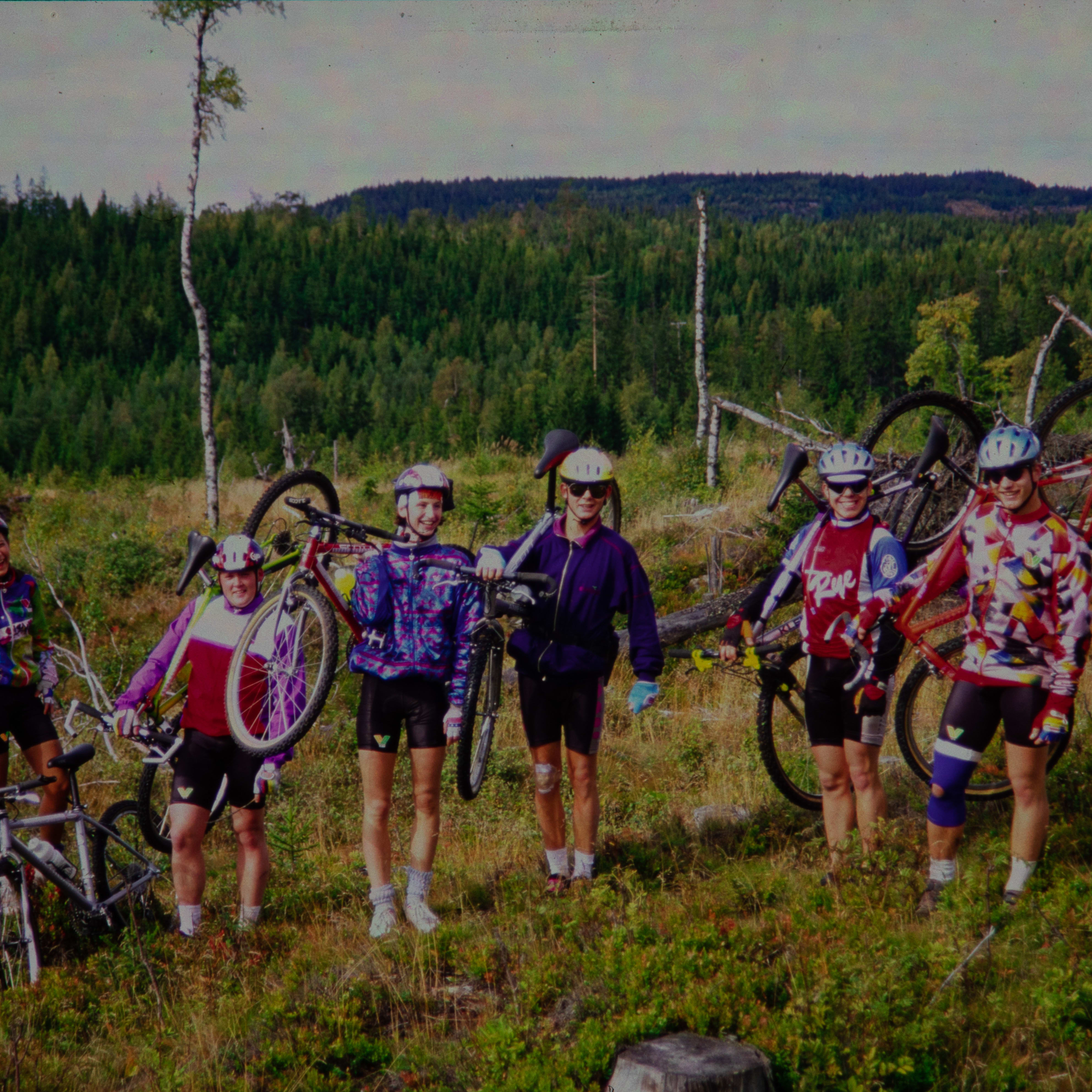
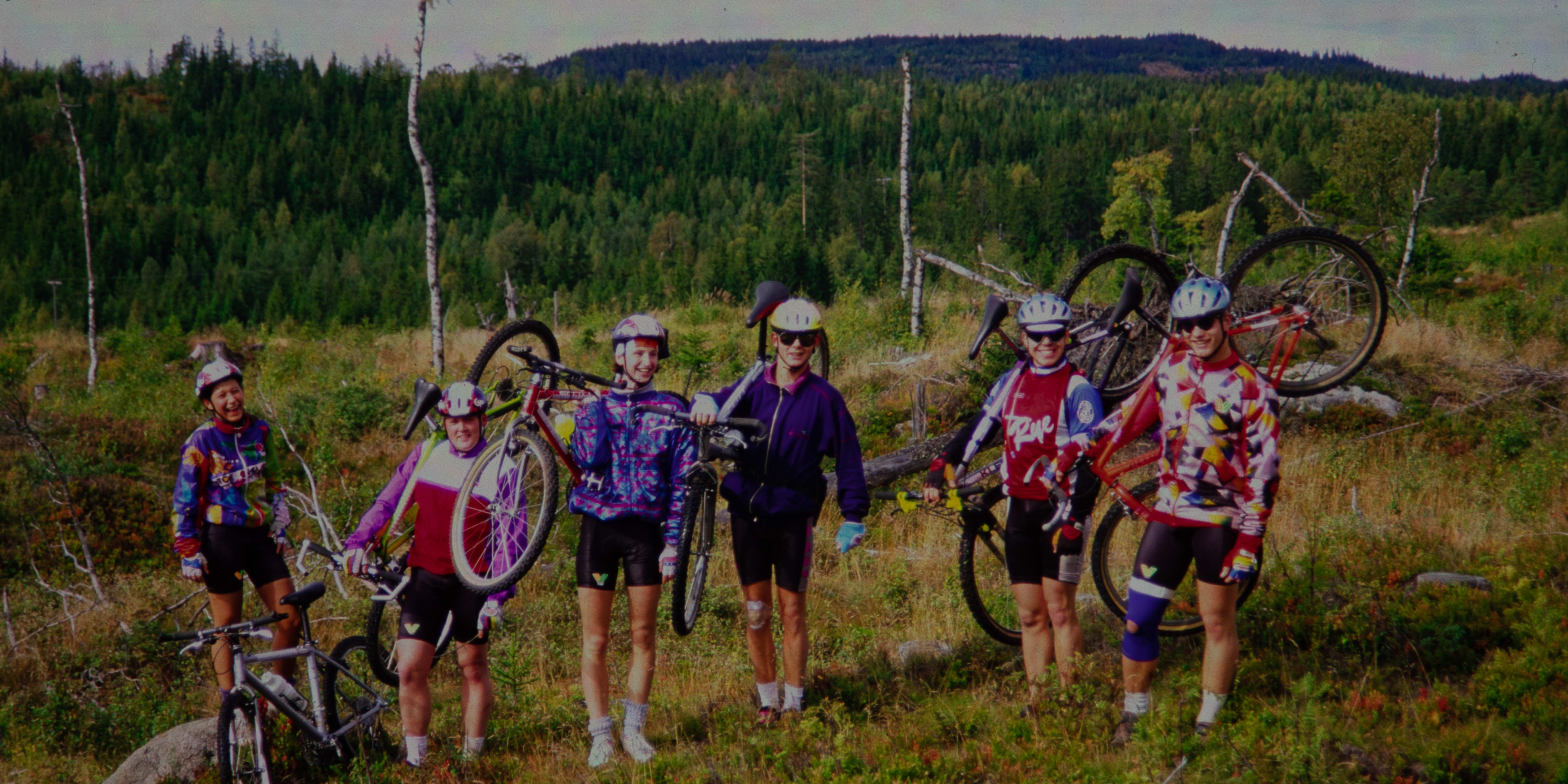
Image: Erik Angvik guides a group of friends on narrow trails in Nordmarka outside Oslo, Norway, in 1992. From left Jasmina, Kenneth, Hanne, Morten, Erik and Dag Jonny. Photo: Rasmus Leiro
What kind of ideas did Lars Fostvedt end up with in California in the fall of 1980? What really happened when Stig Lundsør opened two boxes from Japan in June 1982 in the town of Horten? Why wouldn’t the Åmli city council listen to Jan Fasting's proposal for a ski lift in 1987? And how did excavators and electric motors suddenly become part of Norwegian trail riding?
The story of trail riding in Norway is the story of how a subculture’s playfulness on primitive two-wheelers developed into a national sport, one of the country's major outdoor activities and an important part of the Norwegian tourism industry.
But where did it start?
It’s impossible to say exactly. It started when someone steered their bike off a Norwegian road and onto a trail, discovering the joy of trail riding right then and there. We don’t know who was first. But long before the first mountain bikes arrived, many had become so obsessed with biking in the woods that they started modifying their own bikes. They fitted bigger tires, better brakes and improved shifters.
One of them was a schoolboy who, in 1978, stood in the garage at home in Arendal with a file and a toothed gear in his hand. The boy's name was Jan Fasting and he was hooked on riding in the woods. But the climbs were tough, so he unbolted a large crankset gear from one of the family's bicycles, planning to put it on his own bike’s rear wheel. It obviously did not fit, so he had to cut and file to make it so. It took days of struggle. But finally, Jan rolled out of the garage with Arendal's lowest-geared bike to become the two-wheel king of
the forest, unaware that this would one day become his livelihood. And completely unaware that a few American hippies were doing the same thing at the same time, sparking a revolution unlike anything the bicycle industry had ever known.

Stig Lundsør was one of the first Norwegians to see the new bikes up close. The bike dealer from Horten was already a major supplier of expensive road bikes and was always looking for something new. One autumn day in 1981, he strolled around a bicycle fair in Germany and noticed something completely different: a new type of bicycle with wide knobby tires, super low gears, wide handlebars and solid brakes. Stig was captivated. He placed an order for two bikes on the spot. And one day in June 1982, he eagerly opened two huge cardboard boxes from the export company Yagami in Japan.
Out of the boxes came Norway's first dedicated mountain bikes – without a brand name – with 18 gears and zero suspension. Excited, Stig ordered ten more bicycles. They sold quickly. The following year he ordered a whole container. Each was labeled with his own, long-standing brand name: “Netroh,” which is “Horten," spelled backwards.
But Stig was obviously not the only one to notice what was going on the U.S. West Coast and the gigantic boom that was underway. In California, a horde of small operators was in full swing building and selling the new bikes that people were calling “all-terrain bikes,” or “mountain bikes.” What started small in the early 1970s suddenly became a business when Gary Fisher founded the company MountainBikes with his friend Charlie Kelly in 1979.
Lars Hotvedt from Oslo saw this up close, back in the late autumn of 1980. He and his girlfriend had cycled a several-month trip through the United States when they arrived on the west coast and saw mountain bikes rolling in the hills there. Lars noted that the local heroes rode into the terrain with three cogs in front and five at the back, so they could pedal right up to the top with bikes that could withstand the rough ride back down.
Back in Oslo, Lars started a bicycle workshop on the street Oscars Gate in 1982, together with his friend Kjetil Ryen, who was soon succeeded by Einar Bowitz. The workshop was named Den Rustne Eike (The Rusty Spoke) and would become one of the early mountain bike shops in the Norwegian capital. Other early ‘sykkel’ (bicycle) shops included Aspaas Sykler, Sørensen Sykler and Digerud Sport.
Christian Eide Lodgaard was 16-years-old when he bought a Nishiki Bushwacker at Den Rustne Eike in 1986 and got a part-time job there. Together with a small group from the cycling community around the shop, he traveled weekly to the nearby woodlands of Nordmarka and Lillomarka to find the more entertaining trails. One of the best is on a ridge south of Fagervann lake and is called the "Jon Kåre Trail,” after the trailblazer Jon Kåre Elstad, a bicycle mechanic at Den Rustne Eike.
It was here, in the seasons between 1985 and 1987, that the mountain bike market exploded in Norway. Japanese bikes from Miyata, Kuwahara and Nishiki were out early, and were soon joined by American Trek, Fisher and Cannondale. Even Norway’s tradition-bound DBS entered the scene with off-road models. And when the budget brand Merida from Taiwan was launched in Norway in 1987, everyone could afford the latest thing.
Hardcore shops followed. In 1988, Sykkelskredder'n (The Bike Tailor) started in Oslo’s Grønland neighborhood. In 1989 Torgersen Sport added a mountain bike department on the downtown street Stortingsgata (they started the mountain bike brand Hard Rocx in 1992) and in 1990 Sykkeldelisk opened by the city hall.
People loved the new bikes, in all price classes. Suddenly, all the other bikes looked frail and anemic. Goodbye skinny tires, so long clunky fenders, farewell silly luggage racks.

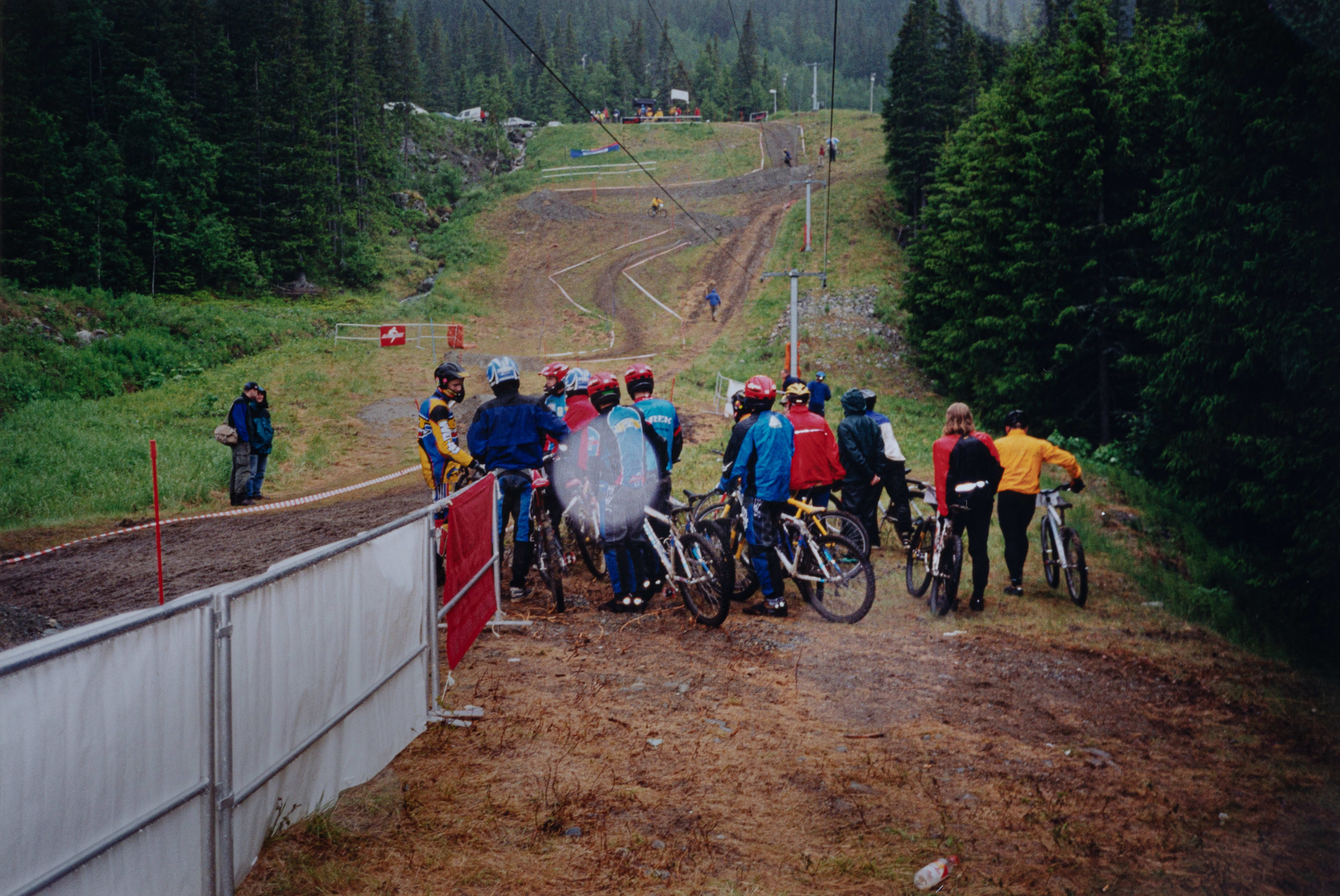
The mountain bike was the new star. New brands arrived and sales skyrocketed. In 1990, every fourth new bicycle in Norway was a mountain bike.
Yet no one had any idea how big it would become.
That included the Åmli city council. As early as 1987, Jan Fasting – the boy from the garage who was now grown up – suggested that Åmli municipality start lift-based trail riding to make use of the local ski lift during summer. He had been hired as a consultant together with the consulting company Asplan Viak, which presented a series of proposals to the council in a project called the "Four Seasons World.” Fasting had studied the terrain above the ski lift and suggested a 10-kilometer round of trails, with the lift as the perfect starting point. But the council said no, wondering “who’s going to carry a bike on a ski lift?”
At that time, maybe no one.
Thirty years later the answer was: enough to make it an industry.
In the meantime, Jan Fasting was trying something else. In 1989, he bought twenty-five Peugeot Orient Expresses and started Norway's first guiding company for mountain biking along the forest roads of southern Norway.
The first season, they guided four groups of tourists from the Netherlands, Belgium and Germany. The next season, the Dutch travel agency they worked with was sold, and the project crashed.
Norway was not ready for either lift-based trail riding or guided bike rides. In the transition to the 1990s, mountain biking had become a kind of national sport, both for those wanting some exercise on gravel roads in the forests and mountains, as well as in organized competitions where riders had race numbers on their handlebars. In 1987, the cycling club Lørenskog CK arranged Norway's first mountain bike race and together with Øglænd and Sandnes CK, the club prepared rules for the Norwegian Cup, which they established the following year.
Pure trail riders, those who just wanted to have some fun on narrow trails and find solutions to crux challenges, were still a small group. The sport had become the driving force in the cycling industry. And mountain biking was now the toughest cycling sport of them all. So tough that the German electronics giant Grundig decided in 1989 to organize the World Cup in mountain biking and added one of the races to Holmenkollen overlooking Oslo.
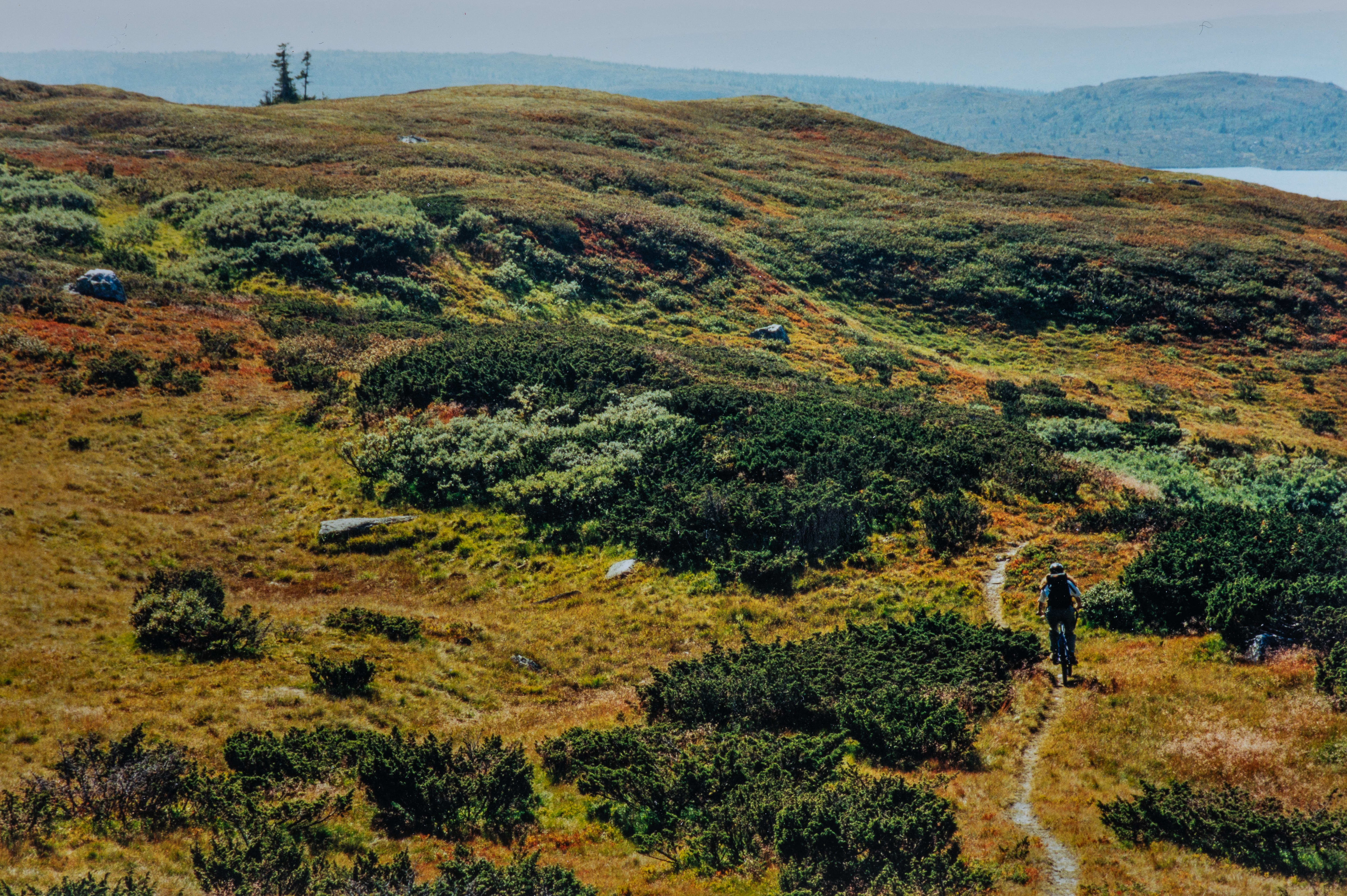

So the Norwegian Grundig branch had to provide a World Cup level team. They signed Norwegian Nordic skiing star Anette Bøe and former Norwegian champion in road racing Ole Kristian Silseth from Molde. They became Norway's first mountain bike pros and were sent on eight international rides during the 1989 season, sponsored by Grundig and Scott.
The race at Holmenkollen drew a record audience, mainly because national broadcaster NRK was filming the popular show Take a Chance there on the same day. Some 20,000 spectators were there in 20-degree weather and the race was broadcast on international television, with co-organizers from Nittedal CK declaring the start of a new era in cycling.
But in this tale, we aren’t talking about cycling as a sport. We talk about what happens when someone, on their own initiative, heads out on trails in forests and mountains, just for fun. Trail riding is the Norwegian hiking culture on rubber wheels. Norwegians would rather not hike on mountain roads. They prefer hiking trails. And what makes trail riding attractive is that it is a bit difficult. Happiness is getting through a difficult crux point on the trail without putting a foot down.
So what happened when Norway, in 1993, ended up with what grew into the world's largest mountain bike race?
How did trail cyclists react when the Birkebeinerrittet marathon mountain bike race from Rena to Lillehammer became a popular movement that got tens of thousands of Norwegian men and women out on knobby tires?
They turned up their noses, of course, because the race runs on gravel roads. ‘Birken’ is the paradox of Norwegian mountain biking. At its peak, the race draws over 18,000 participants and is hailed as a national boost for public health.
But trail riders yawn with disdain. They aren’t even slightly tempted. Just riding a mountain bike doesn’t make it mountain biking.

During the 1990s, Norwegian trail riding became multifaceted, while mountain bike development headed in several directions. In 1992, this division had not yet started. That year, for example, Rune Høydahl became Norwegian champion in mountain biking twice, winning both the regular cross country and the downhill race. He is still one of only two people in the world to win the World Cup in both XC and downhill (the other is the legend John Tomac).
That combination almost immediately became impossible. The difference between the two branches quickly grew bigger. Soon, a mountain bike was no longer a mountain bike. First, someone comes up with suspension at the rear, not just the front. Some get wider handlebars, hydraulic brakes, larger tires and slacker head angles. Some are pure downhill bikes that are tailored for downhills and jumps. Some are versatile trail bikes for those who also want to pedal on the way up. And some appear as a rough middle ground. We're talking about freeride bikes. Those with a lot of suspension, gentle angles yet still manage to keep up their speed on level ground – if they must. It was the freeride culture that contributed to a small clique of cyclists around 1995 bringing hammers, shovels and saws to the forests around Frognerseteren district of Oslo.
The new freeride bikes were inspired by what was happening on Canada’s west coast north of Vancouver, where the cyclists built bridges, jumps and berms to make it down sometimes steep forest terrain. In Norway, Frognerseteren above Oslo became the most important place for mountain bikers who wanted to jump higher, ride faster and crash harder.
Two of the freeriders who built the “Seteren," in the mid-1990s were Snorre Pedersen and Henrik Rostrup. Henrik joined his friend Frederik Rolfsen and made Norway's first mountain bike films, which from 1996 onwards were distributed as video magazines on VHS under the name PushMag. Soon, mountain bike films from the United States and Canada would also define a new generation of fearless trail riders.
What about Snorre? He moved home to Øyer in Gudbrandsdalen to do what he has always done: take a shovel into the forest to improve the trails he wants to ride. On June 21, 2001, he took his shovel up to the ski resort at Hafjell near Lillehammer and started work on a bandit trail without asking anyone for permission. That breaking of ground was the start of what, a few years later, would become a new chapter in Norwegian trail riding and a separate sector within the Norwegian tourism industry: machine-built trails for lift-based trail riding.


Image 1: Frognerseteren Freeride Festival in Oslo, Norway, became the spot for everyone who wanted a real party mood on two wheels. This shot from 2003. Photo: Christian Løverås
Image 2: In 2005, more than 200 riders gathered for the social event of the Norwegian season: Hafjell Mountain Bike Weekend.
Image 3: The five-meter high Buldredroppen in Hafjell, Norway, was an entirely new fixture in 2005. Photo: Christian Løverås
In the year 2001, the websites utfor.com and terrengsykkel. no were launched. The first for the growing numbers who love to ride downhill as fast as they can. The latter for classic trail riders who were tired of the competition focus and wanted to have fun without a start number.
Just as important as the editorial content on terrengsykkel. no, is what grew into the country's most important social gathering point for such riders: the mountain bike forum.
In this forum, tires and suspension forks are discussed in infinite detail. It is also a place to present new trails and build friendships. The editorial staff set up joint trips in the Oslomarka wilderness on Tuesdays and Thursdays during the summer of 2002, in the hope that more people would take similar initiatives. The forum soon became the place to go for anyone who wanted to find trekking buddies and discover new trails. When the editors started the trail bike festival ‘Utflukt på Skeikampen’ in the autumn of 2002 with 15-20 participants, a new and more social era was on its way among Norwegian trail cyclists. It’s time for the mountain bike festivals.
Hemsedal Fat Tire Festival was the first, in 1998 – directly inspired by the American Crested Butte Fat Tire Festival – but was held this one summer only. From 2002, on the other hand, Utflukt (Excursion) became an annual happening, and in Oslo, the riders at Frognerseteren started their own festival in the spring of 2003: Frognerseteren Freeride Festival, which was held in three editions that summer – the last with over 250 participants. Things were also on the move at Hafjell. Snorre Pedersen and the local freeride club invited riders to the Hafjell Mountain Bike Week on the newly built trails on the alpine slope in 2003.
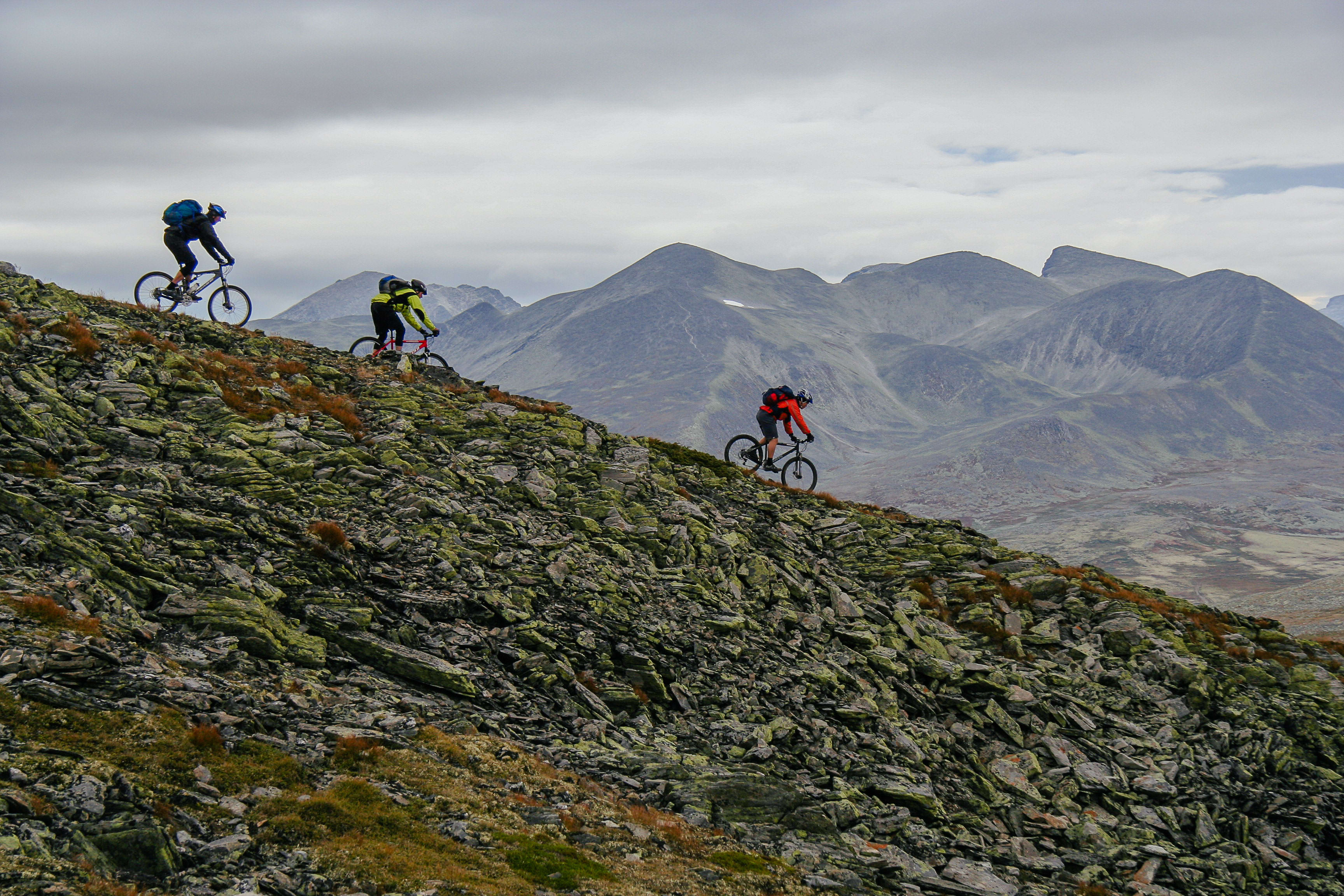
In 2008, it spread to western Norway’s Sunnmøre district. Fjørå Singletrack Camp started with Håvard Melbø at the Mountain Bike Forum posting an open invitation to a summit weekend in Sunnmøre. The gathering on the mountainsides around the waters of Storfjorden was a success. The super-photogenic trail down Mefjellet to Fjørå was one of the attractions, the same season as Norrøna launched the mountain bike collection of the same name, Fjørå.
This social wave marked an important shift in Norwegian trail riding. From the end of the 1980s, it had been something individual riders and groups of friends did on their own. The only organized events were for competitions. A separate Norwegian trail riding culture emerged. The festivals ensured that like-minded people could meet and ride in new places and new trails, where social interaction was more important than the achievements.
In 2007, the Norwegian ski magazine Fri Flyt bought the websites utfor.com and terrengsykkel.no, as well as the festival concept Utflukt. The well respected magazine publishing company had already started the print magazine Terrengsykkel (Mountain Bike) in 2006, 13 years after Norway got its first mountain bike magazine Offroad. But they were not content with that: Fri Flyt was also further developing the grassroots event Utflukt to a commercial festival with a much fuller program.
The festival moved to the town of Kongsberg in 2009, where local enthusiasts did a great job of clearing, marking and mapping paths for the festival cyclists. But then, in 2013, Utflukt found its permanent home in the village of Trysil, where another paradigm shift for Norwegian trail riding was underway. That summer, a small team of professional trail builders from French Bike Solutions was in the village. They were hired by Destination Trysil to do a preliminary project and develop a master plan.
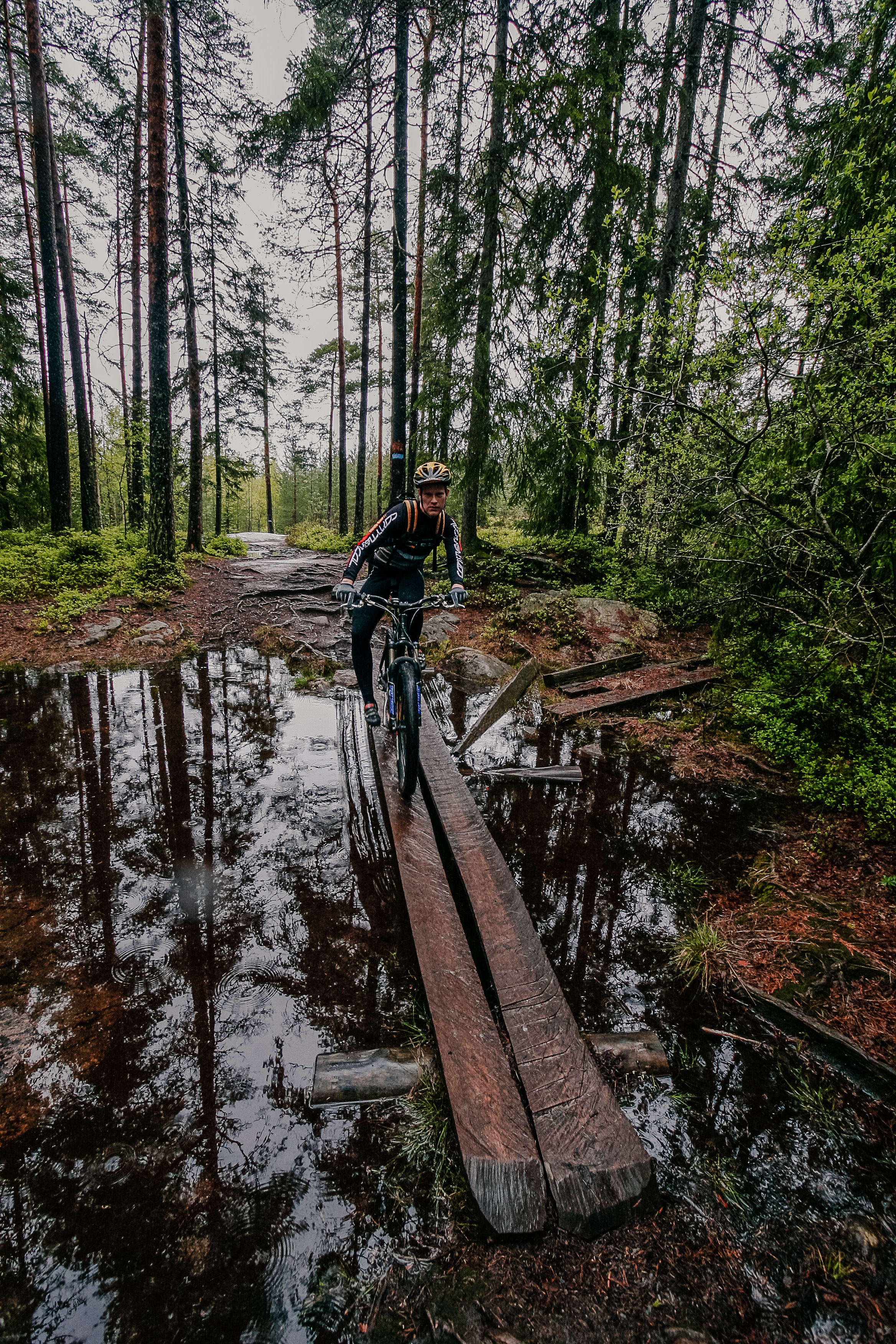
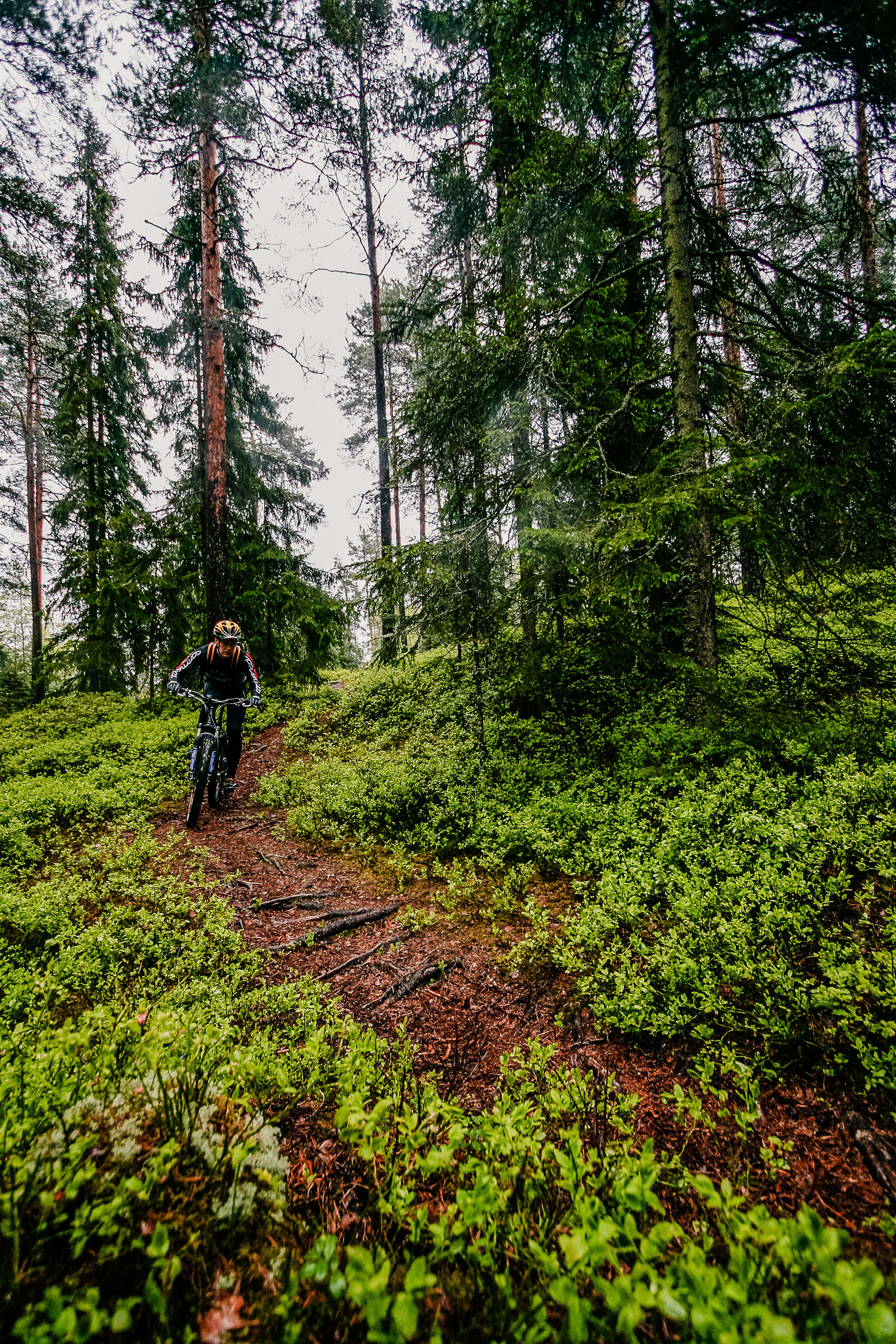
Image 1: Alf Erling Seierstad in Østmarka on a wet summer day in 2004, in the areas that would later become part of the trail project Pionéren – a seven-kilometer route specially made for trail biking in Oslo, Norway. Photo: Geir Anders Rybakken Ørslien
Image 2: In 2004, Alf Erling Seierstad rode the route that would later become part of the Pioneer in Østmarka, just outside Oslo, Norway. Photo Geir Anders Rybakken Ørslien
The goal was to turn Trysil into Scandinavia's best trail bike destination – using shovels, building materials and excavators.
But they were obviously not the first.
At this point, Hafjell is clearly established as Norway's leading cycling facility with downhill runs, trails and world-class installations for lift-based cyclists, signed by trail master Snorre Pedersen. And Jan Fasting has long been in full swing at Canvas Hotel in Nissedal; he has guided guests since it opened in 2010 on an adapted network of paths that connect the slickrock areas.
For the classic trail riders, several groundbreaking things took place in 2013: in Arendal, Tungvekteren (The Heavyweight) opened its first eight kilometers of adapted trail built by Arendal Singletrack Klubb with the same Jan Fasting as the driving force and the Gjensidige Foundation as sponsor.
In Østmarka in Oslo, IMBA Trail Solutions was hired by the Norwegian Organization for Mountain Biking to teach trail building, stone laying and drainage. They benefited from this knowledge when they started work on Pionéren, which in 2015 became Oslomarka's first specially built trail for mountain bikers.
In Sogndal a group of idealists established Sogn Mountain Bike, which built new trails on a voluntary basis. Several of the enthusiasts soon become full-time professional trail builders. And in 2008 in Nesbyen, Ove Grøndal and Knut Lønnqvist started clearing old timber from trails as a hobby project that became their occupation.
In the Sogndal gang, Roald Eidsheim established the trail builder Rekkje Stiutvikling in 2014, the same year that Grøndal and Lønnqvist started Trailhead Nesbyen. Now both companies are fully booked trail construction companies with just over 20 employees each during the summer. The trail building industry in Norway has become so big that, as of 2022, you can take vocational training as a trail builder, through a study program for which the Information Office for Mountain Biking is a driving force. Trail biking has finally also become a profession that is possible to live off, and, as of today, 120 people have earned the "Norwegian MTB Instructor and Guide” certification in this country.

So here is Norwegian Trail riding in 2022: the tourism industry rejoices that tens of thousands of cyclists pay to ride in tailor-made mountain bike facilities, often on electric trail bikes that are exploding in popularity. The machine-built trails, the skilled guides and the electrically assisted bikes make mountain biking more accessible.
Trail riding in Norway is more diverse than ever. But most things are as they always have been. It is simply about what an unknown pioneer once discovered, somewhere in this country: steering a bike off the main road and onto a trail, simply makes life more fun.
Thanks to the sources who have contributed information to this text:
Erik Angvik, Karl Aksel Aubert, Ole Blokhus, Jan Fasting, Robert Foss,
Lars Fostvedt, Ove Grøndal, Helge Janbu, Truls Erik Johnsen, Rasmus Leiro, Christian Eide Lodgaard, Stig Lundsør, Knut Lønnqvist, Bjørn Tore Melhus, Snorre Pedersen, Rufus Preiss, Gaute Reitan, Harald Rishovd, Frederik Rolfsen, Ole Kristian Silseth, Odd Arne Steffensen, Øyvind Wold and Øyvind Aas.
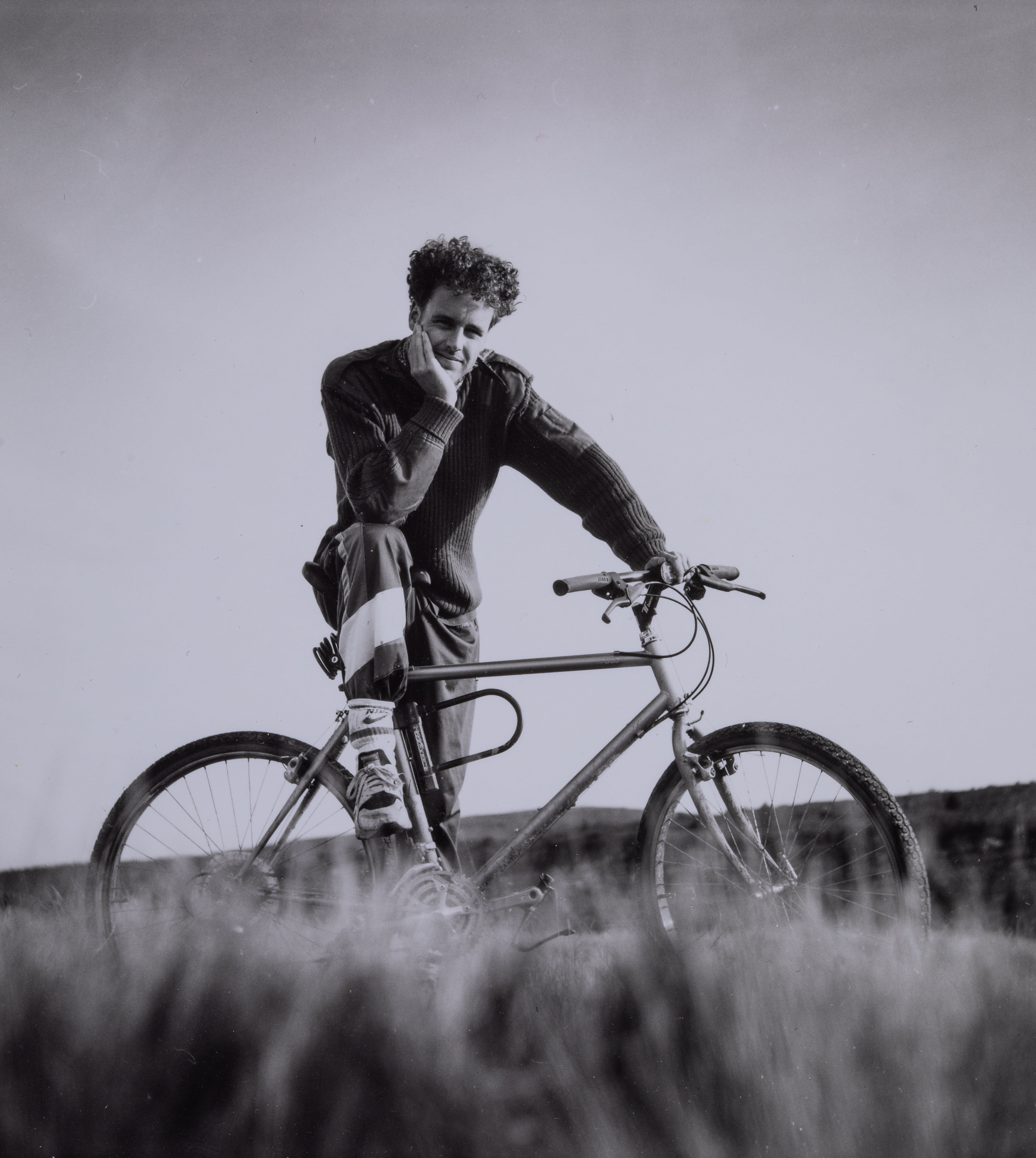
Facts
Epochs in Norwegian off-road cycling
1982 – 1990: The Pioneer Age
The first mountain bikes arrive. Enthusiasm sparks a sales success.
1991 – 1995: The establishment phase
The sport grows. The Birkebeiner race starts. Great improvement in bikes.
1995 – 2001: The Specialization
The bikes have more suspension, downhill bikes arrive, freeriding becomes a phenomenon.
2001 – 2005: Culture Building
Trail cycling grows as a separate concept. Festivals and digital meeting places emerge.
2005 – 2010: Commercialization
Hafjell Mountain Bike Park opens on a regular basis.. Festivals become more professional. Norwegian trail cyclists get their own magazine.
2010 – 2015: Mainstreaming
Trail riding/freeride established as a regular part of modern, Norwegian outdoor life for a bigger audience. Trail use conflicts taken seriously, separate trails for bikes appearing.
2016 – 2022: Consolidation
Lift-based mountain biking becoming mainstream, also as a family activity. Trail building and mountain bike guiding are getting jobs.
Electric mountain bikes slowly accepted.