Published: Feb 6, 2026
How do you find the perfect pants? Keep reading to learn everything you need to know.
What makes hiking pants (often referred to as hiking trousers in the UK and trekking pants in parts of Europe and Asia) so popular?
The number one reason it should belong in anyone’s wardrobe is that it is practical for a wide range of activities. For example, hiking, mountaineering, climbing indoor and outdoor, skiing, exploring, cycling – just to mention some areas of use. People even find them practical for non-sporting activities such as backpacking, gardening, working on their house, going to the café, or even slacking on the couch.
– People's number one priority when they come by the store to buy a pair of hiking pants is functionality, says Store Manager of Norrøna House Flagship Store, Carl Nyrud.

The experienced salesman has sold thousands of hiking pants and has one main advice for those who are looking for a fresh new pair of pants;
– Think through what activities you are going to wear them for and what kind of features you need. Even though you can go hiking, skiing and climbing in the same pair of pants, it would often make sense to invest in a pair of pants that has specific features for the activity you do the most, Carl explains.

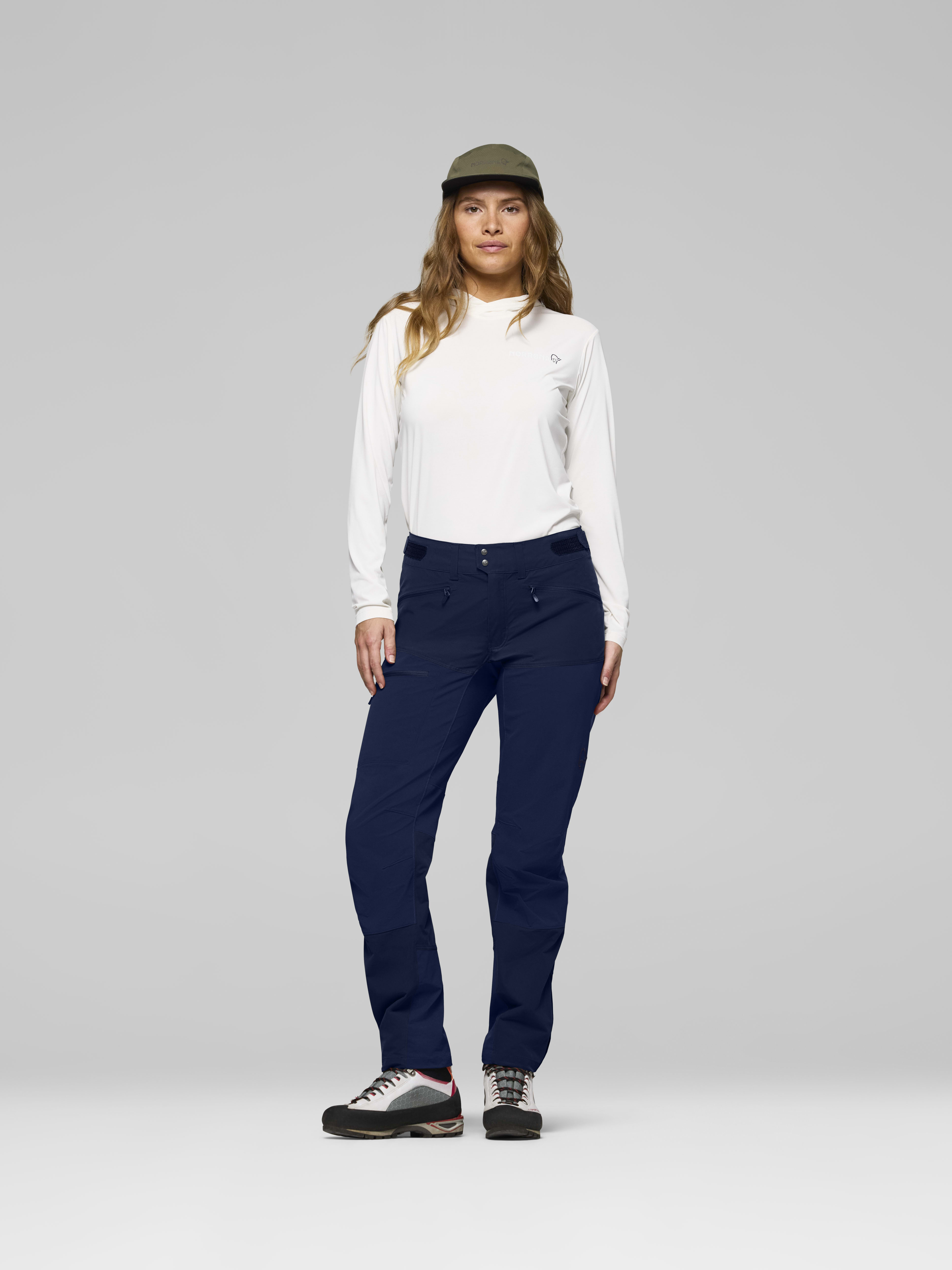


5 tips to find the perfect hiking pants:
1. Define what activities you need the pants for
It`s a jungle out there! Defining what activities you`ll use the pants for, will help you narrow down the selection. And if you find it difficult to define the exact use, you`ll always have the option of choosing one of the more versatile models.
2. Decide how much weather resistance you need
Winter or summer pants? Waterproof or breathable? Hiking pants are versatile, but if you choose only one pair for all kinds of weather, you may have to live with a few compromises.
3. Identify the features you can`t live without
Some hiking pants are simple, while others have numerous features. Here are some features that could be nice to have, depending on what activities you plan to use the pants for:
- Leg room
If you wear high hiking boots or ski boots, make sure there is enough room in the legs, so the pants go on the outside of the boot. - Ventilation zippers
Ventilation zippers are often a good thing if you are wearing waterproof and durable/heavy duty hiking pants during high intensity activities. - Insulation
A thick material provides more insulation when it is cold outside, remember this if you`re planning for year-round use. - Protection from steel edges
If you´re going skiing on skis with steel edges, you need extra tough fabric on the lower inner leg so the steel edges don`t cut holes in your pants. - Pockets
Deep pockets, and perhaps a zippered pocket or two, so you don`t lose your valuables. If you are a climber wearing a harness, you would appreciate pocket placements that don`t interfere with the harness
4. Find the perfect fit
Too tight or too big – buying the wrong size is not a good thing, especially with clothing you wear during activity. Hiking pants come in numerous sizes. If you are not sure about your size, stop by a store and try them on. Move around in the store, squat, lift your legs up high, and stretch to make sure the pants are comfortable in all positions. Often there are size adjustments in the waist, which is practical if you are between sizes.
5. Think sustainability
- Buy from quality brands. Clothing that lasts for many years is more sustainable.
- Follow washing and maintenance instructions to make your product last
- If you damage your pants, repair them yourself or deliver them to someone who can fix the problem.
- Buy designs that are not out of fashion next year.
Types of hiking pants
We group hiking pants into three different categories, each one having its strengths. When buying outdoor clothing, it is important to think about what kind of activity you need it for. For example, a waterproof pant is less breathable than a lightweight/breathable one and is less comfortable on a warm, sunny day. And lightest lightweight pants are not as durable as heavy-duty pants because of the thin and breathable material. For a more in-depth look at materials, head over to Norrøna´s technology and materials overview.
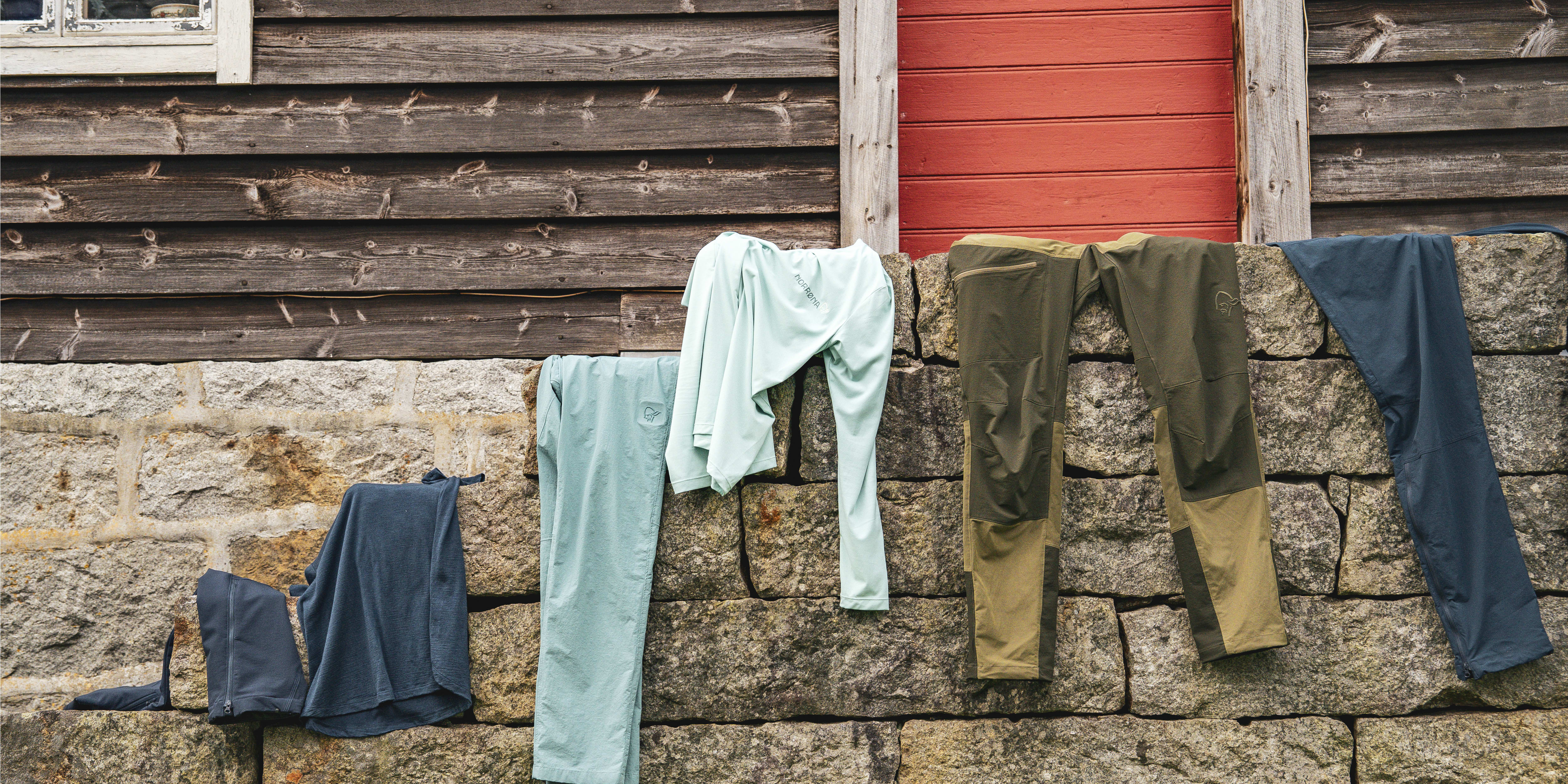
Lightweight and breathable hiking pants
If you are into high-intensity activities or want the most comfortable, breathable, and flexible alternative, lightweight hiking pants are a good option. Lightweight hiking pants are a good alternative when the weather is good, as they are not waterproof.
However lightweight materials tend to dry fast. Lightweight pants are typically made in some sort of thin softshell material, for example Flex1, which is the go-to material when Norrøna is making lightweight and breathable clothing.
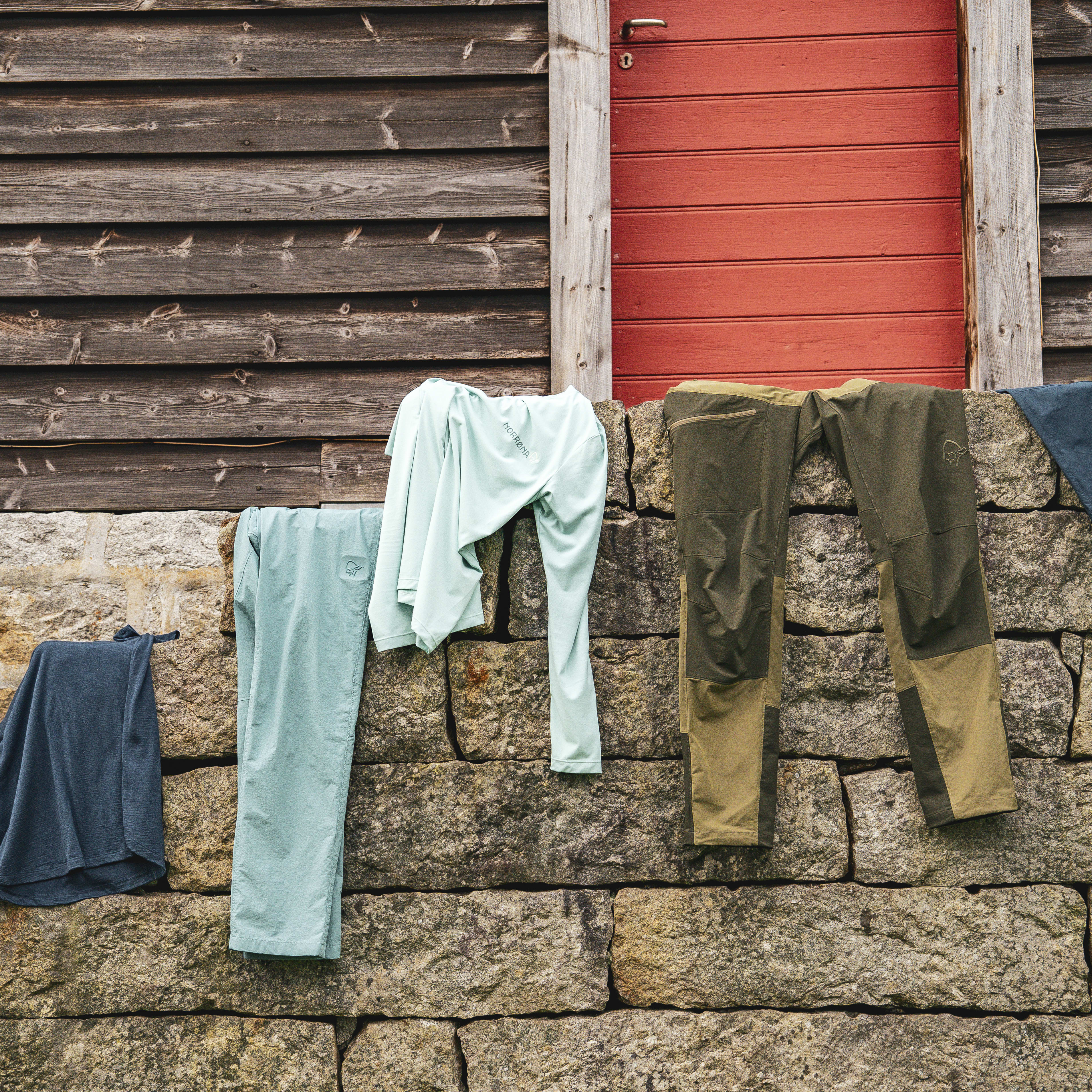
Examples of lightweight hiking pants with Flex1 technology, is the men´s Norrøna femund flex1 lightweight Pants and the women´s Norrøna falketind flex1 Light Pants for mountaineering.

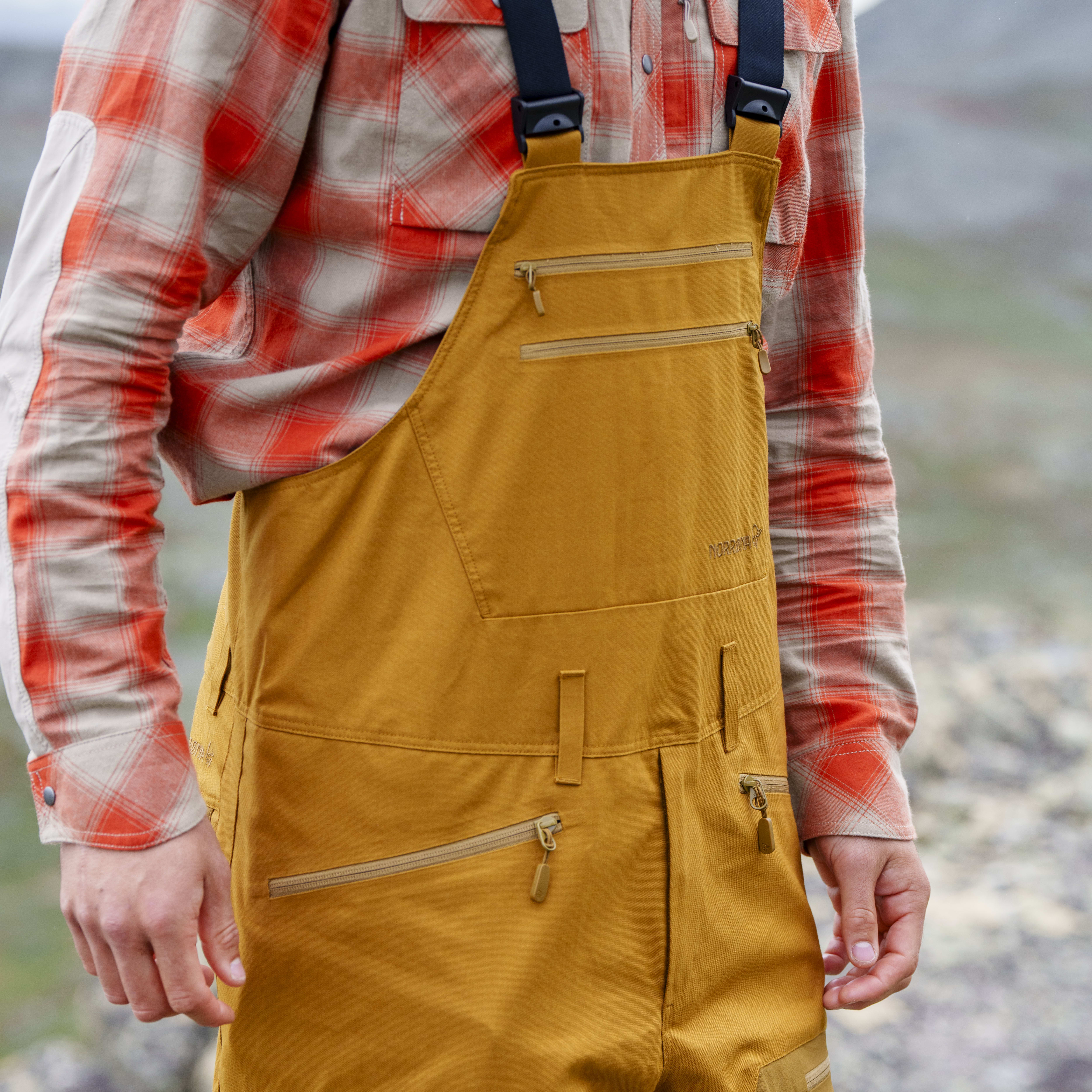
Heavy-duty and durable hiking pants
Do you need pants that resist a lot of abuse? Do you embark on multi-day adventures? Or do you work outdoors, chop wood or climb mountains? Then you need pants that are durable and can hold up with the punishment you give them.
Durable hiking pants are typically made with rougher materials such as thicker softshell or cotton canvas. To maintain a great deal of comfort and flexibility, there is often a mix of rougher and lighter materials. You will normally find rough materials on exposed areas such as knees, lower leg and bum.
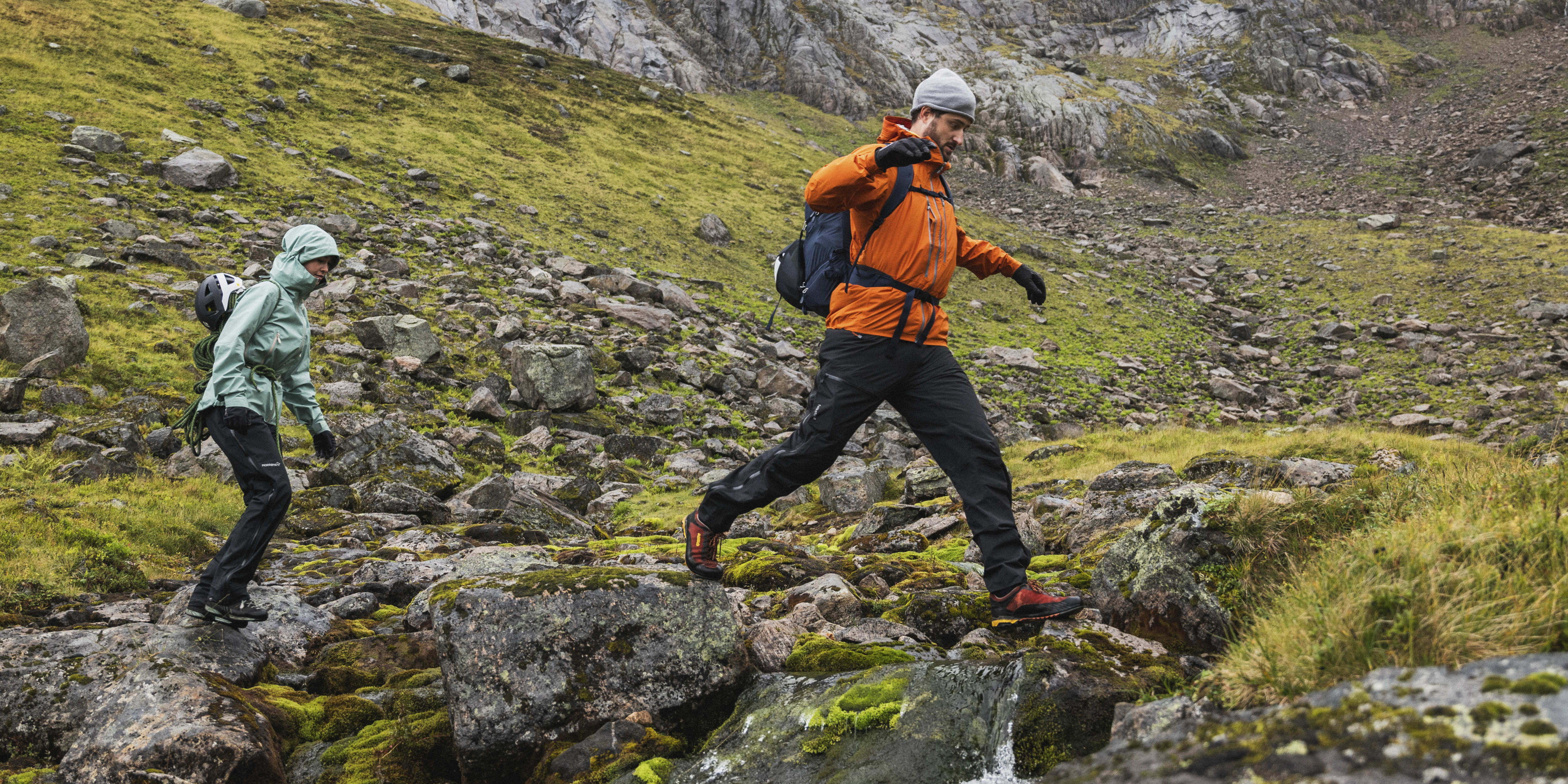
Waterproof hiking pants
Whether it is raining or snowing, waterproof pants will keep you dry. Waterproof hiking pants can come in the same fit and with similar features as other hiking pants. The main difference is the material, as softshell, cotton, and other materials used in pants are not waterproof. For waterproof hiking pants, Gore-Tex is a common material. An example is the falketind Gore-Tex Pants. Other materials with similar features are also used, such as Norrøna´s Dri1 material that is used in the lighweight and packable falketind dri1 Pants.
Waterproof materials can be breathable. However if you look for maximum breathability, you should look at lightweight or durable pants with materials specifically made to be breathable. So, if you know you are likely to use the pants also when the sun comes out, make sure it has good ventilation, such as zippers for mechanical venting.
Hiking short
For those warm summer days, it often makes more sense to wear shorts than pants. Hiking shorts have many of the same features as hiking pants and are available in both durable and lightweight materials. Just as comfy and flexible as pants, just shorter.

Good luck with finding your next pair of hiking pants! If you need more guidance in finding clothing for your next adventure, explore our product guides.

.jpg)